
A cause cannot be added to a brand like a seasonal color. The commitment has to survive contact with the company’s products, partners, operations, and customers.
That is what makes cause-related marketing more demanding than an ordinary campaign. A promotion can borrow attention for a month. A public commitment invites people to inspect the rest of the business. If the cause is real, that scrutiny can strengthen the brand. If the cause is only decoration, the campaign gives everyone a reason to find the contradiction.
Cause-related marketing usually connects a commercial transaction with support for a nonprofit or social initiative. The mechanism may be a donation tied to a sale, a product-distribution program, a long-term partnership, or a campaign that mobilizes a company’s audience and resources. Corporate responsibility is broader: it includes how the company operates even when no promotion is running. The strongest programs connect the two.
In this article
Choose a cause the business can support
The first decision is not which cause will generate the warmest response. It is which problem the company is equipped to address with credibility. Look for a connection to the product, supply chain, workforce, community, or expertise. An electronics company can work on repair, access to technology, responsible sourcing, or e-waste because those issues already live inside the business. The closer the relationship, the easier it is to contribute something more useful than a logo and a check.
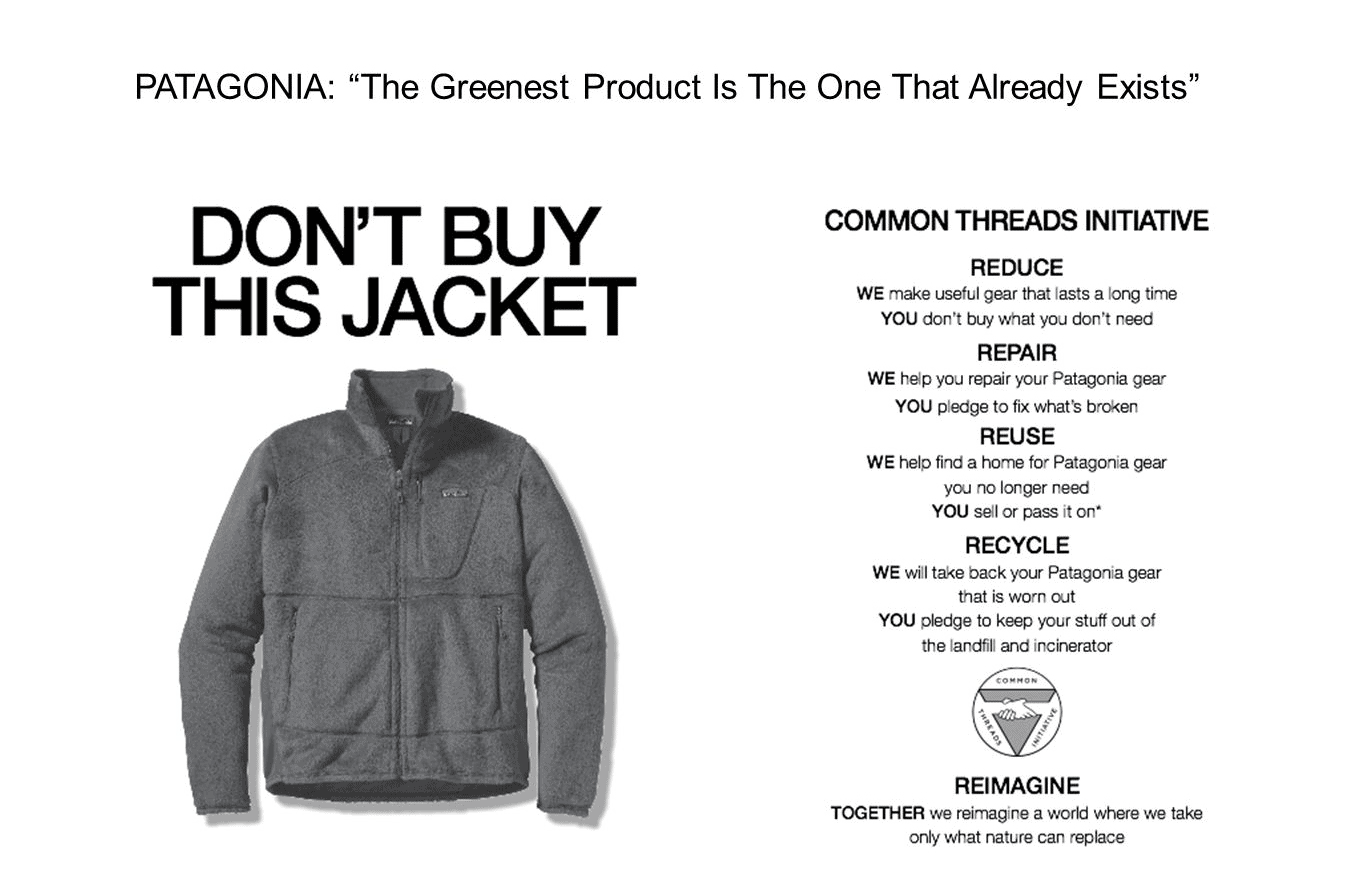
Patagonia’s 2011 “Don’t Buy This Jacket” advertisement remains a sharp example. The company asked people to buy less while acknowledging that every product it made consumed resources. That message could have collapsed under its own contradiction. It held together because Patagonia connected the provocation to longer-lasting products, repair, reuse, recycling, and the wider Common Threads initiative. The advertising made sense because the operating choices supported it.
Audience relevance still matters, but it should not become a popularity contest. Research can show what customers care about and where they expect the company to act. It cannot manufacture a commitment executives are unwilling to defend. The cause has to fit the organization before it fits the media plan.
Design the partnership together
A nonprofit partner is not a credibility prop. It understands the problem, the affected communities, and the practical work in ways the brand probably does not. Bring that knowledge into the campaign before the creative concept is fixed. Agree on the objective, each organization’s role, how people will be represented, how funds or products will move, and what success will mean.
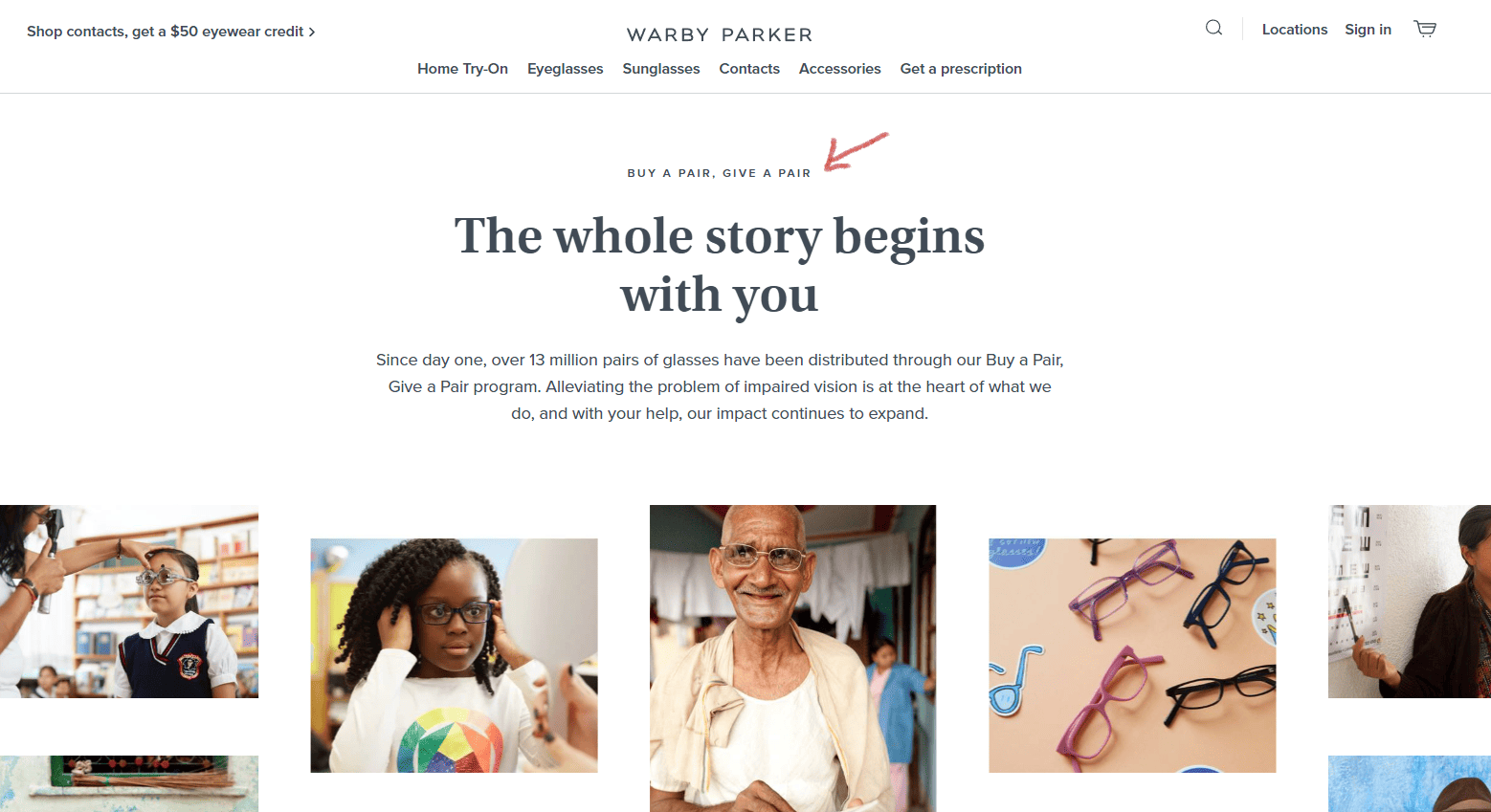
Warby Parker’s current Buy a Pair, Give a Pair program shows how the mechanism can mature. The company works with partner organizations to distribute glasses and support access to vision care. As of September 2026, Warby Parker reports more than 25 million pairs distributed across over 80 countries, including more than 350,000 pairs through its U.S. school program. Those figures matter because they describe delivery, reach, and a continuing system rather than a vague promise to “give back.”
The creative team should treat the partner as a coauthor. That includes decisions about language, imagery, permissions, beneficiary stories, and channels. People affected by the cause should have agency in how they appear. The brand’s role is often strongest as the organizer, funder, distributor, or amplifier. It rarely needs to cast itself as the hero.
| Campaign decision | Question to settle together | Evidence to preserve |
|---|---|---|
| Contribution | What reaches the cause from each transaction? | Agreement, calculation, payment record |
| Program delivery | Who does the work, where, and for whom? | Partner reports and distribution records |
| Story and imagery | Who has consent and editorial agency? | Approvals, releases, and source files |
| Outcome | What changed beyond impressions or sales? | Defined measures and periodic reporting |
Make the impact visible and verifiable
Good storytelling gives a program emotional shape. Good disclosure gives people a reason to believe it. Both are necessary. A moving film cannot answer how much money is being contributed, how long the offer lasts, or whether the campaign has already reached a cap.
The BBB Wise Giving Alliance’s cause-marketing standard recommends stating at the point of solicitation the actual or anticipated portion of the purchase price that benefits the charity, the campaign’s duration, and any maximum or guaranteed minimum contribution. “A portion of proceeds” leaves too much room for assumption. A concrete statement lets the customer understand what the transaction does.
The story should then follow the same level of precision. Show the problem without exploiting the people experiencing it. Explain the partner’s work. Report what the program delivered, where it fell short, and what will change next. Brand awareness, engagement, sentiment, and sales can help evaluate the campaign, but they are not substitutes for the social outcome.
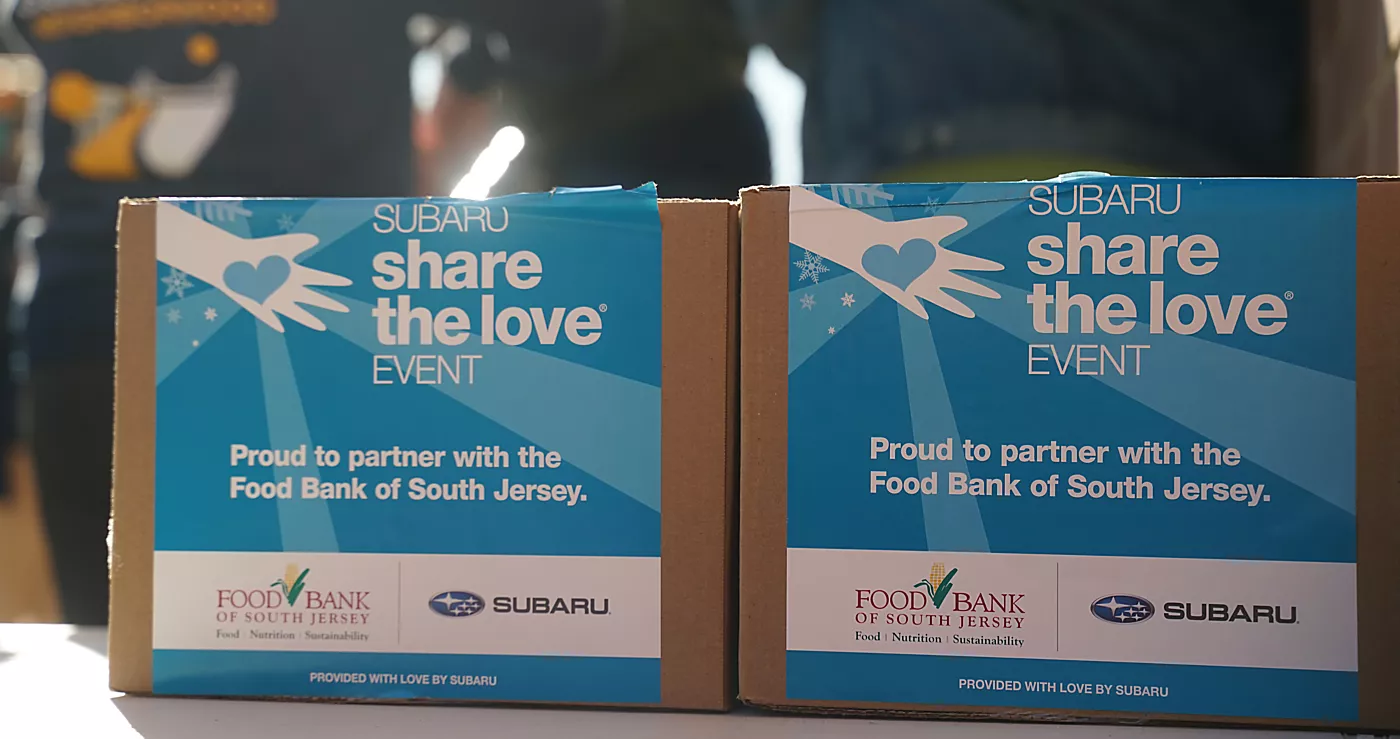
Subaru’s Share the Love program illustrates the value of continuity. The current program reports 18 years of support for four national charities and more than 2,800 hometown charities chosen with participating retailers. The brand story grows from repeated delivery across national and local relationships, not from one launch moment.
Protect the commitment
Public purpose expands the surface area of brand risk. Review the company’s own labor, sourcing, environmental, political, and customer practices for conflicts with the campaign. Vet nonprofit partners, agencies, creators, and spokespeople. Put responsibilities, approvals, disclosure language, escalation steps, and exit conditions in writing. The details vary by jurisdiction, so legal review should happen while the program is being designed.
I learned the partner lesson firsthand. A charity collaboration initially appeared entirely positive. After the campaign began, an influencer commissioned by a partner was found to have a history of antisemitic comments. The backlash reached the nonprofit and then reached us, with people demanding that we end the relationship. The incident made one principle painfully concrete: your public commitment includes the behavior of the people carrying it into the world.
Due diligence cannot eliminate every surprise. It can establish how quickly the partners share information, who makes the decision, what standards trigger action, and how the response will respect the cause rather than merely protect the brand. A sudden retreat can hurt the people the campaign claimed to support. A defensive response can deepen the original problem.
A practical campaign brief
- Fit: State the direct connection between the cause and the company’s products, operations, people, or community.
- Commitment: Define the contribution, duration, minimums or caps, and resources each partner will provide.
- Governance: Set approval rights, representation standards, partner-vetting responsibilities, and escalation paths.
- Proof: Choose social outcomes and business measures before launch, then report both with context.
- Continuity: Decide what the company will keep doing after the campaign window closes.
Cause-related marketing earns meaning when the sale, the partnership, and the company’s behavior tell the same story. The creative work can invite people into that story. The operating choices are what make it true.