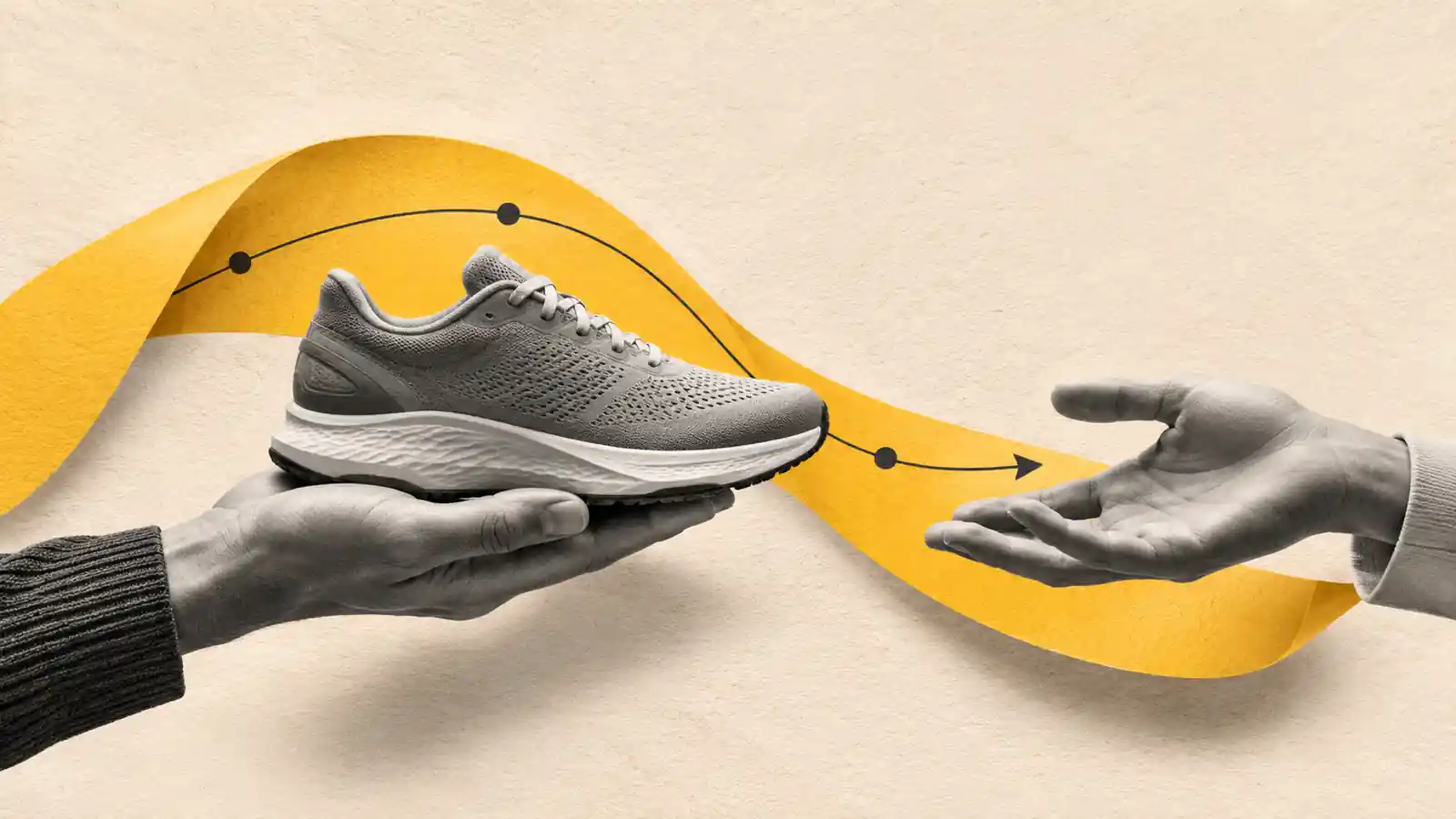
AI can introduce shoppers to brands they have never heard of. The real disruption begins when people trust their AI shopping assistant enough to buy from those brands anyway.
A while ago, I went looking for alternatives to Lululemon’s ABC pants. I had heard plenty about how comfortable they were, and I wondered whether I could get something comparable without paying the Lululemon premium.
I started where most people start, with Google. It turned up several alternatives, including some familiar clothing brands and a relatively unknown option sold on Amazon. Then I asked ChatGPT essentially the same question, and it produced a similar list. Helpful, but nowhere near enough to get me to spend money.
So I went to YouTube, where people were comparing the pants side by side, wearing them, and debating materials, fit, comfort, and construction. Some reviewers insisted the cheaper alternatives were practically indistinguishable from the original.
And yet the more I researched, the more I leaned toward Lululemon.
Part of that was familiarity. Part was the sheer volume of independent discussion surrounding the product. And part was my perception that Lululemon had invested in developing and refining the pants, while some competitors seemed mostly interested in reproducing that success. Whether my perception was entirely fair is a separate question. It was still part of how I made the decision.
AI had introduced me to alternatives and helped me research them. It had not loosened my preference for the brand I already knew.
That experience got me thinking about a bigger question. If AI makes it easier to discover unfamiliar brands, does it actually make us more likely to buy them? And what happens when we trust AI enough that we no longer feel the need to double-check every recommendation ourselves?
Being recommended isn’t the same as being purchased
There is a lot of enthusiasm right now for the idea that AI will level the playing field between established brands and emerging ones. The logic is appealing. Ask an AI assistant to recommend running shoes, and it can surface companies you have never heard of. A smaller brand no longer needs a giant advertising budget, prime shelf space, or decades of name recognition just to get into the conversation.
The discovery part appears to be happening. In August 2026, Boston Consulting Group reported, based on a survey of more than 13,000 consumers across 12 markets, that in more than half of AI-assisted purchase journeys, AI introduced consumers to brands they would not otherwise have considered.
But putting a brand in front of a shopper and persuading that shopper to pay for it are two very different achievements.
One of the more revealing data points comes from Attest’s 2027 Consumer Trends report, released in October 2026. Attest surveyed 4,000 consumers in the United States and United Kingdom and collected 3,252 accounts of real first-time purchases, 1,189 of which involved an AI assistant. Without an assistant, the brand a shopper had bought before won 47% of the time, and a brand they had heard of but never tried won 24%. With an assistant, those two drew level at 36% each. Brands that were completely new to the shopper won about a quarter of the time either way.
In other words, AI seemed to make people more willing to try a different brand they already knew. It did not produce a comparable jump in purchases from brands they had never heard of.
These are self-reported purchase stories, not tracked transactions or a controlled experiment, so we can’t conclude that AI caused the difference. People who reach for an assistant may simply shop differently to begin with. Still, the pattern challenges a popular assumption. For now, AI may be better at converting existing awareness into sales than at overcoming the absence of awareness altogether.
That doesn’t mean AI is failing to move real money. In October 2026, Adobe reported that in September, traffic arriving at U.S. retail sites from AI services converted 90% better than non-AI traffic and generated 83% more revenue per visit. That is measured behavior, not survey recall. But it doesn’t tell us whether those shoppers bought familiar or unfamiliar brands, and it doesn’t prove the AI caused the higher conversion rate. Someone who arrives after a long conversation with a chatbot has often already done most of their shopping.
Discovery, consideration, and conversion are three separate jobs. Brands have spent generations learning how to influence all three, and so far AI has most clearly disrupted the first.
Familiarity is a benchmark, not just a preference
Suppose an AI assistant recommends four pairs of running shoes. Two come from Nike and Adidas. Two come from manufacturers you’ve never heard of. Even if all four appear to meet your needs, would you honestly approach them with equal confidence?
Probably not. Familiarity gives established brands a head start before the comparison even begins, and that isn’t just folk wisdom about consumer psychology. A 2022 meta-analysis of 107 empirical studies in the Journal of Product & Brand Management found that brand familiarity positively influences how consumers form attitudes toward brands, with a stronger effect in some contexts, such as hedonic and mature products, than in others.
We lean on familiarity because most of us don’t have the time, knowledge, or patience to become experts on everything we buy. A familiar brand arrives with accumulated impressions. We’ve used its products, seen friends use them, sat through its commercials, or simply heard its name often enough to feel we know what it stands for. That reduces uncertainty.
But familiarity also becomes a benchmark. When I searched for alternatives to the ABC pants, I wasn’t evaluating each brand on its own merits. I was asking whether anything else was as good as the product I already associated with quality. A challenger brand, in other words, doesn’t compete only against the established brand’s specifications. It competes against the shopper’s entire understanding of that brand, and much of that understanding lives outside the company’s direct control.
The evidence established brands have accumulated
Consider everything that surrounds a popular product: customer reviews, independent comparisons, YouTube try-ons, long-term ownership threads, social media conversations, and the retailers that carry it. For a well-established brand, that body of evidence has been piling up for years.
The famous brand also tends to anchor the comparisons themselves. If a content creator reviews several alternatives to a popular Nike running shoe and leaves out the Nike, viewers will reasonably wonder what the point was. The established product is the reference point everyone wants to understand. So it keeps getting included, each comparison generates more information about it, and that information strengthens its position in the next purchase decision. The advantage compounds.
Reviews work the same way. Personally, I look at both the rating and the number of reviews. A product with 50 positive reviews doesn’t give me the same confidence as one with thousands accumulated over time. But volume is a heuristic, not proof of authenticity. Reviews can be manipulated even on major retail platforms, which is part of why the Federal Trade Commission finalized a rule banning fake reviews and testimonials in 2024. An unfamiliar brand with 100 reviews isn’t automatically less trustworthy than an established brand with 10,000. The established brand simply offers a much larger body of evidence that a shopper can cross-check.
An AI assistant can summarize that evidence. It cannot make missing independent evidence magically appear.
That helps explain why shoppers still aren’t simply taking AI’s word for it. In Attentive’s 2026 State of AI in Retail study, a survey of 3,054 U.S. adults, 93% of the respondents who had used AI for shopping said they sought information or proof outside of AI while deciding whether to buy during a recent AI-assisted shopping experience. They were still checking reviews, comparing prices, and digging into product details. AI was helping them research. It hadn’t replaced their need to verify.
At least, not yet.
When the advisor earns the trust the brand hasn’t
Here is where things get considerably more interesting.
Picture yourself a few years from now, relying on the same AI assistant for most of your purchases. It remembers what you bought, what you returned, what delighted you, what disappointed you, and how much you’re usually willing to spend. It knows you value craftsmanship over fashion trends, prefer certain materials, and will happily give up a feature or two for a design you love. Over time, it has recommended dozens of products that turned out to be excellent purchases.
Now it suggests running shoes from a manufacturer you’ve never heard of. Do you still spend an hour verifying the recommendation? Or do you figure that, given its track record, your assistant probably knows what it’s talking about?
At some point, the trust you’ve developed in the assistant could begin substituting for the trust you haven’t yet developed in the brand.
There is early research pointing in this direction. A 2024 study in the Journal of Retailing and Consumer Services compared ChatGPT recommendations with conventional AI recommender systems and examined how trust in the recommender and trust in the recommended products shaped consumers’ willingness to adopt a suggested set of options for consideration. Higher brand awareness meant more trust in the recommended products, but the researchers found that the gap narrowed significantly for brands with low and medium awareness. The study measured consideration, not purchases, and it is a single study. Still, it suggests that an unfamiliar product can borrow some credibility from the system recommending it.
The implication is significant. Consumers have long relied on brands precisely because they can’t evaluate every product independently. If an assistant knows enough about both the product and the person to make that uncertainty manageable, the logic shifts. Instead of saying, “I trust Nike, so show me Nike,” the shopper says, “I trust my assistant to find the right running shoes, whoever makes them.”
The loyalty hasn’t necessarily disappeared. Some of it has moved from the manufacturer to the advisor.
A good personal shopper knows what matters to you
That kind of trust demands something today’s AI shopping experiences don’t consistently deliver: a real understanding of the individual consumer. As I’ve argued before, that is a harder problem than finding the right product.
Ask an AI for running shoes today and it will promptly produce a list of highly rated options. That doesn’t mean it understands what you need. How often do you run, and on what surfaces? Which shoes have worked for you before? Do you care most about cushioning, stability, durability, appearance, or price? And perhaps most important, which of those are you willing to compromise on?
An assistant might find a shoe that meets every technical requirement but looks terrible to me. Would I rather wear that shoe, or give up a little performance for something I actually enjoy seeing on my feet? Neither answer is objectively wrong. That’s what makes recommending products to human beings so difficult. We don’t buy things purely to satisfy specifications. We make trade-offs between function, price, appearance, identity, convenience, and countless other considerations, often without admitting it.
A knowledgeable assistant might reasonably say: “Based on your running habits, Shoe A is the strongest technical match. However, you’ve consistently preferred styling closer to Shoe B. I think you’d be happier with Shoe B, provided you’re comfortable giving up some cushioning.”
That is far more useful than announcing which product ranked first, and it reveals something important about trust. A trustworthy advisor doesn’t merely agree with us. It challenges our assumptions, explains the compromises, and helps us understand what we’re choosing to sacrifice. When it lacks enough information, it asks. The ideal interaction isn’t necessarily the shortest one. It’s the one that asks just enough questions to make a poor decision less likely.
Personalization also needs boundaries. Someone might happily share footwear preferences and past purchases while preferring to keep medical or financial details private. A trustworthy assistant respects those limits instead of treating greater access as something it’s automatically owed.
Three kinds of effort between consideration and purchase
I think the future of AI shopping can be understood through three kinds of effort consumers would love to avoid.
The first is the effort of discovery. Finding products, sorting through alternatives, reviewing specifications, and locating trustworthy information all take time. AI is already taking a big bite out of that work.
The second is the effort of deciding. Even with enough information, shoppers still have to choose which trade-offs they can live with. Is the cheaper product worth the risk? Does the premium brand offer meaningful advantages? Should appearance win over function? This is where personalization and transparent reasoning become essential.
The third is the effort of undoing a bad decision. This may be the most overlooked part of the entire purchase. People don’t just worry about choosing the wrong product. They worry about what happens afterward. Will the return be complicated? Will they pay for shipping? How long will the refund take? Will they have to explain the same problem to three different customer service agents? Those worries get louder when the brand is unfamiliar.
A personal shopper who makes excellent recommendations is valuable. A personal shopper who also deals with the consequences when a recommendation doesn’t work out is worth considerably more.
Think about what that could look like. You tell your assistant that the shoes it recommended don’t fit. Instead of sending you to a retailer’s return-policy page, it arranges the exchange, obtains the authorization, schedules the pickup, tracks the return, and confirms the refund. Your only job is to put the box outside when instructed. Fully managed returns like this aren’t something most shoppers can count on today. But if they become common, trying an unfamiliar brand would feel a lot less risky.
There’s good reason to believe that reassurance matters. A 2016 meta-analysis in the Journal of Retailing, drawing on 21 papers, found that lenient return policies tend to increase purchases more than they increase returns, though the effect depends on the type of leniency. Generous time limits and easy exchanges were associated with fewer returns, while broader leniency about what could be returned was associated with more. That doesn’t tell us how much AI-managed returns would lift sales. It does reinforce that reducing the perceived cost of a disappointing purchase can make people more willing to buy.
An assistant capable of managing returns, exchanges, and service problems could make shoppers far more comfortable experimenting with brands they would otherwise avoid. For an unfamiliar brand, that could matter as much as the recommendation itself.
Product pages may need a second audience
If AI becomes an increasingly important intermediary, companies will need to rethink how they communicate what their products are worth.
Traditional product pages are built around the limits of human attention. We use attractive photography, concise descriptions, benefit statements, and a carefully selected handful of specifications because presenting every conceivable detail would overwhelm most shoppers. AI doesn’t need to consume information that way. A personalized assistant might want very specific details about materials, durability, dimensions, compatibility, environmental certifications, manufacturing processes, warranties, independent testing, and known limitations. The detail that matters enormously to one shopper may be irrelevant to the next.
That creates an opportunity to provide far more information without forcing every visitor to read it. The visible page can keep telling a compelling brand story, while a deeper layer of structured, accurate information supports individual comparisons. Google’s product structured-data guidance already supports attributes such as pricing, availability, shipping, reviews, and return policies. It’s an extension of a point I made in When AI Does the Shopping, Who Is Your Brand Persuading?: your value has to be visible to the system as well as the person.
The larger opportunity goes well beyond basic structured data. A running-shoe manufacturer could publish detailed information about how each model performs for different activities, how its materials hold up over time, what customers commonly complain about, and where competing products have a legitimate edge.
From a traditional marketing perspective, that sounds backward. Why hand shoppers more reasons to question whether your product is right for them? Because an assistant that’s genuinely working for the consumer needs to understand those distinctions. The objective isn’t to flood AI with promotional claims. It’s to provide reliable evidence that helps the right customer choose the right product.
A company can claim its shoes are exceptionally durable; independent long-term testing is more persuasive. It can claim to be environmentally responsible; credible certifications and measurable evidence are more useful. It can claim to provide excellent service; clear warranties, accessible support, and dependable returns give shoppers something concrete to evaluate. In an AI-mediated marketplace, the distance between what a brand claims and what it delivers may become much easier to measure, and the brands that make that comparison easy could come out ahead.
When the advisor is also selling ads
There’s another complication. What happens when the AI assistant consumers trust is also supported by advertising?
I don’t believe advertising automatically makes an AI shopping assistant untrustworthy. Consumers understand that advertising exists, and most can recognize a sponsored recommendation when it’s clearly identified. If I ask my assistant for running shoes and it shows me a sponsored option, that isn’t necessarily a problem. The ad might introduce a product genuinely worth considering.
The real issue is whether advertising bends the assistant’s independent judgment. If it starts recommending inferior products because an advertiser paid more, the service loses the very thing that made it valuable. Shoppers are relying on the assistant to cut through the noise that advertising can create, not to become a quieter, more persuasive version of it.
A trustworthy assistant should be able to distinguish a relevant advertisement from the recommendation it would make on its own, and explain why an advertised product does or doesn’t deserve consideration. The challenge is that consumers usually can’t observe how those recommendations are produced. That makes transparency, independence, verifiable sources, and a consistent record of successful recommendations especially important.
An AI assistant could eventually become one of the most trusted advisors in a consumer’s life. That trust would also carry enormous commercial influence, and the more influence the assistant accumulates, the more its incentives matter.
The new competition isn’t only between brands
Take two manufacturers selling similar running shoes. One is an established brand with decades of recognition, extensive reviews, familiar retail distribution, and a strong reputation. The other is a relatively unknown company offering a potentially superior product at a competitive price.
Today, the established brand holds most of the cards because shoppers already know what to expect. AI could help the smaller company overcome some of that disadvantage by identifying genuine product strengths and presenting credible evidence. But that opportunity depends on more than showing up in a recommendation. The challenger still needs a product worth buying, reliable information supporting its claims, and an ownership experience that reduces the risk of trying something new.
Established brands have an opportunity of their own. Their customer relationships, product histories, independent reviews, and service networks are exactly the kind of evidence a trustworthy assistant should value. They don’t lose those advantages simply because the shopper starts asking a chatbot. What changes is how those advantages are evaluated.
That leads to an interesting possibility: companies may need to compete for two different kinds of preference. The first is the consumer’s preference for the brand itself. The second is the assistant’s assessment that the brand is the best choice for that particular consumer. Those aren’t necessarily the same thing. A shopper might love an established brand for its heritage, design, identity, or emotional significance, while the assistant points to a less expensive alternative with comparable functionality. A good advisor’s job isn’t to erase those emotional preferences. It’s to understand how much they matter and fold them into a better-informed decision.
That’s why branding isn’t about to become less important. The brands that keep developing meaningful relationships, distinctive products, strong reputations, and satisfying ownership experiences will have more to offer both consumers and their AI advisors. The brands relying mostly on familiarity, without the value to back it up, may find that advantage increasingly difficult to defend.
The future of brand loyalty depends on who earns the trust
We’ve spent generations building brands that consumers recognize, remember, and trust. AI introduces a new participant into that relationship.
Today, shoppers mostly use AI to discover alternatives, then rely on familiar brands and independent sources to make the final call. The early purchase research suggests that established awareness still carries a lot of weight, even when AI is involved.
But that could change as assistants understand people more personally, evaluate products more reliably, explain trade-offs more thoughtfully, and handle the fallout when a purchase doesn’t work out. At that point, shoppers may become willing to trust unfamiliar brands because they already trust the intelligence recommending them.
For businesses, that is both an opportunity and a warning. The opportunity is that a genuinely superior product may need less accumulated familiarity to earn consideration and trust. The warning is that the customer relationship may increasingly run through an intermediary whose judgment the brand does not control.
I don’t think this means traditional branding disappears. People will still care about craftsmanship, design, heritage, identity, community, and the personal meaning of what they buy. Those qualities don’t stop mattering simply because a machine helps evaluate them. But the nature of loyalty could change. Today, brands often earn our trust because we’re familiar with them. Tomorrow, we may become familiar with brands because we trust the AI that introduced us to them.
If that happens, the most consequential question in brand strategy won’t be whether an AI assistant knows your brand exists. It will be whether the assistant has enough credible evidence to recommend your brand with confidence, and whether the customer trusts that assistant enough to act.
The real revolution in AI shopping won’t happen when a machine knows which products to recommend. It will happen when consumers trust it enough to stop second-guessing every recommendation.