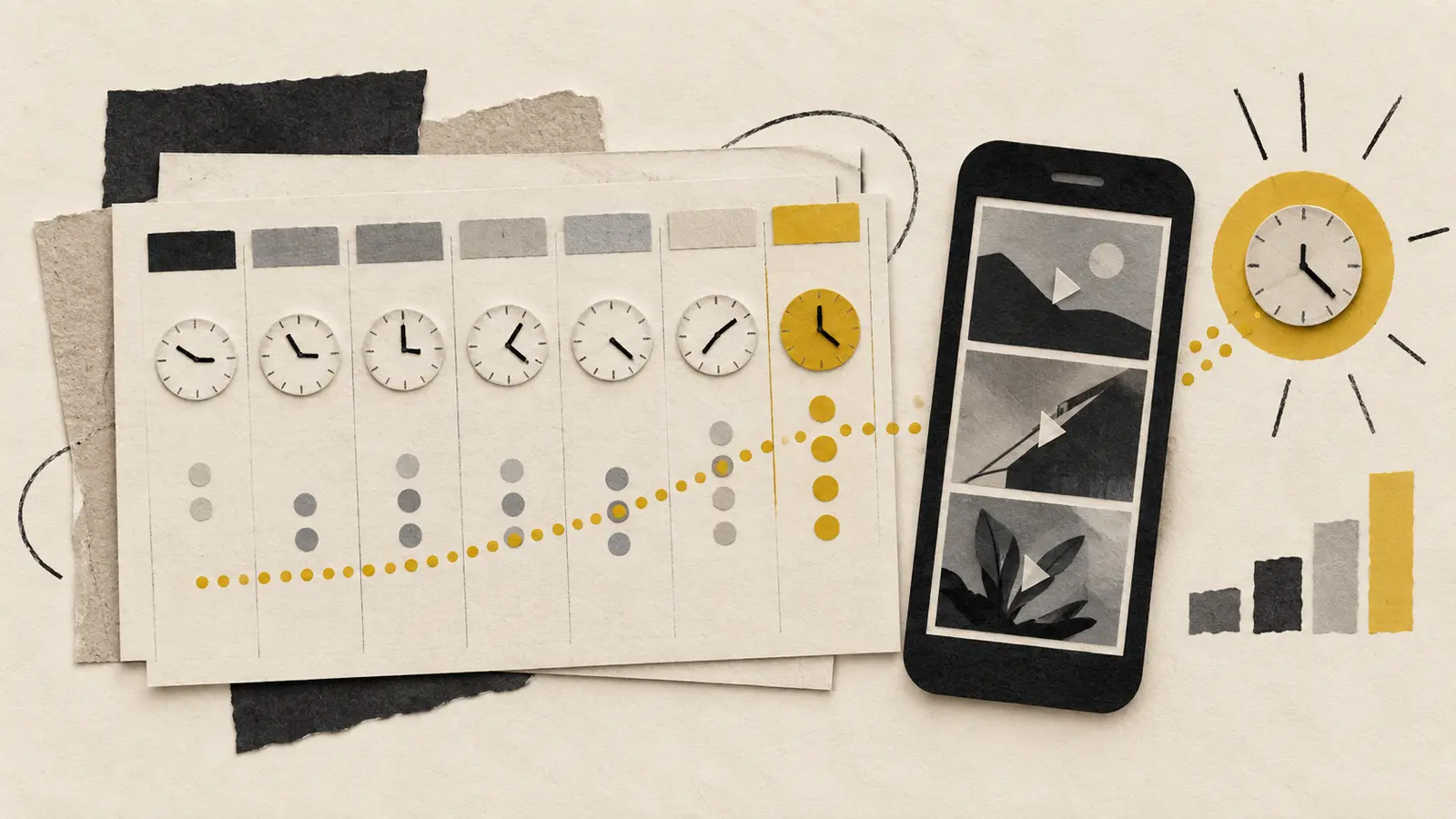
There is no universal best time to post on TikTok. A creator’s useful window depends on where the audience lives, when those people use the app, what kind of video they expect, and whether the creator can stay present after publishing. A chart that says “Tuesday at 10 a.m.” may be a starting hypothesis, but it is not a strategy.
The more reliable approach is to use your own audience activity and post performance to identify two or three repeatable windows. Then test those windows with comparable content long enough to separate a pattern from one lucky video. This guide explains how to do that without chasing a mythical magic hour.
Platform guidance and interfaces were reviewed September 10, 2026. TikTok features can vary by region, account type, and app version.
The short answer: start before your audience becomes active
If your analytics show a reliable activity peak, publish shortly before it and observe what happens. That gives the post time to finish processing, collect its first signals, and be available as more of your audience arrives. “Shortly” is deliberately imprecise: test 30, 60, and 90 minutes before the peak rather than treating one interval as a law.
Timing is only one variable. A strong opening, clear subject, useful caption, relevant context, viewer response, and completion behavior can matter more than the clock. A weak video posted at the perfect moment is still a weak video.
Why generic “best time” charts fail creators
Global posting studies average together accounts with different countries, ages, categories, follower counts, and publishing habits. The result may describe the dataset, but it cannot automatically describe your audience. A gaming creator with viewers in North America and Europe has a different problem from a local food creator whose followers live within one city.
The original version of this article named morning, afternoon, and evening “golden hours” and suggested avoiding the top of the hour because other creators would be posting. Those claims were not supported by TikTok, and the logic creates false precision. Recommendation is not a simple queue in which every post published at 10:00 competes for one slot.
What TikTok says influences recommendation
TikTok’s current explanation of how it recommends content groups signals around user interactions, content information, and user information. The weight of those signals can vary. That is a useful corrective to the idea that a posting time alone determines whether a video reaches the For You feed.
For creators, the implication is straightforward: timing should support relevance and response, not replace them. Publish when the right viewers have a reasonable chance to encounter the video, but make the video legible to the system and valuable to a person. The topic, language, sound, caption, viewer behavior, and audience history all provide context the clock cannot.
Find your audience’s actual windows
Start in TikTok Studio and review the audience and post analytics available to your account. Look for recurring periods of viewer activity, the countries or regions contributing the most attention, and the posts that continued gaining views after the first day. Do not rely on one screenshot or one viral result.
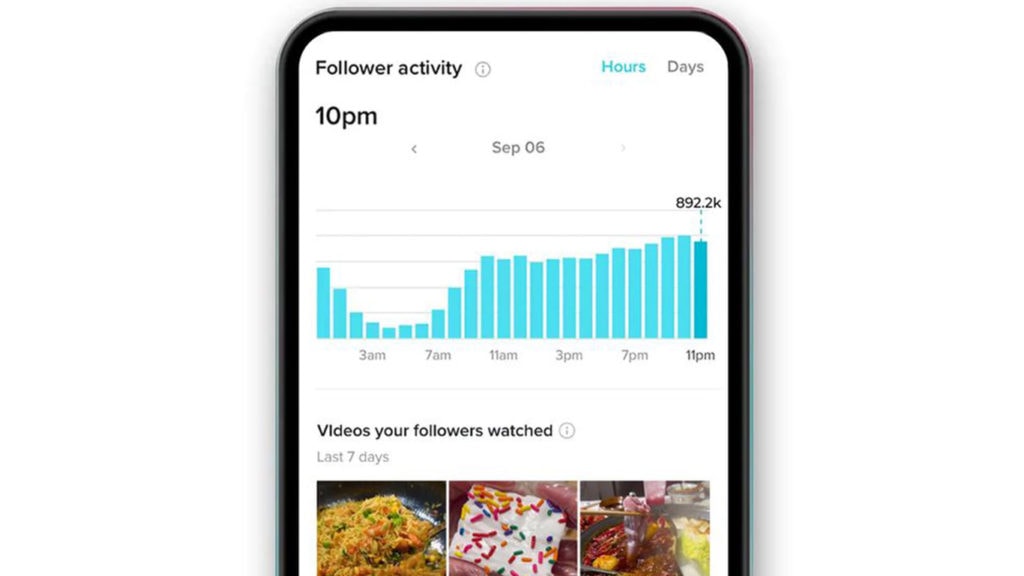
Use local time for the audience you are trying to serve, not automatically the time zone where you happen to be. If the audience is spread across regions, you may need two windows or alternating releases. A scheduling tool can help you stay consistent; changing or masking your location is not a substitute for understanding who follows you.
Run a two-week timing test
Choose three plausible windows from your analytics. If the account does not yet have enough data, use ordinary audience routines as hypotheses—not promises—and select windows such as before work or school, midday, early evening, and later evening. Test no more than three at once.
| Test element | Keep stable | Change deliberately |
|---|---|---|
| Content type | Topic, format, approximate length | Posting window |
| Creative quality | Opening strength, production level, caption effort | Specific example or angle |
| Audience | Language and intended viewer | Day of week when needed |
| Measurement | Same review points and metrics | Window after enough comparable posts |
Rotate comparable posts through the windows. Review each at consistent checkpoints—such as after one hour, 24 hours, and seven days—because some videos develop slowly. Two weeks is a practical first pass, not a scientific guarantee. Extend the test if you post infrequently or if one outlier dominates the results.
Measure more than views
Views tell you distribution, but they do not explain value. Compare completion or average watch behavior, rewatches where available, shares, saves, comments, profile visits, follower growth, and the action the video was meant to create. A smaller release window that produces stronger attention and more qualified response may be better than the window with the largest superficial reach.
- First-hour response: useful for diagnosing whether the initial audience engaged.
- 24-hour reach: a better view of early distribution than the first few minutes.
- Seven-day growth: identifies posts that continued to find viewers.
- Quality of response: comments, saves, profile actions, or conversions tied to the creator’s goal.
Use trends as context, not commands
TikTok’s Creative Center trends can help you understand what is gaining attention in a region or category. Use that information to read the environment, not to force every video into the same sound or format. A trend is useful when it fits the creator’s subject and voice. Borrowed relevance without a point of view is easy to forget.
Timing and trends also interact. A timely cultural moment may justify publishing outside the normal schedule. If the value depends on being early—news, a live event, a release, or a response—relevance can outweigh the historical best window.
What to do while traveling
Travel does not require pretending to be somewhere else. Keep the target audience’s time zone in the content calendar, schedule when appropriate, and use the trip when it genuinely adds context. If the creator’s identity is global, local material can expand the story rather than interrupt it.
The original article recommended a VPN as a way to mask location and influence reach. That advice mixed security, streaming, and distribution claims without evidence. TikTok already considers multiple recommendation signals, and audience relevance cannot be reduced to an IP address. Schedule for the audience; do not build the strategy around location tricks.
A repeatable creator schedule
Once a pattern emerges, give most posts to the two strongest windows and reserve a smaller share for continued experiments. Recheck the pattern when the audience, content category, posting frequency, or season changes. The best time is not a permanent discovery; it is a working decision supported by recent behavior.
If you manage a company account, the operating constraints and audience behavior may differ. See the related guide for TikTok posting times for businesses. For either kind of account, the principle is the same: start with a hypothesis, test it against your own audience, and let the schedule serve the content—not the other way around.
