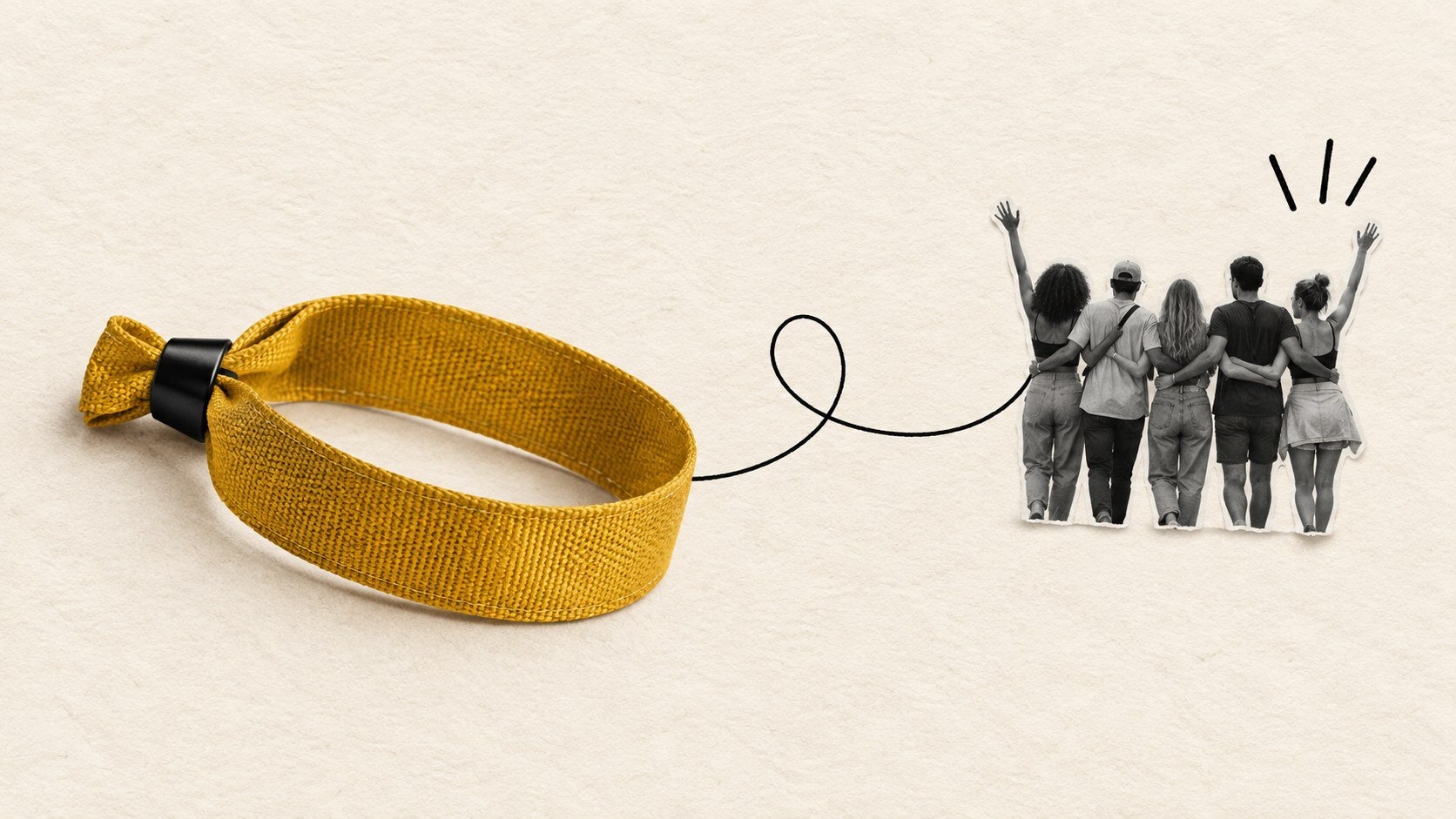
An event brand is not the logo on the registration desk. It is the expectation people carry before they arrive, the experience they have while they are there, and the story they repeat afterward. The visual identity matters, but it only works when the operation, programming, environment, and details make the same promise.
I have approached events from both sides. I have attended them as a guest and built them as an exhibitor, importer, designer, and creative director. Earlier in my career, I worked on Coachella, designed for Insomniac events, and helped brand the Adult Entertainment Expo. One of those installations even appeared in the film The Girl Next Door. The industries were different, but the underlying challenge was consistent: make a temporary experience feel coherent enough to become a lasting memory.

Listen to the original podcast version of this article on Spotify.
Open the original episode directly on Spotify.
Five principles for a durable event brand
1. Create belonging, not artificial scarcity
Events are powerful because attendance is limited by time and place. Even a gathering with thousands of people creates a boundary between those who experienced it and those who did not. That boundary can produce anticipation, status, and fear of missing out, but scarcity alone does not create a strong brand. People return when access leads to belonging.
The difference is important. Artificial scarcity says, “You may not get in.” Belonging says, “If you are here, you are part of something.” The first can generate a spike in attention. The second can build a community that survives between editions.
Exclusivity should therefore come from the experience, not manufactured inconvenience. Give attendees access to work, people, performances, products, or conversations they cannot encounter in the same way elsewhere. Make the value visible before purchase, then make the arrival experience feel generous rather than punitive.
- Before the event: clarify who the gathering is for and what becomes possible by attending.
- At the event: create rituals, shared language, useful access, and moments that reward participation.
- After the event: help the community keep the story alive without making non-attendees feel unwelcome.
FOMO is a real psychological construct, but it should not be treated as a license to pressure people. The more sustainable question is not “How do we make people afraid to miss this?” It is “What would make being here genuinely meaningful?”
2. Show progress without chasing size
The original version of this article argued that an event must grow every year. I would refine that now. An event needs to show progress, but progress does not always mean a larger footprint or a higher attendance number. Growth can be physical, programmatic, or experiential.
| Type of progress | What improves | Examples |
|---|---|---|
| Physical | Capacity and circulation | More appropriate halls, shorter entry queues, better meeting areas, accessible routes |
| Programmatic | The event’s core competency | Stronger speakers, new talent, deeper workshops, better exhibitors, more relevant content |
| Experiential | How participation feels | Clear wayfinding, reliable connectivity, useful mobile tools, rest areas, food, services, contingency planning |
An event may deliberately become smaller if that improves access, focus, or quality. The danger is not shrinking. The danger is allowing attendees, exhibitors, talent, and staff to feel that the experience is becoming less useful or less cared for.
Let the venue become part of the brand
Location shapes the promise. A consistent venue reduces planning friction because returning participants understand the transportation, weather, hotels, layout, and surrounding area. A traveling event can create the opposite promise, where discovery and a new destination are part of the appeal. Either model can work when it is intentional.
Anime Expo demonstrates how an event can grow into a location over time. The event began in Northern California in 1992 and eventually established its flagship presence at the Los Angeles Convention Center. Its official 2026 report recorded more than 422,000 turnstile visits across four days. That number is not the same as unique attendance, but the scale shows how the venue and event have become connected in the public imagination.
Venue planning must also include access rather than treating it as a later compliance check. The US Department of Justice notes that temporary public events may need accessible parking, routes, food service, toilet facilities, and assembly seating. An event cannot credibly promise welcome while parts of the experience remain unreachable.
Strengthen the reason the event exists
For a music festival, programming is the core competency. For a trade show, it may be product discovery, meetings, education, or access to a professional community. Operational novelty cannot compensate for a weak core.
Coachella provides a useful long-term comparison. Its official archive shows how the festival has combined established artists, reunions, and emerging talent across different eras. The names change, but the programming continues to signal cultural relevance.
| Year | Representative headliners retained from the original article |
|---|---|
| 1999 | Beck, Tool, Rage Against the Machine |
| 2004 | Radiohead, The Cure, Kraftwerk |
| 2009 | Paul McCartney, The Cure, The Killers |
| 2012 | The Black Keys, Radiohead, Dr. Dre and Snoop Dogg |
| 2016 | LCD Soundsystem, Guns N’ Roses, Calvin Harris |
| 2018 | The Weeknd, Beyoncé, Eminem |
| 2019 | Childish Gambino, Tame Impala, Ariana Grande |
| 2023 | Bad Bunny, BLACKPINK, Frank Ocean |
Experiential additions should support that core. Apps, installations, livestreams, scavenger hunts, immersive technology, and premium camping can all add value, but only when they solve a real audience need or deepen the event idea. Technology used merely because it is new becomes another queue.
3. Design the story people can carry
Event brands are largely narrated by the people who attend them. Guests post the view from the room, the line outside, the product reveal, the unexpected performance, the food, the staff interaction, and the moment something failed. The organizer can frame the story, but participants decide which scenes travel.
That makes operational delivery part of the content strategy. Reliable internet affects whether exhibitors and creators can publish when the moment is still relevant. Lighting affects whether a space photographs well. Wayfinding changes whether people describe the event as exciting or exhausting. Power, staffing, safety, accessibility, freight, food, and entry are not backstage details from the attendee’s perspective. They are the brand.
The 2018 CES blackout is a useful reminder. A two-hour outage became one of the most shared stories from a show built around technology. It would be unfair to claim that the blackout caused later attendance changes, as the original article implied. The defensible lesson is simpler: an unplanned operational moment can temporarily become the dominant narrative, so contingency planning and communication need the same attention as the launch.
- Identify the story-worthy moments. Mark reveals, performances, installations, demonstrations, and human interactions worth documenting.
- Remove the barriers to sharing. Plan connectivity, sight lines, lighting, permissions, charging, and press access.
- Prepare for the story you do not want. Define owners, escalation paths, backup systems, and plain-language communication for foreseeable failures.
- Capture evidence without controlling every voice. Give participants accurate assets and context, then allow the experience to speak through them.
4. Build recognition through consistency
Consistency does not require every edition to look identical. It requires enough continuity that people recognize the event while leaving room for each year to have its own energy. The stable layer may include the name, mark, typography, color logic, venue rituals, wayfinding principles, or a recurring moment. The expressive layer can change with the program and cultural context.
While I was creative director at Crisp Brand Agency, we worked on early Insomniac events including Electric Daisy Carnival and Nocturnal Wonderland. The early materials borrowed from the visual energy of club flyers. Each event was highly individual, with different artwork and type. In 2004, we began establishing more consistent typography for Electric Daisy Carnival. The work became easier to recognize across editions without losing its sense of change.
I would not credit design consistency alone for EDC’s growth. Programming, production, operations, community, and the work of founder Pasquale Rotella were central. Brand consistency played a supporting role by helping people connect separate experiences to one accumulating story.

A practical event system should define which elements cannot change, which can evolve, and which are unique to one edition. That protects recognition without turning the identity into a template that ignores the experience.
5. Give the memory a physical form
Swag is often treated as a procurement checklist. The better question is whether an object deserves to survive the trip home. A useful or emotionally specific artifact can reactivate the memory of an event long after the social feed has moved on. A disposable object with a logo is usually just waste.
People keep lineup apparel, badges, lanyards, wristbands, posters, pins, programs, and even receipts because those objects provide proof of participation. I still have event lanyards collected across years of shows. My son sometimes borrows old lineup hoodies because the object carries a history that a new garment cannot manufacture.
- Make it specific. An object tied to the place, program, year, or community is more memorable than generic merchandise.
- Make it useful or collectible. Quality, function, scarcity with meaning, and a continuing series can justify keeping it.
- Design distribution as part of the experience. Long, confusing giveaway lines can destroy the goodwill the object was meant to create.
- Consider the full lifecycle. Quantity, materials, packaging, transport, and leftovers are brand decisions too.
The event is the proof of the brand
The five principles work together. Belonging gives people a reason to care. Progress gives them a reason to return. Story design helps the experience travel. Consistency lets separate editions build on one another. Artifacts give the memory a physical anchor.
None of them can compensate for an event that fails its basic promise. The strongest event branding makes the strategy tangible in hundreds of decisions, from the first invitation to the last freight pickup. When those decisions align, the event stops feeling like a branded container. It becomes a piece of the brand people have actually lived.
Frequently Asked Questions
What is event branding?
Event branding is the coordinated promise expressed through the event’s identity, program, environment, operations, service and communications. It shapes what people expect, experience and remember before, during and after the event.
What should remain consistent from one event to the next?
Keep the elements that build recognition and trust, such as the event name, core promise, identity logic, service principles and recurring rituals. Programming, artwork and individual experiences can evolve when they still support that stable foundation.
Does a successful event have to grow every year?
No. It should show progress, but progress can mean better programming, access, service, operations or audience fit rather than greater physical size. A smaller, more focused event may deliver more value.
What makes good event swag?
Good event merchandise or keepsakes are specific to the experience, useful or collectible, well made, responsibly produced and distributed without creating unnecessary friction. The memory attached to the object matters more than the logo size.