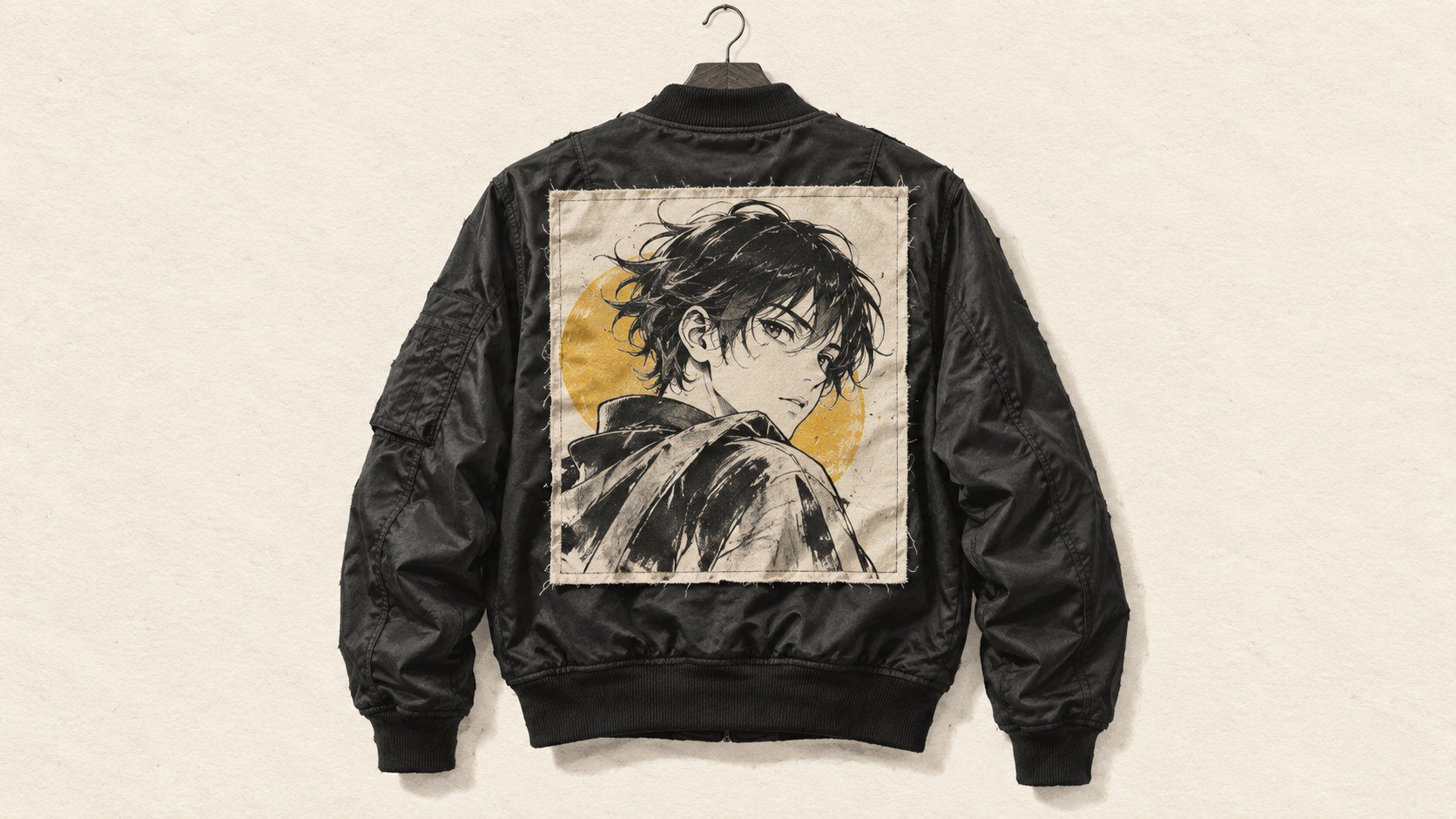
A person can care about Japanese animation, sneakers, competitive games, and a beautifully made jacket without experiencing any contradiction. Brand teams are often less comfortable with that combination. We organize markets into categories, assign audiences to them, and then act surprised when the same people turn up somewhere else.
That is what makes anime interesting to me as a branding question. Its commercial relevance becomes clearer when we look at how people carry the stories they love into the things they wear, buy, and share. A character on a jacket can express taste, recognition, or belonging. The opportunity for a brand begins with understanding that meaning.
Anime marketing, in practical terms, brings those stories and associations into a brand’s products, experiences, or communications. The difficult part is making the connection worth something to the audience. Familiar artwork can attract attention. It takes more thought to give someone a reason to care about the company putting it there.
The audience already connects these worlds
When we describe fashion and anime as an unlikely pairing, we may be revealing the limits of our own category map. Clothing already communicates affiliation. People wear references to music, sport, places, and ideas that matter to them. A reference to a favorite series can serve a similar purpose, whether it is immediately recognizable or subtle enough that only another fan will notice.
This changes the research question. Counting the size of a fandom tells us something about possible reach, but very little about a particular product’s relevance. I would want to understand which fans are likely to buy, what they value in the original work, and how they express that interest outside the screen. A broad demographic description cannot answer those questions.
What the fashion examples actually show
In 2019, Coach introduced a Naruto-inspired collection with Michael B. Jordan, created in partnership with VIZ Media. It brought the series into clothing, footwear, and bags, connecting Jordan’s interest in Naruto with Coach’s product design. The collaboration had an identifiable person and point of view behind it.
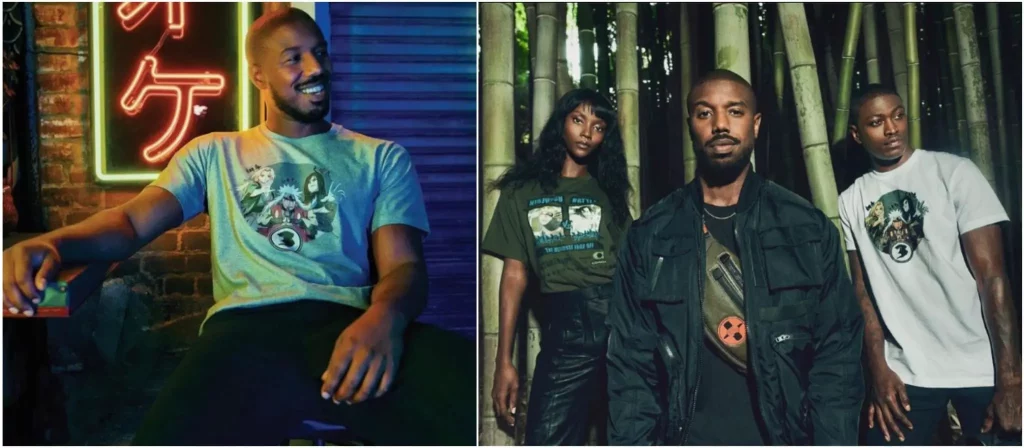
My reading of that example is that the relationship gives the creative work a starting point. There is a reason to explore how the story might become something wearable. That does not prove commercial success, and a campaign photograph cannot tell us whether the partnership created lasting customers. It does let us examine whether the connection makes sense before making claims about its results.
Gucci’s Doraemon collection offers a different visual approach. The character appears alongside the house’s GG motif across ready-to-wear and accessories. Both identities remain legible. For me, that is the useful design question: can a collaboration make room for the guest’s identity while retaining enough of the host’s character to feel deliberate?
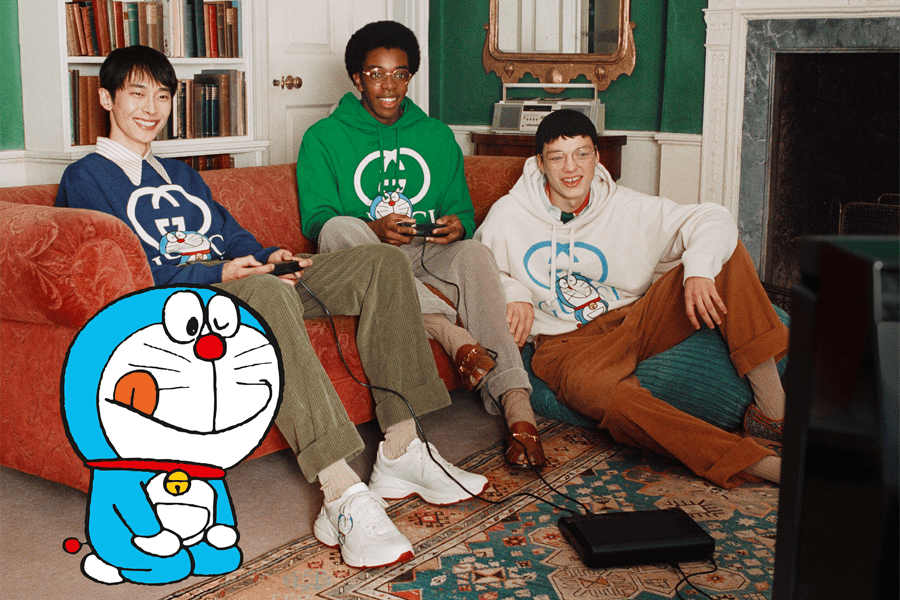
Neither example establishes that every fashion brand should pursue anime. Each shows a particular way of connecting a cultural property with an existing product language. A successful creative direction still needs an audience, an appropriate price, and a product people want to own. A recognizable character cannot carry all of those decisions.
Gaming turns recognition into participation
A game offers another way to express the connection. Fortnite introduced its My Hero Academia collaboration in December 2022, with character outfits and themed activities. The reference could become part of what a player did inside the game, alongside what they wore.
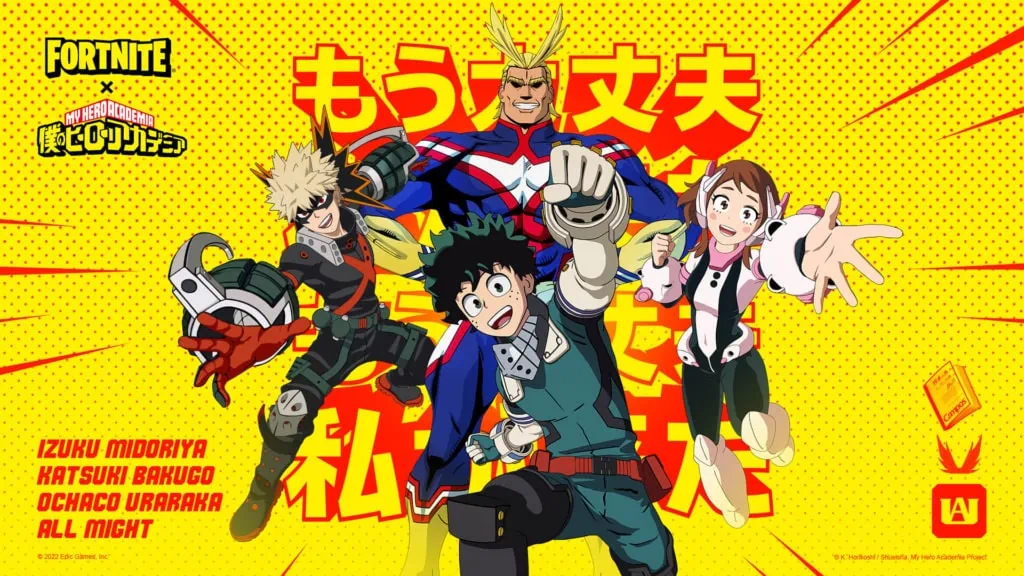
That distinction matters beyond gaming. If a partnership is meant to create engagement, we should be able to describe the experience it makes possible. A product can let someone carry a reference into daily life. An event can give fans a place to meet. An interactive experience can let them participate in a familiar world. Each asks something different of the brand, and each needs its own reason to exist.
I would also resist treating gamers and anime fans as interchangeable groups. Shared interests are a useful hypothesis to investigate. They do not tell us that every player follows the same series or that every fan wants the same merchandise. The more specific the creative idea becomes, the more specific our understanding of the audience needs to be.
Build the brief around a contribution
Before choosing a property, I would write down what the brand can contribute. That might be a distinctive product, a design capability, a useful service, or a place for people to gather. Then I would ask which part of the audience would value it and why the cultural connection improves it. If the answer depends entirely on putting a familiar face on something ordinary, the brief needs more work.
The details deserve time. Fans may care about a particular story arc, relationship, symbol, or visual treatment that a general audience misses. Research should include the work itself and the people who care about it. Listening to those people helps the team distinguish a meaningful reference from an interchangeable graphic.
Commercial planning belongs in the same conversation. Price, availability, production quality, and the customer experience shape how the collaboration is received. The creative idea and the delivery plan need to support each other. An exciting announcement followed by a disappointing product leaves the brand responsible for the disappointment.
Give people a reason to stay
The question after launch is whether interest in the collaboration has created interest in the brand. I would look beyond opening-week attention to the behavior that fits the original objective: product use, repeat visits, relevant inquiries, or purchases beyond the collaboration. Those signals need context, including the cost of the partnership and what the business would otherwise have done.
The larger lesson is to study people with fewer assumptions about where their interests belong. Fashion, entertainment, and gaming can meet naturally in someone’s life long before a brand team puts them together in a presentation. Understanding that overlap gives us a better chance of making something they would choose for themselves.
From the original article
The audio below accompanied the original 2023 article. It predates this revised essay and may include claims or examples that have since been removed from the text.