
Brand personality begins with the behavior beneath the surface. Editorial illustration created with AI.
A company can describe itself as friendly, confident, and curious without giving anyone a reason to believe it. Those words are easy to put in a brand book. The harder part is making them visible when someone asks a question, opens the product, or needs help after something goes wrong.
That is the useful way to think about brand personality: the recognizable character people infer from repeated encounters with a business. Advertising contributes to it. So do instructions, support policies, product decisions, and the way employees treat customers. If those encounters contradict one another, a clever voice guide will not resolve the confusion.
Humanizing a brand should make it easier to understand and relate to. It does not require pretending the company is everyone’s best friend. Sometimes the personality people value most is calm competence, particularly when they need an answer rather than another joke.
What personality adds to a product
Apple’s “Get a Mac” campaign turned competing computer identities into two people having a conversation. The series began in 2006, not 2005 as an earlier version of this article stated. Adweek’s campaign archive documents the ads released from 2006 through 2009.
The contrast made the positioning immediately visible: a casual, self-assured Mac beside a more formal PC. My interest in the campaign is the mechanism. Product differences became situations and personalities a viewer could follow without first studying a comparison table. That does not establish that one campaign single-handedly changed a generation of buyers, but it shows how character can organize a message.
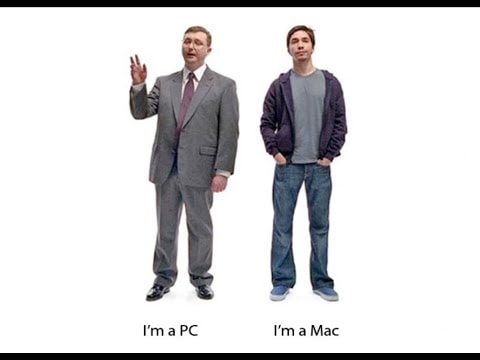
The original article’s campaign compilation is retained below. It is an advertising example, not an objective comparison of current computers.
Define the character before choosing the costume
Jennifer Aaker’s 1997 research on brand personality identified five dimensions: sincerity, excitement, competence, sophistication, and ruggedness. The framework gives teams a vocabulary for discussing perceptions. It is not a rule that every brand must fit neatly into one of five boxes.
A useful personality is specific enough to guide a choice. “Confident” might mean explaining a recommendation clearly and acknowledging its limits. It should not automatically mean sounding aggressive. “Playful” might mean finding an unexpected way to demonstrate a benefit. It should not mean treating every customer problem as material for a punch line.
Start by comparing how the organization describes itself with what customers actually experience. Reviews, support conversations, interviews, and the language people use without prompting can reveal a gap. That gap is more useful than another internal vote on whether the brand is adventurous.
Seven steps for building a believable brand personality
1. Visualize a person, then describe how they behave
Imagining the brand as a person can make an abstract discussion concrete. How would this person introduce themselves? What would they notice in a conversation? Would they explain patiently, challenge an assumption, or help someone feel comfortable trying something unfamiliar? These questions reveal more than deciding whether the person wears a suit or sneakers.
Use visual references to explore character, but do not confuse appearance with evidence about an audience. Clothing, age, or a particular style does not reliably tell you what a person values. The exercise is a creative starting point. Customer research still needs to test whether the proposed character makes sense to the people you want to reach.
Choose a small number of traits and give each a behavioral definition. A hypothetical approachable technology brand might explain unfamiliar terms, make setup easier, and answer basic questions without making customers feel foolish. That definition can guide design, writing, and support in a way that the word “approachable” alone cannot.
2. Use stories to make the character visible
A story becomes useful when it demonstrates how the brand sees a problem. Show the decision, the obstacle, and the reason behind the solution. A product-development story might reveal curiosity. A clear explanation of a mistake and its correction might demonstrate accountability. Neither requires inventing a heroic origin story.
Analogies can help when they reduce the work required to understand something. The “Get a Mac” characters made a technical contrast social and familiar. The lesson is not that every product needs a mascot. It is that an explanation becomes easier to follow when the audience has a recognizable frame for it.
3. Connect emotion to a credible product or belief
Emotion is strongest when it has a reason to be there. Dove’s Real Beauty pledge connects its communication with representation, self-esteem, and a stated commitment to the people shown in its advertising. The strategic idea is broader than a product feature, but it still belongs to the territory in which the brand operates.
Nike’s “Just Do It” work can similarly be read as a voice of encouragement and determination. That is an interpretation of the creative platform, not proof that every consumer feels the same way about the company. The practical question is what emotion your brand can credibly help someone experience: confidence, relief, curiosity, belonging, or something else that matters in the situation.
Then identify the evidence. If the promise is confidence, does the customer understand what to choose? If it is relief, have you removed a frustrating step? A campaign can introduce the feeling. The experience has to support it.
4. Keep the character consistent and adapt the tone
Consistency does not mean speaking identically in every context. A person can be funny at dinner and serious when a friend needs help without becoming a different person. Brands need the same judgment. A playful launch and a straightforward apology can come from the same underlying character.
Document how the traits behave in different situations. Show an announcement, a support response, a delay notification, and a difficult answer. Include examples of what the brand would avoid. This turns a personality statement into an operating tool and helps teams recognize when a familiar tone is inappropriate.
The customer should recognize the same values across the website, packaging, social channels, and service experience. The wording and intensity can change. Respect, accuracy, and responsibility should not disappear when the format changes.
5. Learn the audience’s language without performing it
Speaking naturally to an audience begins with listening. Notice how people describe the problem, what they already understand, and which details they consider meaningful. A technical community may appreciate precise terminology. Someone trying to solve an unfamiliar problem may need the same information explained more patiently.
Age alone is not a voice strategy. Assuming that younger customers require memes and emojis is a reliable way to sound like a committee has recently discovered the internet. Cultural fluency comes from understanding references, interests, and context, not borrowing the most visible slang.
For a hypothetical fitness brand serving busy parents, that might mean discussing manageable routines and time constraints. It should not mean pretending every parent has the same life. Specificity helps people recognize their situation; stereotypes flatten it.
6. Make the values survive a difficult decision
Pepsi’s 2017 advertisement featuring Kendall Jenner remains a useful caution. In its April 5 statement, Pepsi apologized, said it had missed the mark, and announced that it was removing the content and stopping further rollout. The documented response is enough to make the point without inventing a measure of long-term reputational damage.
My reading of the failure is that emotionally charged imagery requires more than a broadly positive intention. A brand needs to understand the people, conflict, and meaning it is borrowing. The original commercial below and the subsequent Saturday Night Live parody are retained as different kinds of evidence: one shows the execution, the other a cultural response. The parody is not a factual account of how the advertisement was produced.
Nike’s “Dream Crazy” work with Colin Kaepernick offers a different example of a brand taking a visible position. The One Show archive identifies the campaign and its creative credits. That does not justify the broader claim that controversy automatically builds trust or increases sales. A campaign can reinforce meaning for one audience while alienating another.
Before attaching the brand to a cause, ask what the organization is prepared to do when the position becomes inconvenient. Public statements are easy to produce. Sustained behavior provides the more demanding test.
7. Show the people doing meaningful work
People can make the organization easier to understand, especially when they explain something useful. Show why a designer made a choice, how a service team solves a recurring problem, or what a founder learned from a decision that did not work. A staff photograph can introduce a person. Their judgment and contribution give the introduction substance.
Ben & Jerry’s describes its social mission as something integrated into day-to-day business activity. Whether a company uses founders, employees, suppliers, or community partners in its storytelling, that connection between stated values and actual work is the part worth examining.
Participation should be voluntary. Employees do not owe the brand access to their private lives, and a human-centered identity should not depend on making everyone perform for the camera. There are useful stories in the work itself.
Check whether the personality is helping
Review real touchpoints together instead of judging isolated posts. Does the proposed personality clarify the product? Does it help people know what to expect? Can customer-facing teams use it when the answer is difficult? If the voice attracts attention but makes the service harder to trust, attention is the wrong success measure.
Inclusivity also needs practical attention. Humor can exclude people who do not share a reference. Informal language can become unclear. A persona imagined around one narrow kind of person can make the brand feel unwelcoming to others. Test comprehension and the quality of the interaction, not merely whether the creative team finds the work entertaining.
Give the personality an operational home
The same standards should apply to automated communication and customer-experience tools. A conversational assistant still needs accurate information, clear limits, and a route to human help. Giving software a friendly name does not make an unresolved problem feel personal in a good way.
Assign responsibility for the guidance, collect examples from the teams using it, and revise it when actual interactions expose a weakness. A brand personality should become easier to apply as the business learns. It should not remain a set of adjectives everyone agrees with and nobody uses.
Become recognizable through what you do
A believable brand personality gives people a consistent sense of who they are dealing with. The seven steps above are a starting structure, not a promise that customers will love the result. That response depends on whether the character is relevant, distinctive, and supported by experience.
The goal is not to persuade people that a corporation is secretly their friend. It is to make the business more understandable, more considerate, and more consistent. When those qualities are real, the voice has something worth expressing.
Frequently asked questions
What is a brand personality example?
A brand personality example is Apple’s portrayal as innovative, sleek, and user-friendly, fostering a sense of modern sophistication and forward-thinking among its consumers.
What are the 5 brand personalities?
Jennifer Aaker’s five brand-personality dimensions are sincerity, excitement, competence, sophistication, and ruggedness. They are a research framework, not five mandatory personas or an exhaustive description of every brand.
What are the brand personalities of a company?
The brand personalities of a company refer to the set of human characteristics attributed to the brand, shaping how consumers perceive and relate to it, such as being reliable, playful, luxurious, or adventurous.
Original audio edition
This audio accompanies the original article and may differ from the revised text.