
AI customer experience software is easiest to compare when you stop asking which platform is “best” and start asking what work the system must do, what it may touch, and when a person must take over.
I originally reviewed and demoed 11 platforms while managing a support and sales-support organization of roughly 40 people handling more than 18,000 tickets a month. At that scale, even routine questions create real operational pressure. The goal was never to remove people from the experience. It was to give customers faster answers to predictable questions while keeping human attention available for the cases that require judgment.
The market has changed considerably since that first review in 2023. Products have expanded, repositioned, or changed ownership. Fixed prices and numerical ratings age quickly, so this updated guide focuses on durable differences: operating fit, knowledge quality, actions, escalation, governance, and measurement. Vendor positioning was rechecked on September 10, 2026.
In this article
Start with the operating model, not the demo
A polished demo can make every platform look capable. The meaningful differences appear when the system meets your real knowledge, policies, channels, permissions, and edge cases. Before inviting vendors in, define the job.
| Decision | Question to answer first | Why it matters |
|---|---|---|
| Audience | Is this for customers, employees, sales prospects, or field technicians? | Several products in the original list now serve very different audiences. |
| Channel | Do you need chat, email, voice, social, or an internal work surface? | Channel coverage changes the content, testing, and escalation design. |
| Knowledge | Which sources are approved, current, and permission-aware? | An AI agent cannot be more reliable than the operating knowledge behind it. |
| Action | May it only answer, or also update orders, issue refunds, and change accounts? | Action introduces authorization, audit, and recovery requirements. |
| Escalation | What must always reach a person, and what context follows the handoff? | A fast answer is not a good answer if the customer must start over. |
| Risk | Which errors would be inconvenient, expensive, discriminatory, or unsafe? | The risk level should determine testing and human oversight. |
This framing also makes procurement more honest. A customer-service agent, a sales chat agent, an employee assistant, and a field-service diagnostic system can all use generative AI, but they are not substitutes for one another.
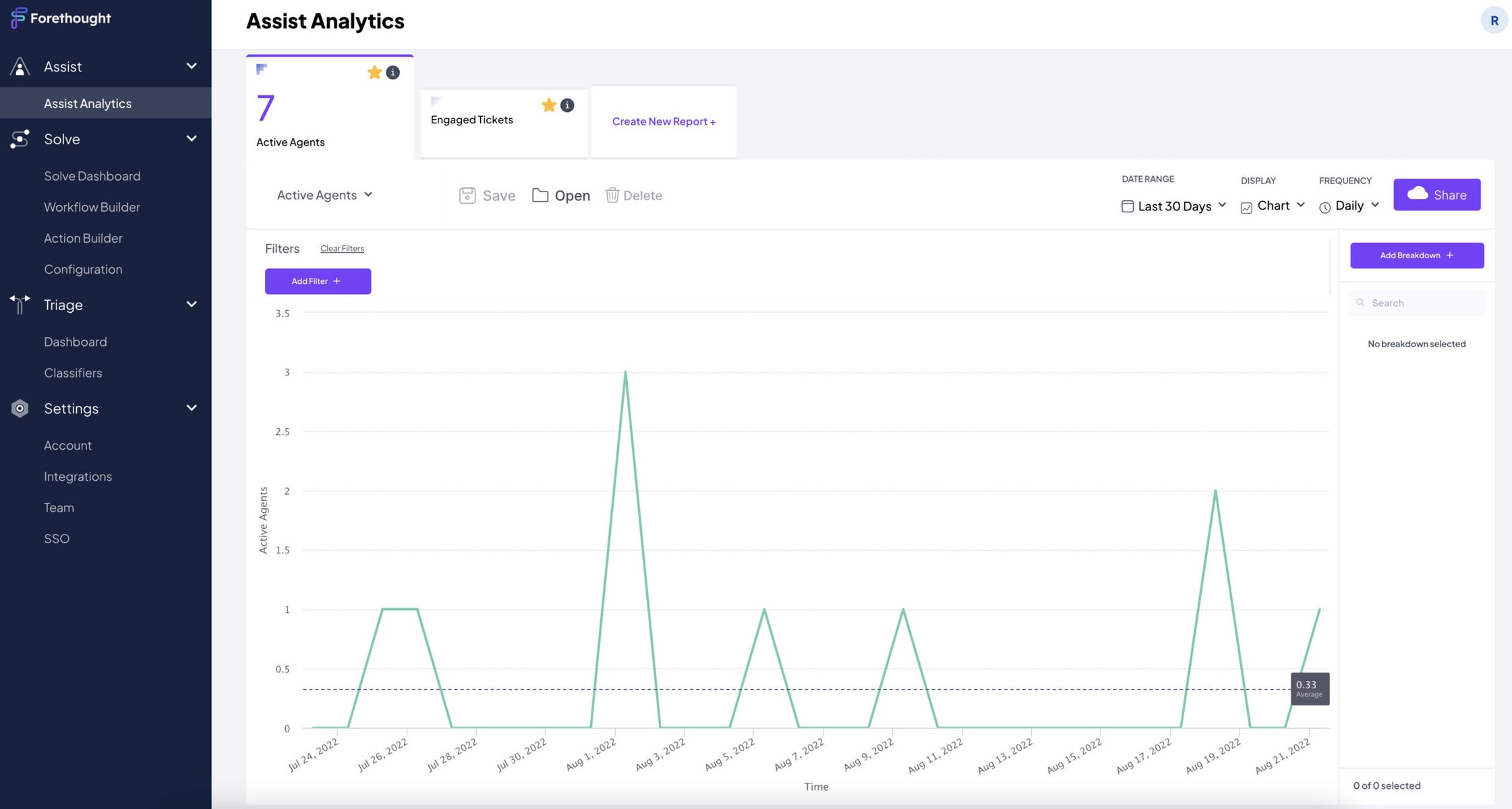
Eleven platforms, compared by fit
This is not a scorecard. It is a map of where each name from the original review appears to fit now. Product claims come from current first-party pages and still need to be tested against your environment.
| Platform | Current fit to investigate | What to verify |
|---|---|---|
| Ada | Enterprise customer-service automation across messaging, voice, and email. | How its playbooks, integrations, testing, safety controls, and multilingual continuity work with your stack. |
| Fin by Intercom | A customer-facing agent for service, sales, and ecommerce that can work with several help desks. | Knowledge controls, procedures, outcome-based pricing, testing, observability, and handoff behavior. |
| Freshdesk AI | Teams that already use, or want to consolidate around, the Freshdesk service environment. | Which capabilities are native to your plan, channel coverage, data residency, and the separation between agent assist and autonomous resolution. |
| Kommunicate | Chat-led customer automation with an emphasis on deployment and integrations. | Complex action handling, governance at scale, evaluation tools, and total implementation effort. |
| Aisera | Broad enterprise automation spanning customer service and internal functions. | Roadmap and integration implications following its acquisition by Automation Anywhere, plus permissioning and observability across domains. |
| DeepConverse | A historical option from the 2023 review. | I could not verify a current first-party product page on September 10, 2026. Treat the old profile as archival, not as a current recommendation. |
| Netomi | Enterprise experience programs that want a vendor-led discovery process. | The public site now provides limited product detail. Require a current architecture, channel, security, evaluation, and customer-reference review. |
| Forethought | Customer-support teams looking across resolution, triage, quality assurance, agent assist, and knowledge improvement. | How the multi-agent model shares context, prevents conflicting actions, and measures end-to-end resolution. |
| Salesloft Chat Agents, formerly Drift | B2B sales conversations, qualification, and revenue workflows. | Do not compare it as a general customer-service platform unless your primary use case is sales-led. |
| Ascendo | Technical support and field service where asset history, manuals, service records, and technician knowledge must connect. | Evidence for your equipment and workflows, integration depth, diagnostic safeguards, and the technician’s authority to override. |
| Moveworks | An employee assistant that searches and acts across workplace applications. | It belongs in an employee-experience or enterprise-service comparison, not an external CX shortlist by default. |
What changed since 2023
The clearest lesson from revisiting the list is that categories move faster than rankings. Intercom now presents Fin as a broader customer agent. Drift sits within Salesloft as a sales chat product. Ascendo emphasizes physical and field-service intelligence. Moveworks remains centered on the workforce. Aisera says it has been acquired by Automation Anywhere. A list that once looked like 11 comparable chatbots now spans at least four operating categories.
That is why I removed fixed ratings, “best” badges, old price claims, and dated interface screenshots. They create an appearance of precision without showing whether the product fits the actual work. A useful comparison should help you build a shortlist, not manufacture a winner.

How to run a useful pilot
Use representative work, including the cases you do not want the system to resolve alone. A pilot made entirely from clean FAQs tests retrieval under ideal conditions. It does not test the operation.
- Build a case set. Include routine questions, ambiguous requests, policy exceptions, angry customers, missing information, account-specific actions, and requests that must be refused or escalated.
- Freeze the source set. Record which knowledge articles, policies, tickets, and system fields the agent may use. Fix contradictions before blaming the model.
- Define acceptable behavior. Specify what a correct answer contains, when the agent should ask a question, and when it must stop.
- Test the handoff. Confirm that identity, intent, steps already attempted, relevant policy, and conversation history reach the human agent.
- Test change. Update a policy, remove an article, revoke a permission, and verify that the system follows the new state without relying on stale material.
- Run a limited release. Start with low-risk intent categories, review failures, and expand only when evidence supports it.
The NIST AI Risk Management Framework is useful here because it treats trustworthiness as something designed, measured, and managed throughout the system lifecycle. Its generative-AI profile adds practices for risks that appear specifically in generative systems.
Measure resolution, not deflection
Deflection can look impressive while hiding a worse experience. A conversation may avoid a ticket because the customer gave up, opened a second channel, or received a confident but incomplete answer. Pair automation metrics with customer and operational outcomes.
| Measure | What it reveals |
|---|---|
| Verified resolution rate | The share of cases completed correctly without repeat contact inside an agreed window. |
| Escalation quality | Whether the right cases reach the right person with useful context. |
| Customer effort | How many turns, channels, and repeated explanations the customer needed. |
| Critical error rate | Incorrect policy, authorization, safety, privacy, or account actions, tracked separately from minor wording issues. |
| Human workload | Whether automation removes routine work or simply creates review and cleanup elsewhere. |
| Knowledge health | Coverage gaps, contradictory sources, stale material, and time to correct them. |
The human system still matters
At 18,000 tickets a month, speed matters. So do consistency, training, morale, and the customer’s sense that someone understands the real problem. AI can retrieve knowledge, draft language, classify work, complete approved actions, and surface patterns. People still define the policies, repair the knowledge, handle exceptions, decide what deserves empathy, and remain accountable for the system.
My current recommendation is simple: choose the operating category first, then test two or three credible options against the same case set. Do not buy a resolution-rate promise. Buy the system you can govern, measure, and improve, with a handoff your customers and agents can trust.