
AI can answer a question in seconds. That does not mean it understands the customer, knows when the source is wrong, or recognizes when a simple request has become a serious problem. The technology is only one part of the experience. The operating model around it determines whether the result feels useful or careless.
I learned this while researching an AI customer-service system for a client. We had years of support tickets, knowledge-base articles, customer journeys, and chat conversations. My first instinct was to ask how much of the work could become automated and hands-off. The better question was more practical: what should the system be allowed to do, what evidence should it use, and when should a person take over?
Start With the Service Job, Not the Bot
“Add AI” is not a service objective. A useful starting point is a narrow job with a clear boundary: find the right troubleshooting article, summarize a case for an agent, classify an incoming request, draft a reply for review, or complete a low-risk self-service task.
Each job needs its own definition of success. A fast answer is not a good answer if it sends a customer through the wrong process. Measure what the customer actually experiences: resolution, accuracy, repeat contact, escalation quality, abandonment, and the effort required from both the customer and the support team.
| Service job | Good first use | Human boundary | Useful measure |
|---|---|---|---|
| Knowledge retrieval | Surface approved articles | Escalate when sources conflict | Correct-source rate |
| Agent assistance | Summarize and draft | Agent approves the action | Handle time and correction rate |
| Request routing | Classify intent and urgency | Person reviews sensitive cases | First-route accuracy |
| Self-service | Bounded, reversible tasks | Handoff on ambiguity or failure | Resolution without repeat contact |
Your Knowledge Base Is the Product Underneath the Product
At CyberPowerPC, I wrote hundreds of knowledge-base articles. I eventually tried to move that work to the support team, but subject expertise and clear writing are different skills, and the team did not have unlimited time. The responsibility came back to me, which meant the library could not grow as quickly as the questions did.
That experience made one part of an AI-service demo especially interesting. Forethought showed me a workflow that could identify recurring questions without supporting articles, draft new material, and route it to a person for review before publication. The valuable idea was not that AI could write by itself. It was that customer conversations could reveal gaps in the service system, while a human still controlled what became trusted knowledge.
Before connecting a model, assign owners to the sources it will use. Remove obsolete instructions, resolve contradictions, add review dates, and separate approved policy from informal agent notes. Retrieval can make a library easier to use, but it can also make bad information easier to distribute.
Design the Handoff Before the Conversation
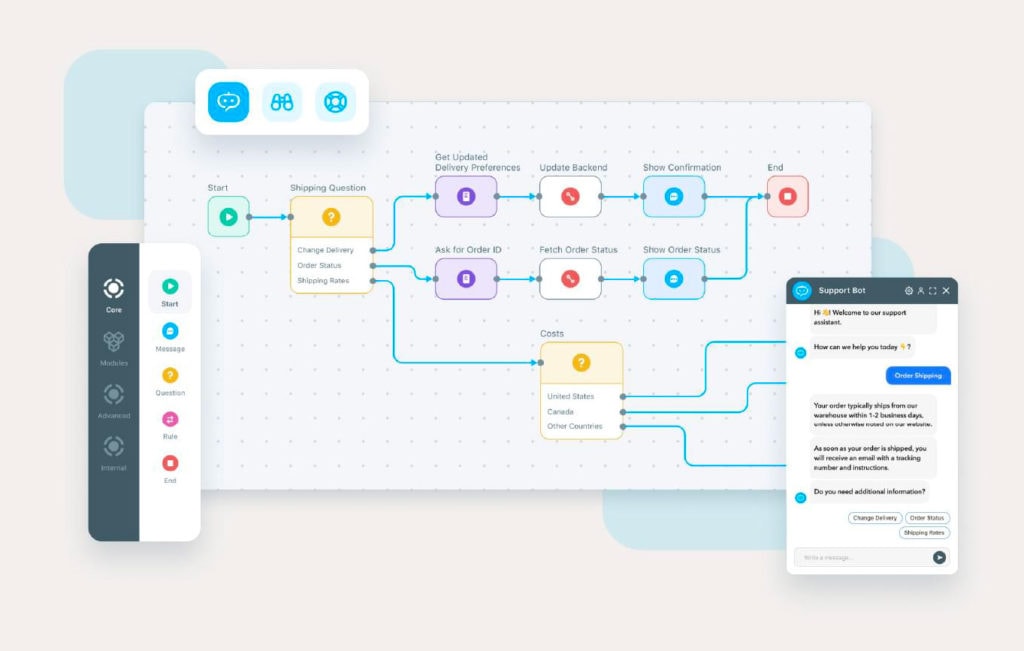
A customer should not have to defeat the bot to reach a person. Define the escalation path before launch, including what triggers it, what context transfers with the case, who receives it, and what happens outside staffed hours. The human agent should see the conversation, the sources used, the attempted action, and the reason for escalation. Otherwise automation merely moves effort from the company back to the customer.

Sentiment can help prioritize review, but it is not a substitute for judgment. In a Netomi demonstration, I saw a system use positive or negative signals to help decide when a conversation might need escalation. That can be a useful input. It should not become the sole gatekeeper, especially when customers communicate differently across cultures, languages, disabilities, or stressful situations.
Connect Systems With the Least Authority Necessary
Customer-service tools often touch account records, order history, payment details, internal notes, and authentication flows. Integration is not simply a feature checklist. Decide which data the system can read, what it can write, which actions are reversible, and which actions always require confirmation.
The NIST Privacy Framework treats privacy as enterprise risk management, not a badge supplied by a vendor. Map the data flow, minimize collection, set retention rules, limit access, and create a response plan for mistakes. Legal requirements vary by location and use case, so “compliant” should never be accepted as a complete answer without evidence.
Pilot With Real Questions and Deliberate Failure Cases
A polished demo is designed to show the system at its best. A pilot should reveal where it breaks. Build an evaluation set from real customer questions, including incomplete descriptions, misspellings, multiple intents, angry language, unusual account states, unsupported requests, and questions whose correct answer is “I do not know.” Keep the set separate from the material used to configure the system.
Review both the answer and the behavior around it. Did the system use an approved source? Did it invent a policy? Did it take an action without confirmation? Did it reveal information it should not have? Did it recognize uncertainty and hand the case to the right person?
This is consistent with the NIST AI Risk Management Framework, which places trustworthiness across design, development, use, and evaluation. NIST’s Generative AI Profile, published July 26, 2024 and updated April 8, 2026, adds guidance for risks specific to generative systems. The practical lesson is simple: evaluation is an operating habit, not a launch-day event.
Monitor the Experience, Not Just the Automation Rate
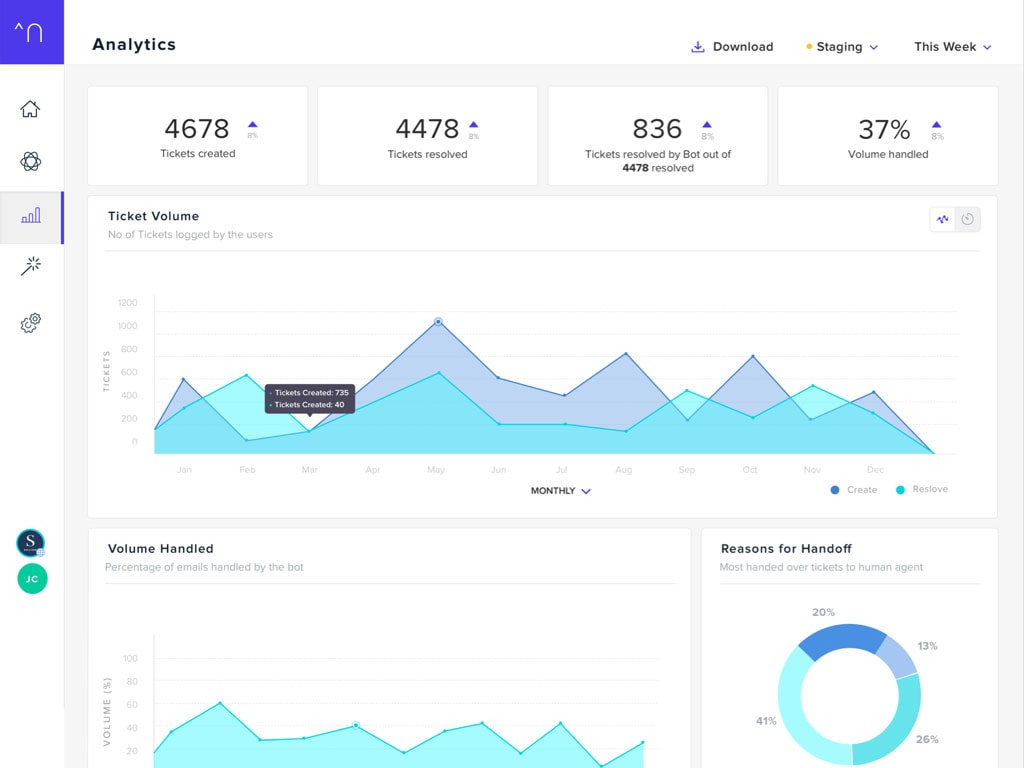
Automation rate is seductive because it produces a clean number. It can also reward the wrong behavior. A system may keep more conversations away from agents by trapping customers in longer, less useful interactions. Pair operational metrics with audits of accuracy, unresolved intent, repeat contact, complaints, accessibility, and escalation quality.
Create a rhythm for reviewing failures and updating sources. Give frontline agents a fast way to flag bad answers. Track changes to prompts, retrieval rules, models, integrations, and policy documents so the team can connect a new problem to a recent change. When the system cannot be trusted for a task, narrow its authority until it can.
Questions to Ask Before You Buy
- Which exact service jobs will the system perform, and which are out of scope?
- Can it show the approved source behind an answer?
- How are permissions, customer data, retention, and third-party model use controlled?
- What actions can it take, and which require human approval?
- How does a customer reach a person, and what context follows the handoff?
- Can our team test it against our own cases before committing?
- How are failures logged, corrected, and re-evaluated after changes?
- What is the full cost of implementation, supervision, integration, and ongoing maintenance?
If you need to compare specific vendors, my companion guide to AI customer-experience platforms organizes them by operating fit rather than a universal ranking.
The Goal Is Better Service
The best AI customer experience does not prove how human the machine can sound. It gives customers a reliable path to the right answer, makes routine work lighter for the team, and knows when the situation deserves a person.
Start narrow. Build the knowledge. Limit the authority. Test the failures. Design the handoff. Then expand only when the evidence says the service is genuinely better.
Editorial Process:
Our reviews are done by myself and come from my own experiences. I may not have used some products recently, so my reviews may reference details such as specifications and features that may have changed since I last used them. Let me know if you find any discrepancies.
Some of the links in this article may be affiliate links, which can compensate us at no cost if you decide to purchase a paid plan. These are products we’ve personally used and stand behind. This site is not intended to provide financial advice. You can read our affiliate disclosure in our privacy policy and editorial disclosure.