
The metaverse did not arrive as one seamless digital universe. Something more credible is taking shape instead: a collection of spatial tools that make distance, objects and identity feel less abstract.
When Mark Zuckerberg began describing Meta’s version of the metaverse, I wanted to believe it. The science-fiction and anime fan in me imagined something closer to The Matrix or Sword Art Online: expressive people, convincing environments and a genuine sense of being somewhere together. The first public avatars looked more like Nintendo Miis. The ambition was enormous; the experience felt strangely small.
Then, in 2023, I watched Zuckerberg and Lex Fridman speak through Meta’s photorealistic Codec Avatars. The technology was still a research demonstration, not a consumer product, but it changed the quality of the question. Instead of asking whether people would spend their lives in a cartoon universe, it became reasonable to ask whether digital presence could preserve more of the human signals that video calls flatten.
In this article
The name got ahead of the product
“The metaverse” was presented as a destination before the industry had agreed on the roads, rules or reasons to visit. It bundled social worlds, virtual reality, augmented reality, digital goods, remote work and gaming into one oversized promise. That made the story easy to repeat and almost impossible to deliver.
The public was not wrong to be skeptical. A convincing future cannot be built by asking people to tolerate an inferior present indefinitely. A headset can be technically impressive and still be uncomfortable. An avatar can be expressive and still feel artificial. A virtual office can reproduce all the ceremony of work without improving the work itself.
The more interesting development is that the underlying technologies kept advancing after the buzzword cooled. Researchers continued improving human capture and rendering. Hardware makers improved passthrough, hand tracking and spatial interfaces. Developers gained better tools for placing digital content within physical environments. The single grand narrative weakened, but the components became more useful.

Why the Codec Avatar demo mattered
The 2023 conversation between Zuckerberg and Fridman was compelling because it focused on a narrow problem: how can two people in different places feel more present to one another? Their digital faces reproduced eye contact, expression and subtle movement with far more fidelity than Meta’s earlier public avatars. You can watch the original interview and demonstration.
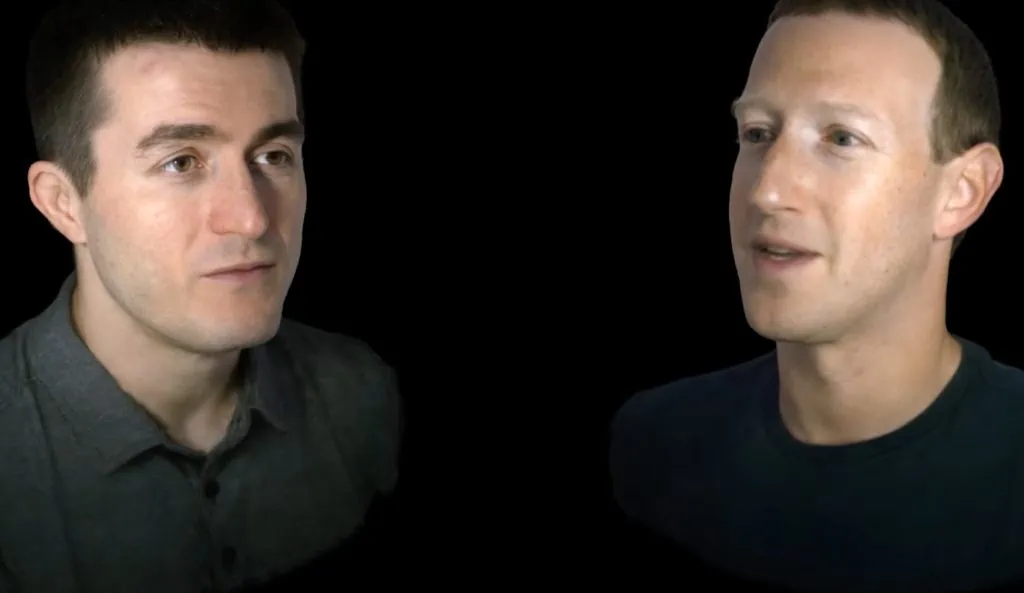
A Codec Avatar is not simply a photograph pasted onto a 3D head. The system creates a model that can be driven by a person’s expressions and rendered from changing viewpoints. The difficult work is not only capturing a face; it is preserving identity, movement, hair, lighting and expression while keeping the result responsive enough for conversation.
That challenge remains active research. Meta’s later Instant Codec Avatar demonstration showed a path from specialized studio capture toward phone-based scanning. A 2025 research paper on Layered Universal Codec Avatars addressed another stubborn problem: representing faces and hair as distinct layers while retaining real-time performance. Progress is visible, but a research result is not the same as a broadly available, effortless product.
This distinction matters. The demo did not prove that everyone wants a metaverse. It proved that remote presence can improve when technology preserves more of what people actually read in a face.
The practical future is mixed
I once assumed full virtual reality was the ultimate destination and augmented reality was an intermediate step. I now think that hierarchy is too simple. Most people do not need reality replaced. They need digital information to fit the task in front of them.
That is why “spatial computing” has become a more useful frame than “the metaverse.” Apple’s current platform work, for example, emphasizes windows, volumetric objects, shared experiences, immersive media and enterprise tools rather than one universal social world. Its visionOS 27 developer overview describes multiple paths into spatial experiences, including ordinary applications, purpose-built immersive software and streamed computer experiences. The 2025 enterprise API guidance points to concrete uses such as object tracking, collaborative coordinate systems, remote diagnostics and industrial inspection.
| Experience | Useful when it improves | Question it still must answer |
|---|---|---|
| Photorealistic telepresence | Expression, eye contact and social context | Is the capture process accessible and consensual? |
| Mixed-reality work | Visualization, training and spatial collaboration | Is it better than a screen for this task? |
| Immersive entertainment | Scale, participation and a sense of place | Does the experience justify the equipment and isolation? |
| Spatial web content | Exploration without a separate app or closed world | Can it remain portable and broadly compatible? |
This is less cinematic than the original metaverse pitch, but it is a better product strategy. Start with a job people already need to do. Add immersion only where depth, scale, movement or presence makes that job meaningfully easier.
The building blocks were already here
Part of the reason I remained patient with the technology is that I had already experimented with earlier pieces of it. Leap Motion used infrared cameras and LEDs to track hand movement. Intel RealSense cameras could capture depth and produce textured 3D representations. Neither product delivered a complete virtual world, but both made an invisible layer of computing feel tangible.
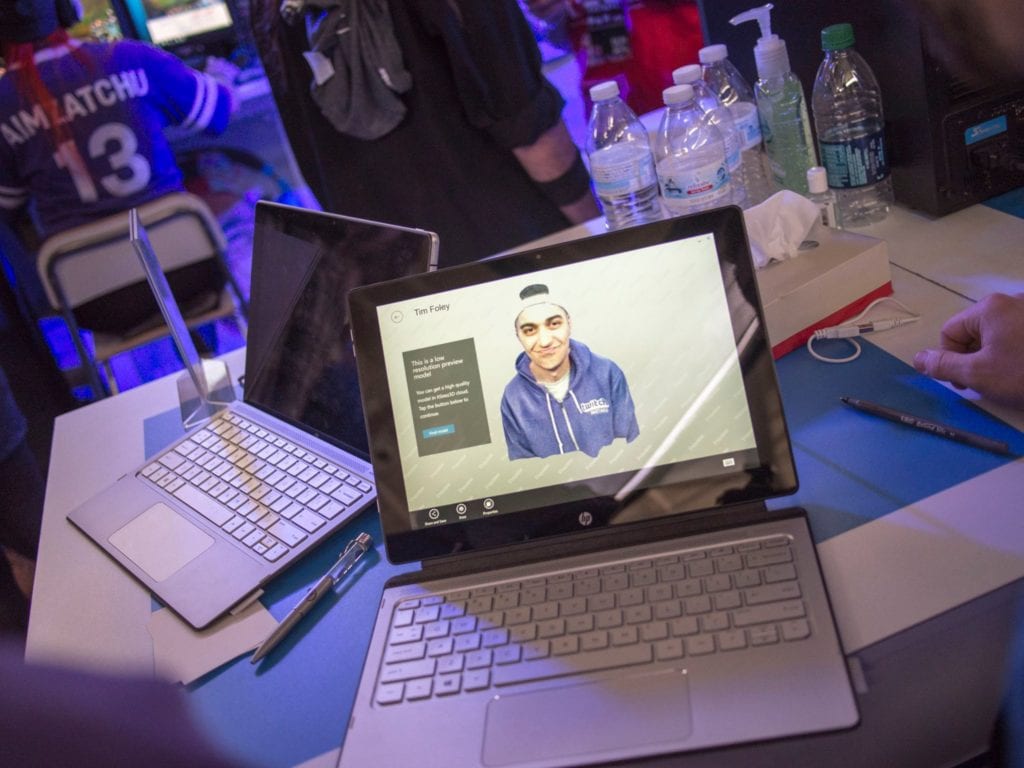
The lesson from those systems is that breakthroughs often arrive as an accumulation of imperfect parts. Hand tracking gets faster. Capture becomes easier. Rendering becomes more efficient. Open standards reduce the cost of supporting multiple devices. The Khronos OpenXR standard, for example, gives developers a common interface across augmented- and virtual-reality platforms instead of forcing every experience to begin again for every headset.
No single improvement creates the future on its own. Together, they can turn a spectacular demonstration into ordinary infrastructure.
Presence is not the same as trust
The closer a digital representation gets to looking and moving like a real person, the more seriously we have to treat consent and identity. A high-fidelity face model is not a decorative profile picture. It can carry biometric information, reproduce a person’s likeness and create convincing interactions they never participated in.
That makes provenance, permissions and control part of the product—not a legal appendix. People should understand what is captured, where it is processed, how long it is retained, whether it can be exported and how they can revoke its use. Shared spaces also need clear moderation, age-appropriate defaults, personal boundaries and reliable ways to leave or report an interaction.
There is also a simpler human risk: mistaking fidelity for value. A meeting does not become useful merely because the avatars look real. A virtual store does not become persuasive merely because shoppers can walk through it. Presence can improve communication, but it cannot rescue a weak purpose.
What brands should learn
Brands should resist rebuilding the metaverse hype cycle under a new name. The opportunity is not to announce that you have entered a virtual world. It is to find moments where space changes the experience.
- Begin with the task. Training, visualization, collaboration and entertainment have different requirements.
- Choose the lightest useful medium. A well-designed page or video may work better than an immersive environment.
- Design for access. Provide screen-based paths where a headset is unnecessary or unavailable.
- Treat identity as sensitive. Likeness, voice and behavioral signals require explicit control.
- Measure the outcome. Time saved, comprehension, confidence and repeat use matter more than novelty.
The metaverse may never become the singular destination its advocates described. That does not make the underlying ambition meaningless. The future I find credible is quieter and more distributed: digital people who feel more present, virtual objects that help us understand physical ones, and spatial experiences that appear when they improve the moment and disappear when they do not.
That future is less like escaping into The Matrix. It is more like giving computing a better sense of where we are—and a more human way to meet us there.