
A customer walks into a computer store and says they have $1,000 to spend. One salesperson immediately points to a machine that costs $999. Another asks what the computer is for. Gaming? Editing video? Working from home? A gift for a child? Do they already own a monitor? Does portability matter more than performance? The first salesperson has answered the request. The second is trying to understand it.
We have always called that difference good customer service. Yet much of the excitement around AI shopping assistants celebrates the first salesperson as a technological breakthrough. Give an assistant a budget and a product category, and it returns a tidy shortlist. Connect it to checkout, and it can help finish the purchase. That’s useful. It also skips the question that separates a good recommendation from a good outcome: did the customer explain enough for the assistant to know what they actually needed?
The customer’s question is not always the customer’s problem
Ask for the best running shoes under $150, and an assistant can produce five perfectly legitimate options, all in stock and under budget. But are the shoes for roads or trails? Everyday walking or serious training? Is the buyer replacing a pair they already love, or looking for something completely different? Does fit matter more than appearance? The assistant can satisfy every condition the customer stated and still miss the one that would have changed the answer.
My wife recently ran into a version of this with an AI assistant. After bleaching her hair, she asked whether jet-black or dark-brown dye would fade faster. It gave her a comparison. But the more consequential question was how to get back toward her natural color after bleaching, and once she explained that context and goal, the advice changed. Her first question wasn’t foolish. It simply wasn’t the whole problem, and neither she nor the assistant had surfaced the information that mattered most.
Search engines trained us to do that work ourselves. When Google didn’t return what we needed, we added a brand name, a location, a technical specification, or some other qualifier, and tried again. Refining the question was our job. Conversational AI has a chance to take on some of that job, but only if it has the judgment to ask a question before rushing toward an answer.
That doesn’t mean interrogating every shopper. Some people genuinely don’t care which brand of basic supplies they buy. A useful assistant might simply ask whether there are any preferences it should know about, then respect the answer. The goal isn’t the longest conversation. It’s removing the assumptions most likely to lead to a disappointing purchase.
Helping people find what they want is only half the opportunity
Shopping has always involved two jobs. The first is serving demand that already exists: find the product, compare credible alternatives, confirm availability, and make buying easy. The second is helping people discover something they might value but hadn’t considered. Retailers, salespeople, advertisers, and brands have always worked on both. The conversation about AI shopping, so far, is almost entirely about the first.
A good salesperson pays attention to a customer’s history without treating it as a permanent instruction. Someone who has bought gaming computers for years may now need a machine for a completely different purpose. An assistant could use past behavior to narrow the starting options, then ask whether the customer has considered another configuration, product, or approach. That one question opens the door to discovery instead of locking the person inside a prediction built from their previous purchases.
This matters to marketers because demand isn’t a fixed quantity waiting to be harvested. Products, experiences, and cultural associations can make people care about things they never searched for. An AI could become excellent at anticipating familiar requests and still be surprisingly poor at introducing useful novelty. Which way it goes will depend on how well its recommendations balance memory with curiosity.
Retailers and independent agents are fighting different, overlapping battles
The major commerce platforms are not taking the same road. On October 21, Walmart announced Agent Profiles and an Agent Gateway, designed to let customers authorize outside AI agents to shop Walmart and Sam’s Club under permissions they control, such as requiring approval for each purchase or setting a spending limit. A week earlier, Shopify introduced Shop MCP, which lets compatible agents search products, build carts, and move to Shop Pay checkout once the shopper confirms the total. The technology is pulling the assistant closer to the transaction, even if routine autonomous shopping is still far from an everyday consumer habit.
Amazon has taken a more guarded stance toward agents it hasn’t authorized. In a November 2025 statement about Perplexity’s Comet, Amazon argued that third-party shopping agents should be transparent and respect a retailer’s decision not to participate, and it alleged that Comet delivered a degraded shopping and customer-service experience. Perplexity pushed back publicly, calling Amazon’s actions bullying and arguing that AI agents acting for users are different from scrapers and bots. There are legitimate questions here about access, security, commercial incentives, and control. It would be too convenient to file every decision under either customer protection or corporate self-interest.
I don’t think a retailer’s assistant owes customers a referral to a competitor every time another store has a better price. It is a commercial service built to help people shop that retailer’s offerings, much like the salesperson on its floor. An independent assistant operating across many retailers has a different mandate and a broader obligation to compare. That distinction also affects which brands AI recommends and why customers trust those recommendations. Most consumers won’t consciously track that distinction. They’ll simply return to whichever tool proves useful and trustworthy often enough.
That leaves retailers competing on two fronts at once. They need their own assistants to serve existing customers better while staying discoverable to shoppers who start somewhere else. And the shopping assistant is only one piece of the intelligence they can deploy. Competitive pricing, inventory analysis, returns, abandoned carts, merchandising, and post-purchase support can all reveal where customers are dissatisfied and how to respond. A lost sale should be information the business learns from, not a signal that its assistant should start selling for the competition.
Advertising cannot be allowed to put the noise back
Imagine someone looking for red LEGO bricks. A useful assistant finds five relevant sets from different sellers. Now an advertiser pays to slip blue bricks into those results. Even with a sponsored label, the shopper has to notice the mismatch and discard it. That sounds trivial, but eliminating exactly that kind of sorting is the reason people turned to the assistant in the first place.
Sponsored products still have a place in AI shopping. A relevant paid placement can introduce a brand or alternative the customer wouldn’t otherwise encounter. Better yet, the shopper could ask the assistant why the sponsored option deserves a look and what tradeoffs it involves, turning the ad from a static interruption into an invitation to explore. But an assistant that serves four paid distractions for every useful recommendation is selling off the very advantage people came for.
The real test is whether an advertiser can simply outbid irrelevance. In an October 21 technical description of ChatGPT’s advertising system, OpenAI said ad selection runs in a service separate from ChatGPT’s answers, screens candidates for relevance and eligibility before a final auction, and treats showing no ad as a legitimate outcome. That is a stated design, not a guarantee that every ad will be useful. The longer-term question for every AI platform is whether those standards hold when more ad inventory would be financially tempting.
Best Buy is a reminder that the sale isn’t the only source of value
At a Best Buy advertising event in New York, I was struck by how the company described its evolution toward media and advertising, not just electronics retail. The familiar assumption is that a retailer wants every shopping journey to end at its own register. Best Buy’s strategy suggests that influencing a purchase can carry commercial value even when the transaction happens somewhere else.
A Circana marketing-mix modeling study released with Best Buy Ads on October 7 estimated that nearly 16% of the media-driven sales associated with Best Buy Ads occurred at competing retailers. That figure reflects modeled advertising influence. It doesn’t show that Best Buy earned commissions on those sales or that shoppers clicked an ad and left Best Buy’s website. It does show why a retailer might value its influence beyond the transactions it captures directly.
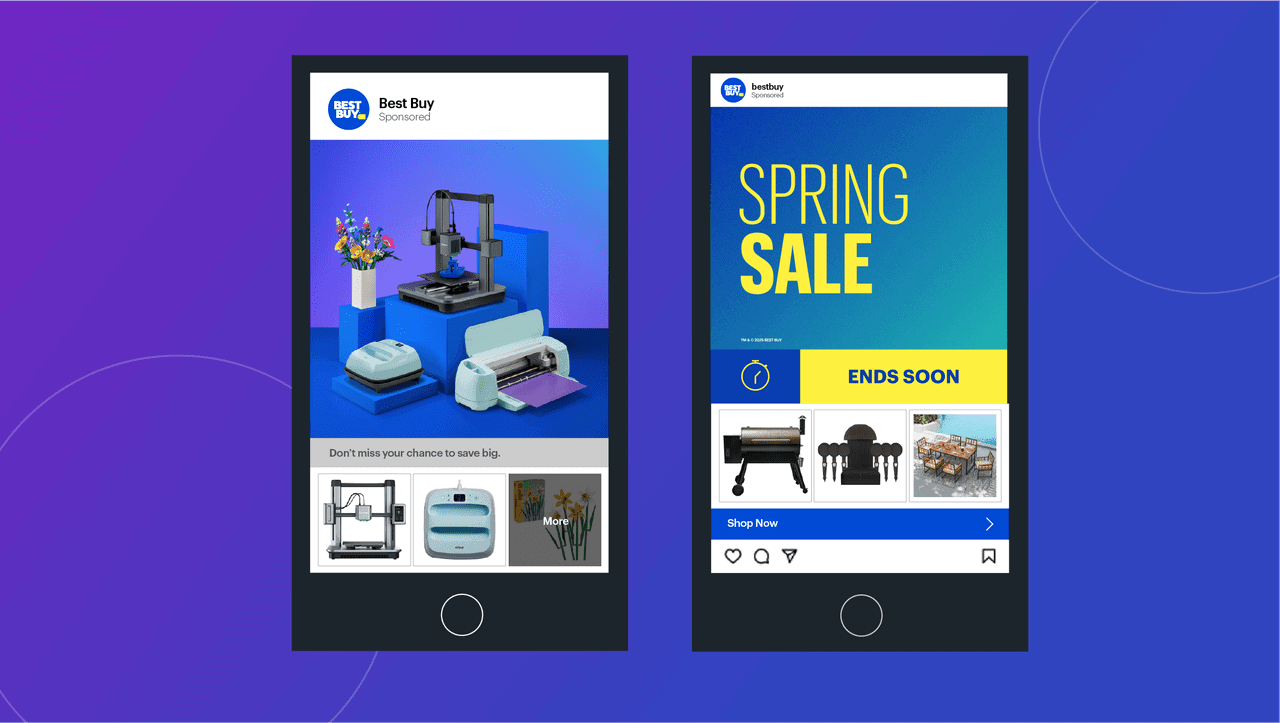
AI commerce could produce similar overlapping incentives. A platform might earn from its own retail sales, help merchants close sales elsewhere, and generate revenue from useful introductions. Those activities aren’t inherently incompatible. They become a problem when the business model rewards recommendations that leave customers less satisfied. The question is no longer which single company owns the customer relationship. Increasingly, several companies own different parts of it.
The purchase should start a feedback loop, not end the conversation
For all the attention on recommendation accuracy, the most important evidence may arrive after someone buys. Did the product do the job? Was the size right? Did setup go smoothly? Was support effective? Did the customer return it, buy from the retailer again, or tell a friend to use the assistant? A conversion records a decision. It doesn’t certify that the decision was good.
If I were evaluating an AI shopping program, I’d look at several connected measures. How long did it take a shopper to reach a suitable choice? Did they buy? Were they satisfied afterward? Did they keep using the assistant? Would they recommend it to someone else? A faster path to purchase is valuable only if it doesn’t come at the expense of better outcomes. More sales are good news, but high returns and disappointed customers can reveal what the conversion number concealed.
A conversational assistant is well positioned to follow up. After a reasonable interval, it might casually ask how the purchase worked out. If the person enjoys the exchange, it can learn more. If they routinely ignore follow-ups, it should adapt rather than turn a gesture of care into one more automated marketing sequence. Privacy choices and purchase permissions still need dependable protections, but the everyday interaction shouldn’t be reduced to a rigid decision tree.
That feedback can also flow back into the company. Repeated complaints about a complicated setup might point to a documentation problem. Dissatisfaction with fit could change which questions the assistant asks before recommending a product. A pattern of customers choosing a higher-priced alternative might reveal a product feature, service advantage, or brand association that the original recommendation model missed. A retailer doesn’t need to know everything about every person. It needs to keep getting better at noticing, interpreting, and responding to the signals that matter.
The advantage belongs to the service that keeps learning
AI shopping is usually framed as a race to automate the path from search to checkout. That race matters, and retailers that remove needless effort will gain an edge. But the larger opportunity is to bring the judgment of excellent customer service into an experience that can remember, ask, discover, recommend, follow up, and improve.
Not every customer wants the same amount of help. Some want a quick answer. Others want to explore possibilities they didn’t know existed. The capability that matters isn’t a longer script or an inflexible personality that pretends to care. It’s a system that adjusts to the person in front of it and learns when its assumptions were wrong. In other words, it’s the second salesperson, at scale.
The winners may not be the companies whose assistants complete the most transactions in the fewest seconds. They may be the ones customers learn to trust because, over time, the things those assistants recommended turned out to be worth buying. That’s a harder advantage to build than a checkout button, and a far more interesting one to compete for.