
Guerrilla marketing is often described as a shortcut: spend less, surprise people, and hope the internet does the rest. That definition confuses a visible tactic with a useful strategy. The strongest guerrilla campaigns do not succeed because they are strange or inexpensive. They succeed because the idea belongs in its setting, gives people a reason to participate, and makes the brand easier to remember.
That makes guerrilla marketing less of a budget hack and more of a design problem. A small company can use it, but so can a global brand. Either way, the work has to connect an audience, a place, and a behavior without creating a safety, privacy, or trust problem.
What Guerrilla Marketing Actually Means
Guerrilla marketing uses an unconventional placement, interaction, or event to earn attention outside the usual advertising pattern. Surprise is part of the mechanism, but it is not the objective. The objective might be trial, conversation, attendance, donation, search interest, or a clearer association between a brand and an idea.
The distinction matters. A stunt that generates views but leaves people unsure who created it has produced entertainment, not necessarily brand value. A disruptive installation that ignores permits or accessibility can turn attention into resentment. And a campaign designed only to “go viral” is built around an outcome no team can guarantee.
Five Useful Guerrilla Marketing Formats
The familiar labels—ambient, experiential, street, buzz, and viral marketing—are most useful when they describe how an idea meets its audience.
Ambient marketing changes the meaning of a place
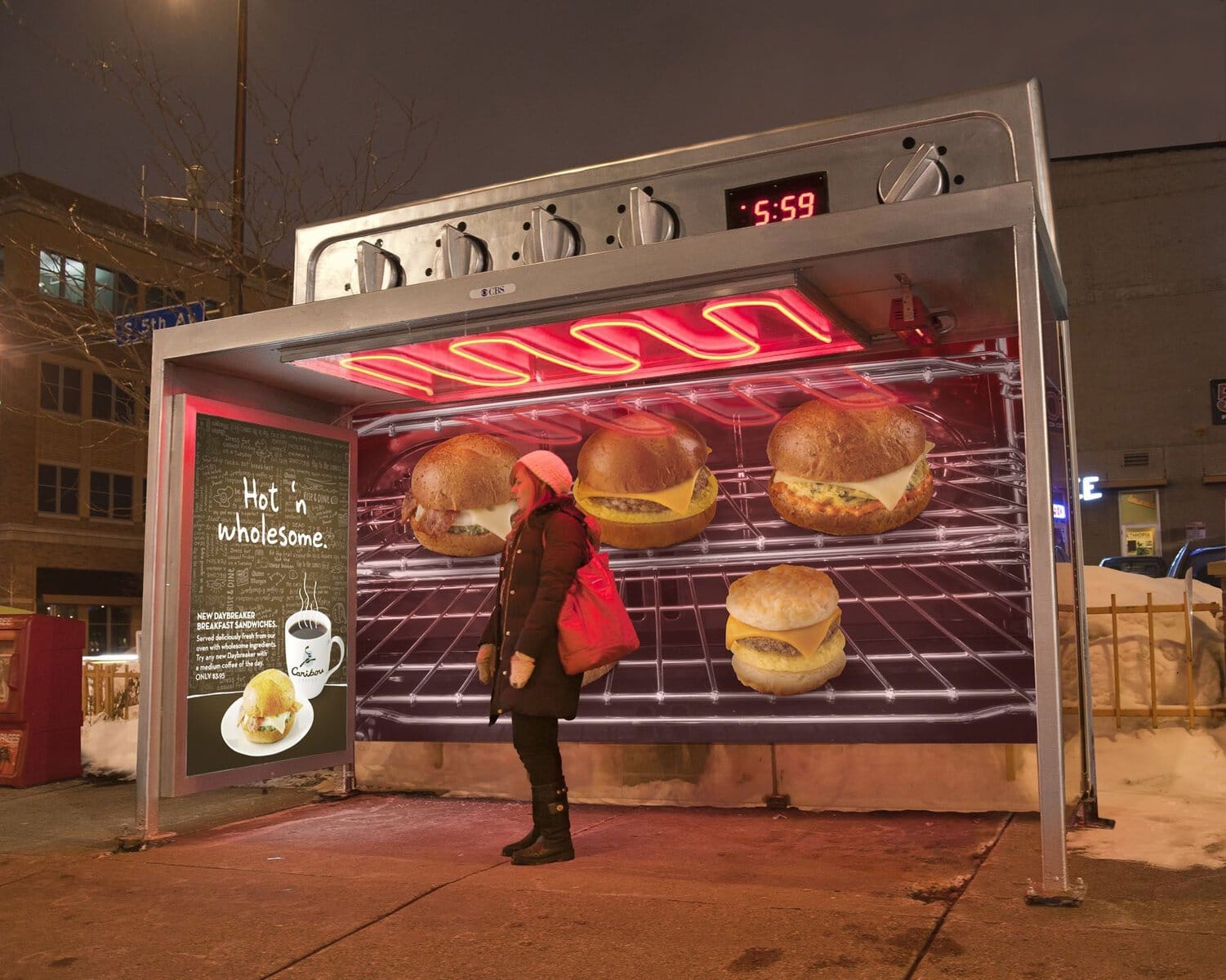
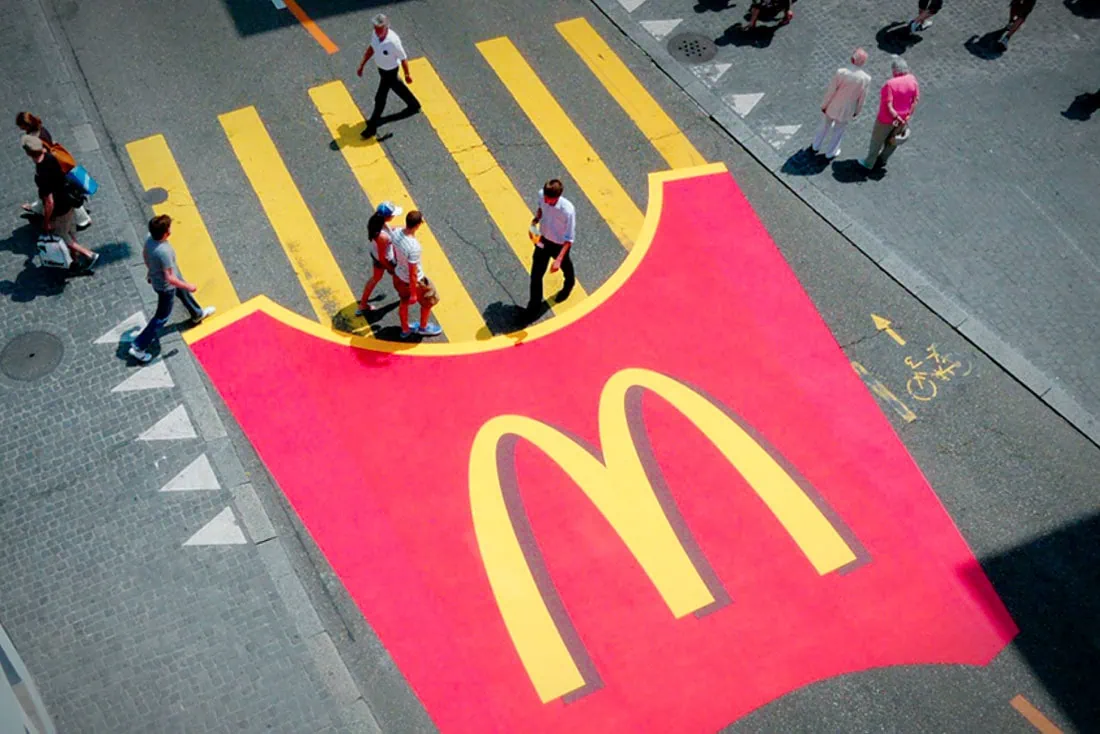
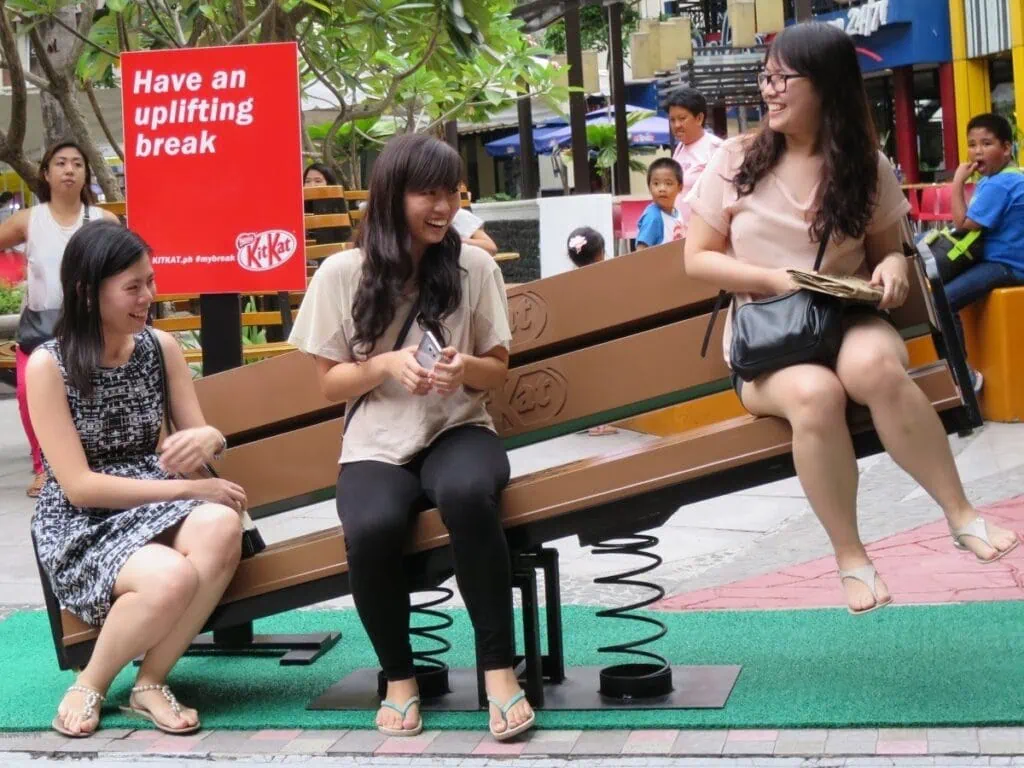
Ambient work turns an ordinary surface or object into part of the message: a bus shelter that appears to become an oven, a crosswalk that becomes a row of fries, or a bench transformed into a familiar product shape. The location is not merely media inventory; it completes the idea. That is why the best ambient executions can be understood in a glance.
Experiential marketing creates a direct interaction
Experiential campaigns ask people to do something rather than simply look. A tasting room, pop-up, playable installation, or unexpected vending experience can make the brand promise tangible. The interaction should still be optional and clear. Participation loses its value when people feel tricked, filmed without meaningful notice, or pushed into sharing.
Street marketing meets a specific community
Posters, performances, temporary art, sampling, and neighborhood activations can concentrate attention where a relevant audience already gathers. The advantage is not simply foot traffic. It is context: a local launch can speak to a neighborhood with more precision than a broad media buy. That also raises the standard for cultural awareness, cleanup, access, and permission.
Buzz marketing gives people a story to carry
Buzz begins when an experience is easy to retell. Mystery, anticipation, scarcity, or a remarkable reveal can help, but withholding essential information can damage trust. If creators or influencers are paid, gifted, or otherwise connected to the brand, that relationship should be disclosed clearly. In the United States, the Federal Trade Commission updated its Endorsement Guides in June 2023 and continues to emphasize disclosure of material connections.
Viral distribution is an effect, not a plan
Digital sharing can extend a physical campaign far beyond its original location. But “viral” describes how content travels after launch, not a reliable production method. A better plan identifies the first audience, the moment worth documenting, the path to a useful next action, and the response if the public interprets the work differently than intended.
Why Some Campaigns Become Cultural References
Coca-Cola’s “Happiness Machine” is a useful experiential example because the product interaction carried the campaign idea. Coca-Cola described the 2009 video as part of its broader “Open Happiness” campaign; the vending machine dispensed unexpected items and created a social scene around sharing. The surprise was memorable because it dramatized an existing brand promise.
Red Bull Stratos worked at an entirely different scale. Felix Baumgartner’s 2012 high-altitude jump was a complex mission, not a low-budget street stunt, yet it demonstrates the same strategic principle: the event embodied Red Bull’s long-standing association with extreme performance. Red Bull’s official project archive and mission data continue to document the jump and the team behind it. The lesson is not to imitate the spectacle. It is to make the execution inseparable from the meaning the brand wants to own.
Cause-related work demands even more care. The well-known UNICEF dirty-water vending-machine activation made an invisible public-health problem physically legible. That kind of provocation can focus attention, but the standard is higher than shock: the facts, donation path, dignity of the people represented, and relationship to the organization’s actual work all have to hold up after the moment passes.
Build the Campaign Backward From a Behavior
Start with the action you want after attention arrives. Should someone scan a code, try a product, visit a location, join a list, donate, or simply remember a new association? The desired behavior determines the site, duration, staffing, documentation, and measurement plan.
Then define the audience in practical terms. “Everyone who walks past” is not a target. Look for a place and moment where the intended people already have the time, permission, and reason to engage. A playful installation at a festival behaves differently from the same object in a rushed transit corridor.
Prototype the interaction at small scale. Watch for confusion, bottlenecks, accessibility barriers, unintended interpretations, and what happens when people decline to participate. A pre-mortem is useful: imagine the campaign has failed, then list the likely reasons. Safety review, property permission, local permits, insurance, weather, staffing, waste, privacy, and an escalation plan belong in the creative process—not in a checklist added after approval.
Connect the Physical Moment to a Digital Path
The physical experience should work even if nobody posts it. Digital distribution can then extend the idea: a short URL or QR code can lead to context, an offer, accessibility information, or a clear next step; owned channels can show the making of the work; and paid support can reach people who were never present.
Design documentation deliberately. Decide who may be filmed, how consent is communicated, which angles explain the idea, and how the content will work without sound. If influencers or partners amplify the campaign, brief them on both brand accuracy and disclosure. A real reaction is valuable; an undisclosed commercial relationship or manipulated response is not.
Measure More Than Attention
Views and mentions show distribution, not necessarily impact. Choose a small measurement set that follows the campaign logic: encounters or participants at the site, completion rate, scans or visits, qualified sign-ups, trial, donations, local search lift, sentiment, and assisted conversion. Use unique links, codes, or geographic and time-based comparisons where appropriate, while respecting privacy.
Also record the costs that “low-budget” summaries ignore: fabrication, permits, staffing, insurance, documentation, moderation, removal, and follow-up. Guerrilla marketing can be efficient, but unconventional does not mean free. The right comparison is cost per useful outcome, not production cost alone.
A Practical Decision Test
- Brand fit: Could this idea plausibly belong to another brand, or does it express something specific about yours?
- Audience value: Does the encounter offer delight, utility, access, or meaning rather than treating people as props?
- Context: Does the location make the idea clearer, and can people safely choose whether to engage?
- Permission: Have property, permit, safety, accessibility, privacy, disclosure, and cleanup requirements been addressed?
- Next action: Is there an obvious path from the moment to a useful behavior?
- Measurement: Can the team distinguish attention from business or mission impact?
If the idea needs an explanation longer than the encounter itself, it probably is not ready. If it creates a clean connection between place, participation, and brand meaning, it may not need a huge budget—or the promise of virality—to work.
Frequently Asked Questions
What is guerrilla marketing?
Guerrilla marketing uses an unconventional placement, interaction, or event to earn attention outside familiar advertising formats. The strategy should connect that attention to a clear brand objective.
Is guerrilla marketing always inexpensive?
No. Some executions are modest, while others require fabrication, permits, staffing, insurance, production, and distribution. Its defining feature is unconventional context, not low cost.
Can a small business use guerrilla marketing?
Yes. A small, locally relevant experience can outperform a broad stunt when it reaches the right people and offers a natural next step. Start with a limited prototype and a specific behavior to measure.
What are the main risks?
Common risks include confusion, backlash, safety or accessibility failures, missing property permission or permits, privacy problems, undisclosed commercial relationships, and cleanup costs. Review them before production.
How should a guerrilla campaign be measured?
Match metrics to the intended behavior. Combine on-site participation and completion with scans, visits, sign-ups, trial, donations, sentiment, local search interest, or conversion—then compare the outcome with the campaign’s full cost.