A family can appreciate a company for helping its child play basketball and still buy a different brand on the next grocery trip. Gratitude happens at the clinic. Preference happens in the cereal-and-cocoa aisle, usually with a tired kid negotiating from the cart. That gap is the central challenge in Nestlé’s new NBA partnership. Creating something useful for a community is worthwhile on its own terms. Turning that contribution into a lasting relationship with Milo, Nescau, or Nesquik requires a second connection, one the family can recognize in its own life.
The agreement announced on October 7 makes those three brands official NBA partners across 21 markets on four continents, beginning January 1, 2027, with the Philippines joining that October. Nestlé calls it its largest international brand collaboration to date. The company says its ambition is to inspire 2.5 million young people to take part in basketball over three years. That is a participation goal. It is not a count of people the partnership has already helped, and it should not be read as one.
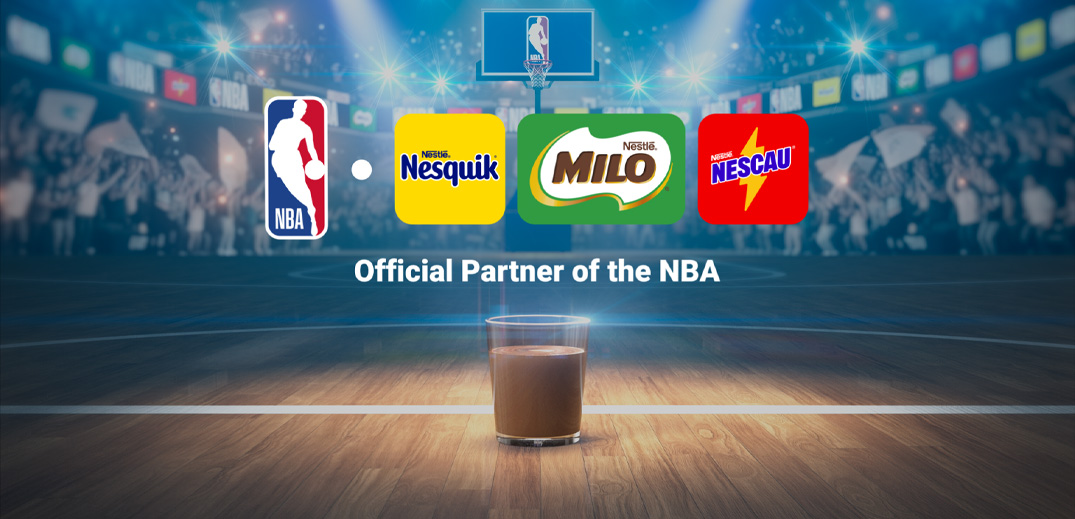
The logic is easy to follow. These products already carry associations with childhood, enjoyment, and family routines. Basketball gives them a way into something young people actively do, and there is a real need behind it: the World Health Organization reports that 81% of adolescents aged 11 to 17 are not physically active enough. A participant also has a different relationship with a program than someone who briefly notices a sponsor’s logo. There is room here for experiences people remember because they learned something, met someone, or got an opportunity they would otherwise have missed.
The NBA’s announcement lists youth programs such as Jr. NBA/Jr. WNBA, NBA Basketball School, coaches academies, Her Time To Play, and NBA 3X, alongside fan platforms like NBA Global Games and NBA House and on-pack promotions in stores. That breadth matters. The partnership can support participation while also creating packaging, content, and shopping occasions around the association. Nestlé has been candid about the commercial side, too. It says it will judge the partnership through a balanced scorecard that puts participation alongside campaign engagement, brand equity, business growth, household penetration, and the value created with retailers.
I do not think we need to pretend that helping a community and building a business are incompatible. A program can create real value for the people involved while also making a brand more desirable. The trouble starts when a company assumes the second outcome automatically follows from the first. Parents may be grateful for a clinic. That gratitude could attach to Nestlé generally, to the coach who made their child feel welcome, or to basketball itself. It does not necessarily settle which drink goes into the shopping cart.
When I think about marketing, I keep returning to what changes for the person receiving it. The benefit might be practical, such as a product solving a problem. It might be emotional or social: enjoyment, confidence, status, or a feeling of belonging. Those benefits are real even when they cannot be reduced to a specification. A logo on a jersey works a little like a name on a donor wall. People notice it, they may even appreciate it, but they rarely feel anything personal about it. A product becomes easier to want when people understand the role it plays in an experience they already care about.
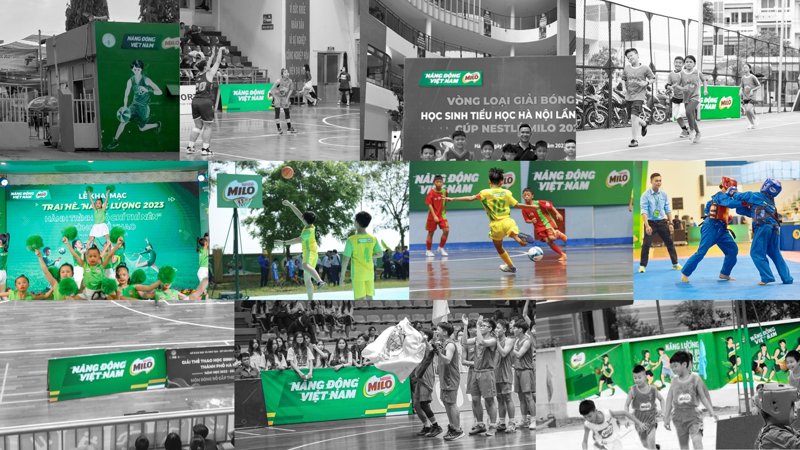
Nestlé has relevant community experience to build from. In Vietnam, for example, its 2025–2030 agreement with Ho Chi Minh City’s education department covers school sports and nutrition education. That is a separate local initiative, not evidence that the NBA partnership will include the same educational program everywhere. It does show that the company has worked in the space where participation, families, schools, and product messaging meet.
My first instinct was to ask whether the product could play a useful nutritional role in that setting. But I am not working inside Nestlé, and I do not know enough about the individual formulations to make that case for the company. If it wants to talk about a health benefit, the evidence has to support the actual product, serving, and use being discussed. Sponsoring basketball does not establish what a drink does for a child’s health or athletic performance.
That leaves an important job for the company: find the honest connection, then make it understandable. It might be a substantiated product benefit. It might be taste, convenience, or a family ritual around an activity people enjoy. Education could help when it gives parents information they can actually use. Whatever the answer, the product has to earn the role the campaign assigns to it. A basketball on the label cannot do that work by itself.
I learned how powerful that connection can be from a campaign we worked on with Intel. Intel brought us an idea called Rise, Shine, and Inspire, with funding for a giveaway to help emerging creators. We wanted to extend it through a pay-it-forward idea: each act of support would lead someone to recognize another person who needed help. The computer would have a practical purpose, and the community would help us find that purpose.
We worked with AnthonyZ, known for playing Tony Corleone in Grand Theft Auto role-play on the NoPixel server. His girlfriend at the time, Bree, was also streaming, with a smaller audience and hardware that was making her ambitions harder to pursue. Anthony explained why she needed a new computer, and we built the first part of the campaign around helping her. Then the two of them nominated another creator, Biotox.
They could explain his problem in terms everyone around him understood. His old computer kept crashing during role-play scenes. These players were creating ongoing stories together, almost like improvised television inside a game. When one person disappeared in the middle of a scene, the interruption affected everyone trying to tell that story. There were clips of it happening. The need was visible, familiar, and shared.
The reveal took place inside a virtual computer store in the game. They told Biotox he was getting a new CyberPowerPC, and at first he thought it was part of the scene. They had to explain that the computer was real. As the confirmation and specifications made that clear, he began crying on the live stream. We had arranged the gift and the surprise. His response was his own.
That is what people responded to. They knew the person, understood the frustration, and could see what the help meant. Viewers were happy for him. Comments and social posts kept appearing, including on things unrelated to the campaign, with people saying the moment had given them a reason to support CyberPowerPC. It also gave the pay-it-forward idea a life beyond the first giveaway. One person noticed another person’s need, and that person helped bring the next need into view.
“The need was visible, familiar, and shared.”
I cannot isolate a sales increase from that campaign. Our business was growing, and we were doing many things at once. The evidence I can speak to is the response we saw and the meaning people attached to it. I would not trade away the value of that interaction simply because I cannot staple a purchase receipt to each comment. I believe those memories stay with people and keep circulating long after the campaign ends.
The story also complicates the idea that everyone has to receive a direct product benefit before they can develop a preference. Biotox received the computer. The wider audience watched a company help someone in a community they cared about. The product solved a recognizable problem, and the act of solving it gave observers a reason to feel something about the brand. That is a more substantial relationship than asking an audience to applaud generosity in the abstract.
Nestlé’s opportunity is to find its own version of that connection. A basketball program does not need a dramatic surprise or a tearful reveal to matter. It could help a young person gain access, feel included, or keep showing up. The stories should come from what the program actually changes for people. The company then needs to understand how its brands and products fit into those experiences without inventing benefits the experience cannot support.
To its credit, Nestlé’s scorecard already separates participation from household penetration, and I would keep that distinction sharp. Are the opportunities useful, accessible, and sustained? Are families also developing a clearer, credible reason to choose the products? Participation figures can help answer the first question. Product preference and purchasing behavior help answer the second. Neither fully captures the relationships that may develop, but keeping them apart prevents a large activity count from doing more explanatory work than it should.
That lesson reaches well beyond a chocolate drink and a basketball league. Any brand that invests in a community is making two promises at once: one to the people it serves and one to its own business. The first is kept by being useful. The second is kept only when people can see where the product fits in that usefulness. Nestlé has chosen a setting with the potential to create something meaningful. If it can show families that connection honestly, they will have a reason to carry the experience home with them, and that is where durable brand value begins.