A company can do good work and still be absent from the customer’s shortlist. The product may solve the problem, the price may be reasonable, and the service may be dependable. None of that helps much if the buyer does not recognize the name or think of it when the need arises.
Brand awareness addresses that problem. It is the work of becoming recognizable and retrievable in the right context. The objective is not simply to put the name in front of as many people as possible. It is to help the people who could use the offer connect the name with a relevant reason to remember it.
Retail presence, advertising, earned coverage and word of mouth offer four useful routes. Social media can support several of them at once. The choice is less about finding a universally best channel than understanding where the audience encounters the category, what the business can sustain, and how you will know whether the effort is working.
What brand awareness does and does not mean
Brand awareness concerns whether people recognize or recall a brand. Aided awareness is recognition when the name or another cue is supplied. Unaided awareness is recall without being shown the brand, usually in response to a category question. Top-of-mind awareness is the first brand recalled, not every brand a respondent can name.
Those measures are different from trust, loyalty and brand association. Someone can know a company very well and dislike it. They can also recognize its logo without knowing what it offers. Treating all these outcomes as awareness makes it harder to diagnose what the marketing needs to accomplish.

Why being remembered matters
Awareness gives a brand an opportunity to be considered. A familiar name may be easier to notice on a shelf or retrieve when someone asks for a recommendation. But it is not a guarantee of preference. Price, availability, suitability and previous experience still matter.
That distinction changes the strategy. If the right people have never heard of the business, more relevant reach may help. If they know the name but misunderstand the offer, the message needs work. If they understand the offer and reject it because of a product problem, an awareness campaign is not the repair.
Nielsen’s 2015 new-product research examined several sources of discovery, including paid, earned and owned media. It is useful historical evidence that discovery happens through multiple routes, not a current channel ranking. A plan for your business should be based on how its intended customers behave now.
Four routes to building brand awareness
1. Retail presence: become visible where the choice happens
A retail environment can introduce a brand while someone is already thinking about the category. Packaging, shelf position, demonstrations and signage all help determine whether the product gets noticed and understood. The useful question is not only how much shelf space you have. It is what a passing customer can work out from it.

The same logic applies to an online marketplace or a company’s own storefront. The name, image, product description and category placement need to work together. A listing that is technically available but difficult to understand is not doing the same job as an offer that is easy to identify and compare.
Retail visibility has costs and constraints. Placement may require commercial support, and a display cannot compensate for missing stock or a confusing product range. Decide what the presence is meant to do: introduce the brand, explain a difference, encourage trial or help an existing customer find it again.
2. Advertising: build reach around a recognizable idea
Broadcast, online video, display, search, print and outdoor advertising offer different ways to create encounters with a brand. They do not all serve the same purpose. A broad video campaign can introduce an idea to people who are not currently shopping. Search advertising can meet someone already expressing a need.
I can remember drug names such as Skyrizi and Ozempic from their advertising even when I am not looking for those products. That is a simple example of awareness without an immediate purchase. Remembering a name is not the same as deciding that the product is appropriate for you.
The original article includes this compilation of 2023 Super Bowl commercials as a broadcast-advertising example. Use the direct link if the embedded player is unavailable. The compilation is not evidence of a measured sales or awareness result.
Search advertising and search engine optimization also need to be separated. One involves paid placement; the other involves improving the discoverability and usefulness of content in organic search. Neither guarantees the top position or a lasting place in someone’s memory. A visitor still needs to understand which brand supplied the answer.
Coca-Cola’s account of the original Share a Coke campaign describes a simple idea that began in Australia in 2011: put names on packaging and invite people to share. The useful feature is how the product itself participates in the communication. A bottle, an outdoor execution and a social post can carry the same recognizable invitation.

The lesson is not that outdoor is always more credible than digital, or that a larger advertising budget automatically creates a stronger brand. Each format has a job, a context and a cost. Evaluate the combination against the audience and objective instead of declaring one medium inherently superior.
3. Earned coverage: offer something worth reporting
Independent editorial coverage can introduce a brand through a publication or creator the audience already follows. That can be valuable, but coverage is not an automatic endorsement and a mention does not guarantee lasting awareness. A negative story can make a company well known for the wrong reason.
View the original media example on YouTube. This is a historical example retained from the earlier article, not a current placement opportunity.
Start with what is genuinely useful to the outlet’s audience: a substantive product development, a well-supported finding, an informed perspective or a story that explains a change in the category. A pitch that only says the company would like publicity gives an editor little to work with.
Separate independent reporting from sponsored content and paid placements. They may all reach people, but they create different expectations about who selected the message and why. Describe the relationship accurately, and prepare a clear destination for readers who want to learn more.
4. Word of mouth: give people a useful reason to pass it on
In Nielsen’s 2012 global research, 92% of respondents reported trusting recommendations from people they knew completely or somewhat. This is an old survey, not a current universal rate. Its relevance is the distinction between a company making a claim and someone you know sharing an experience.
A useful recommendation often answers a practical question. Who solved this problem? What was the experience like? What should I watch out for? Make the offer easy to explain and the experience worth explaining. A referral mechanism cannot indefinitely compensate for a service people do not want to recommend.
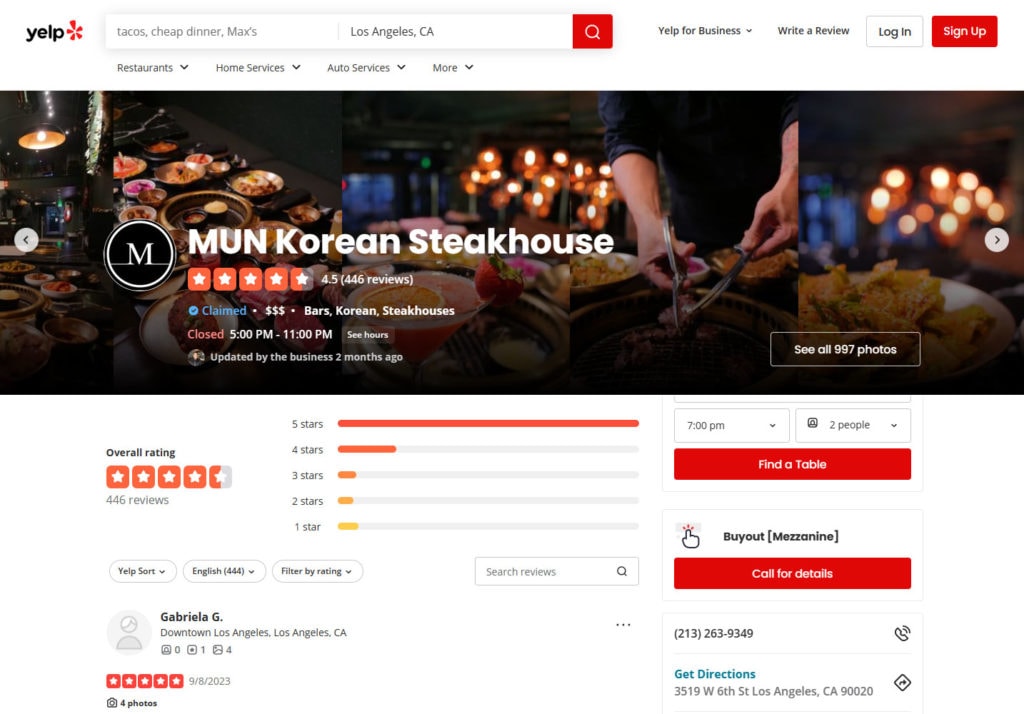
Online reviews add a public record of customer experiences, but they are not equivalent to a recommendation from a close friend. People must judge whether the reviewer is relevant and credible. Respond constructively, learn from recurring issues, and do not manufacture a favorable consensus.
Paid creator recommendations and celebrity endorsements belong in a different category from independent customer advocacy. The FTC’s guidance on endorsements and reviews explains the importance of truthful claims and clear disclosure of material connections. A free product or another benefit can be relevant to that relationship, not just a cash payment.
An expert publication can also introduce a brand through a detailed review. Its usefulness depends on the quality of the evaluation and its fit with the reader’s decision. A famous name, a large audience or a positive headline is not, by itself, evidence of sales impact.
Twelve ways to make social media more useful
Social media is a distribution and interaction environment, not a free substitute for strategy. Production, moderation, design and paid reach all have costs. These twelve practices can help make the effort more coherent, but none guarantees inexpensive growth on every platform.
1. Give the account a recognizable personality
Decide how the brand should sound when it explains, responds and disagrees. The aim is a recognizable point of view, not a performance of friendliness. A playful voice can be useful, but copying another company’s sarcasm without its context can turn a routine customer interaction into a problem.
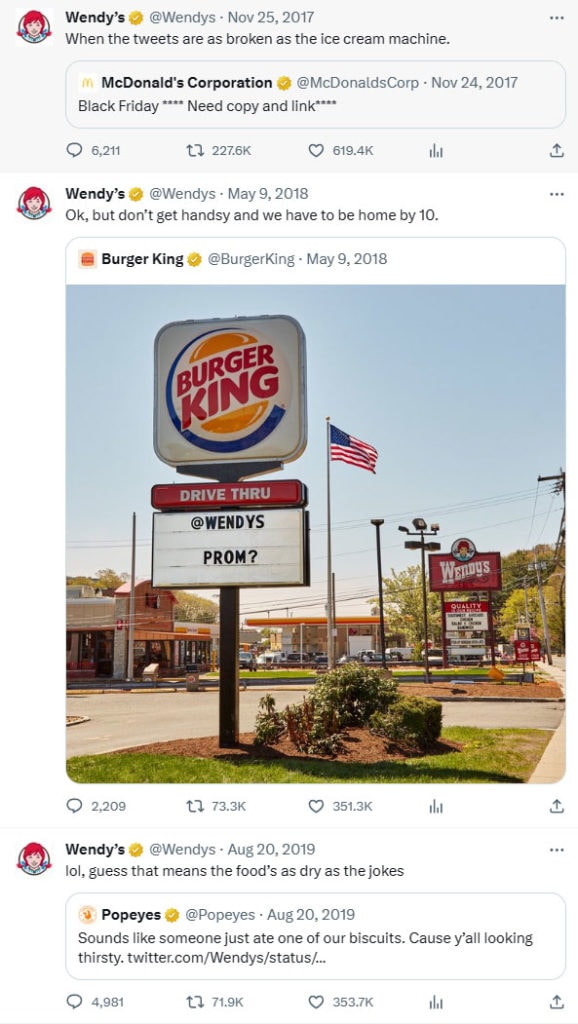
The historical Wendy’s screenshot above is an example of a particular style of interaction. It is not evidence that every brand should roast its customers. Choose a voice the team can use consistently and responsibly, including when the customer is frustrated.
2. Make the profile understandable
A profile should make it easy to identify the company, understand what it does and find the right next step. Keep the name, imagery, description and destination links coherent. Use the fields that serve the reader rather than filling every available space with promotional language.
Check the profile as a newcomer would. A familiar team may understand an abbreviation or slogan that means nothing to someone arriving for the first time. Recognition starts with reducing that unnecessary work.
3. Use visuals to communicate something
A useful image can explain a product, demonstrate a process or make a comparison easier to understand. A striking image that could belong to any company may attract attention without helping people remember the source. Give the brand a consistent visual role without stamping a giant logo over everything.
Judge the format by what the audience needs to see. A short demonstration, a clear diagram and a well-captioned photograph do different jobs. The goal is not to satisfy a universal rule that images always produce a particular engagement lift.
4. Collaborate where the fit is visible
GoPro’s 2016 announcement of its Red Bull partnership described content production, distribution, cross-promotion and product innovation. The pairing has a clear underlying connection: point-of-view cameras and activities that benefit from immersive footage.

For a smaller business, the same test applies. What can the two parties create or explain together that is useful to both audiences? A partnership needs a concrete contribution from each side, not merely an exchange of logos. Agree on responsibilities, rights and success measures before producing the work.
5. Understand a conversation before joining it
Hashtags and topical references can place a post in a wider conversation, but their meaning comes from how people are using them. Read the context before adopting one. A phrase that looks suitable in isolation may refer to an experience that has nothing to do with the product.
Do not treat a sensitive topic as an invitation to force in a promotion. Relevance and judgment matter more than the size of the conversation. Platform conventions also change, so avoid assuming that a fixed number of hashtags is an enduring growth formula.
6. Treat replies as part of the experience
The comment section is a place to clarify, listen and help, not only to accumulate engagement. Answer the question that was asked. If resolving it requires personal information, move to an appropriate private channel without asking the customer to post those details publicly.
A helpful reply may also answer the same question for future readers. Record recurring confusion and fix the underlying explanation or process. Otherwise, the social team becomes a permanent workaround for a problem elsewhere in the business.
7. Adapt useful material for a new context
A strong article can become a short demonstration, a diagram or an audio discussion. Repurposing is useful when the new format helps a different audience understand the idea. Simply cutting the same message into more pieces can create volume without adding value.
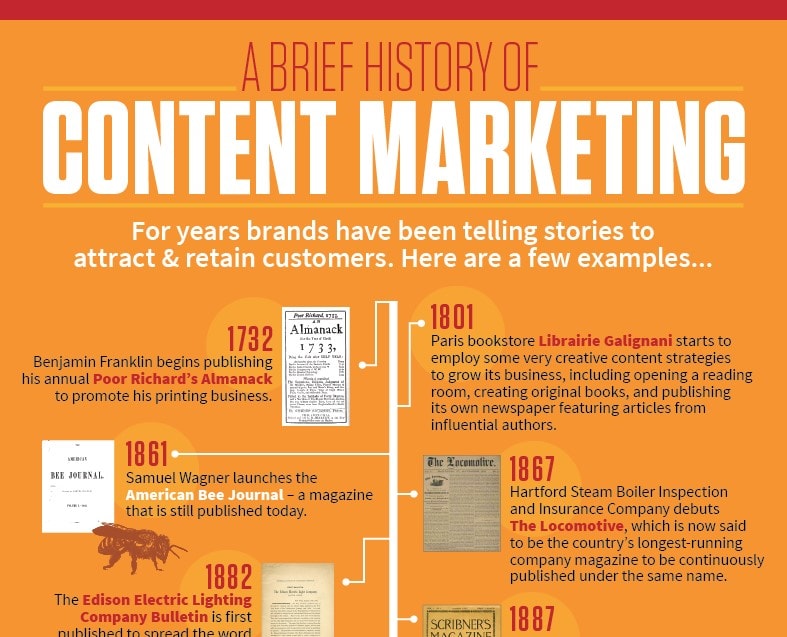
The original Content Marketing Institute example illustrates how an idea can be organized visually. Before adapting older work, check that its facts, links and examples still hold up. Preserve source credit and make the new piece useful on its own.
8. Offer a perspective you can support
A point of view becomes useful when it helps someone see a problem more clearly. Explain the reasoning, show the evidence and identify the trade-off. Declaring that the industry must change is less helpful than explaining what should change and what the alternative would require.
The same standard applies to social and environmental issues. A public position should connect with real decisions and commitments. Awareness created by a statement does not establish that the company has earned trust on the subject.
9. Test the expression without losing the idea
Try different openings, examples and formats to learn what the audience understands and finds useful. Keep the underlying proposition identifiable. If every test introduces a completely different promise, it becomes difficult to know whether the result came from the format or the message.
Use comparable objectives when evaluating results. A question designed to prompt replies should not be judged in exactly the same way as an explanation designed to be saved or a demonstration intended to bring qualified visitors to a product page.
10. Help the audience do something better
Answer recurring questions, explain confusing terms and show how to approach a decision. Educational material creates a reason to encounter the brand before someone is ready to buy. Make the relationship between the lesson and the business clear without turning every explanation into a sales pitch.
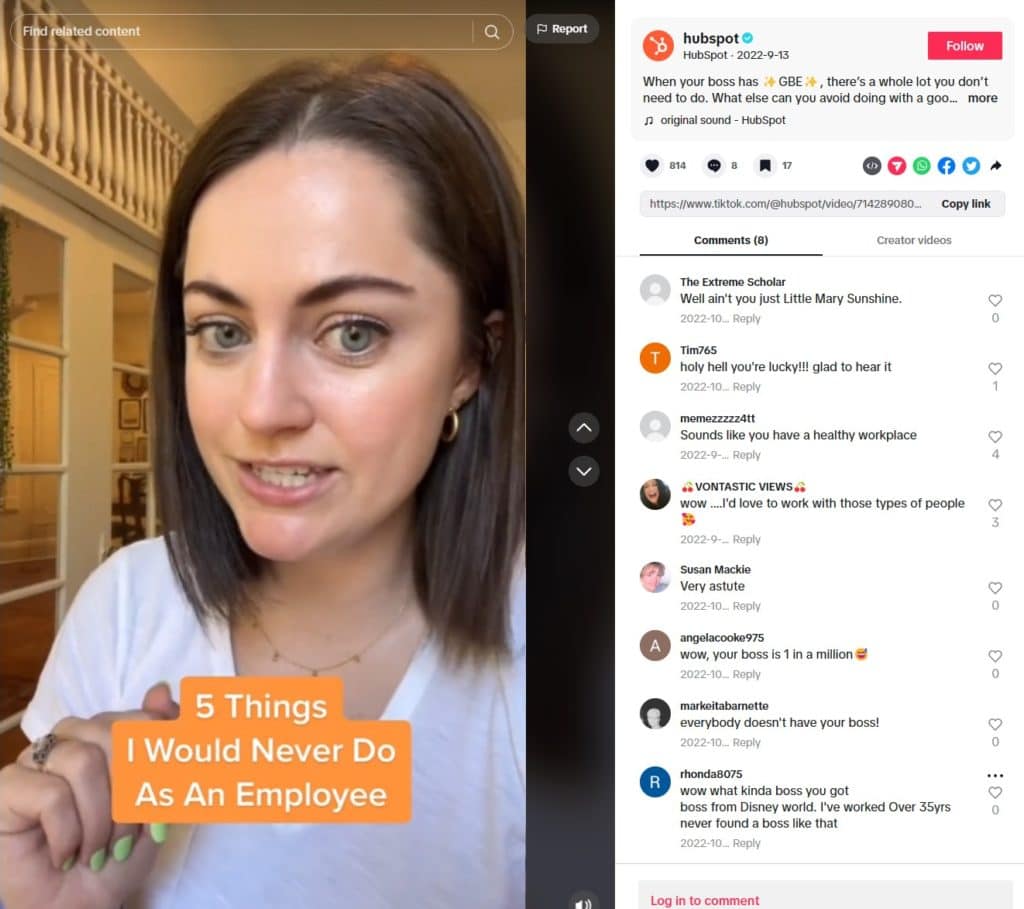
The historical HubSpot example is relevant to this approach: the subject matter connects to the category the company serves. For your own business, start with the questions customers actually ask rather than a generic content calendar.
11. Choose creators for relevance and credibility
Look beyond follower count. Consider the creator’s subject knowledge, audience fit, communication style and ability to demonstrate the product honestly. Decide whether the job is discovery, explanation, trial or another specific outcome.
Set clear expectations for disclosure, usage rights, review independence and factual claims. A creator should not have to invent a positive experience to satisfy the brief. Review the work for accuracy while preserving the qualities that make the creator useful to the audience.
12. Build a cadence the team can sustain
A content calendar coordinates work, but a calendar is not a strategy. Choose a rhythm that leaves time for useful production, responses and review. Publishing more often is not automatically better if quality falls or the team cannot handle the conversations it starts.
Consistency means repeated, coherent encounters with a recognizable brand. It does not require identical posts or constant activity on every channel. A focused presence can be more manageable than maintaining several neglected accounts.
How to measure brand awareness
Brand awareness can be measured directly through research. Sales are not the only measure, and they are not a substitute for it. Sales combine the effects of awareness with many other factors, including price, availability and the quality of the offer.
Separate recognition, recall and first recall
For unaided recall, ask which brands come to mind in a relevant category before showing any brand names. Record the first answer separately if you want a top-of-mind measure. For aided awareness, present the brand or a controlled list and ask which names the respondent recognizes.
Keep the audience definition, question wording and method comparable over time. Surveying existing customers alone will not tell you how well the wider market knows the brand. Small or changing samples can produce apparent movement that does not reflect a real change in awareness.
Questions such as how someone heard about you or which words they associate with the brand are useful, but answer different questions. The first concerns remembered discovery; the second concerns meaning. Keep those results separate from recognition and recall.
For eligible advertising campaigns, survey-based lift studies can add another perspective. Google’s Brand Lift documentation distinguishes awareness from other measures and notes that access is not available to every account. Check eligibility and study design before including it in a measurement plan.
Use website and search data as supporting signals
Branded searches, qualified website visits and direct traffic can help identify changes in interest. They do not directly reveal what percentage of the intended audience recognizes the brand. Direct traffic is especially easy to overinterpret because it does not necessarily mean someone typed the address from memory.
Read the signals together. A rise in visits alongside unchanged awareness might reflect more activity from people who already know the company. More recognition with poor conversion might reveal a problem later in the journey. The point is to diagnose, not to choose whichever number makes the campaign look successful.
Use social listening to understand the conversation
Track mentions, recurring questions and the context in which people discuss the brand. Distinguish the amount of conversation from its meaning. A burst of attention can be favorable, hostile or unrelated to the buying decision.
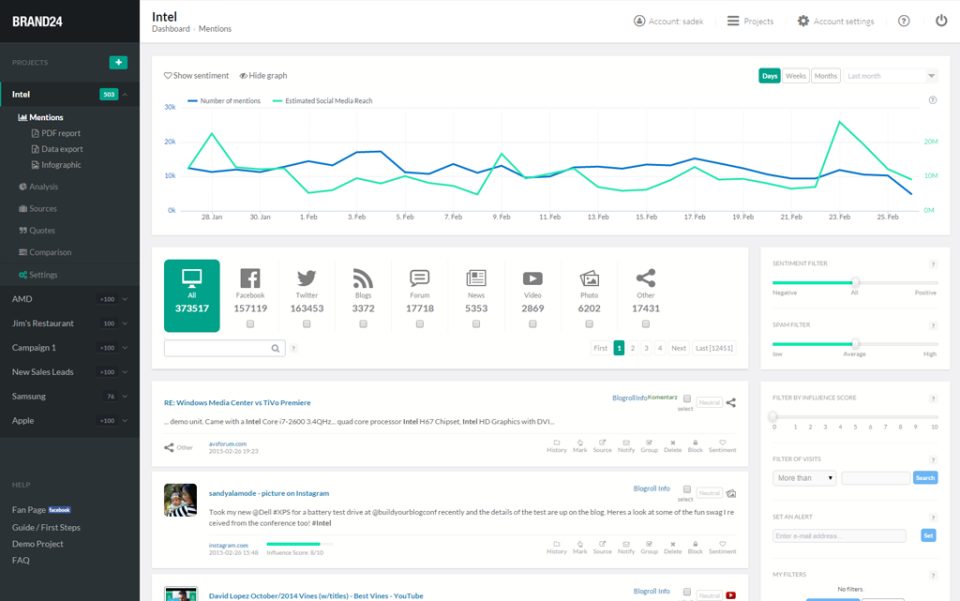
The historical listening-tool screenshot above illustrates a reporting interface, not a current product recommendation or a verified performance result. Tool coverage and classification have limits. Combine automated summaries with review of the underlying posts before drawing a conclusion.
Turn the plan into a manageable test
Define the audience, the situation in which you want the brand remembered, and the central idea that should connect the two. Choose channels that can realistically reach those people. Establish a baseline before the activity begins, then decide which measures will indicate progress and which would suggest a problem.
Give the work enough continuity to learn from repeated encounters, but review whether the assumptions still hold. If the message is misunderstood, improve it. If the audience is wrong, adjust distribution. If the product experience contradicts the promise, involve the people responsible for that experience.
Awareness is a beginning, not the whole relationship
Recognition creates an opportunity. The next question is what people believe about the brand and whether their experience supports that belief. Community work, partnerships and public commitments can contribute, but they should not be used as shortcuts around product or service problems.
A company does not become responsible because a campaign says it is. The same principle applies to being innovative, helpful or dependable. The claim needs something behind it that people can examine.
Make the brand easier to recognize for a reason
The strongest awareness plan connects visibility with a useful idea. It gives the right audience repeated opportunities to encounter the brand, makes its role understandable and checks whether recognition is actually improving.
Start with the gap you need to close. Being unknown, being misunderstood and being disliked are different problems. Once you know which one you are addressing, the channel choices and the measurement become much clearer.
Frequently asked questions
How do I create brand awareness?
Define who needs to know the brand and in which situation it should come to mind. Use a coherent message across suitable channels, then measure recognition and recall among that audience.
What are the types of brand awareness?
Aided awareness measures recognition when a brand cue is supplied. Unaided awareness measures recall without showing the name. Top-of-mind awareness is the first brand recalled in the relevant category.
What is brand awareness on social media?
It is recognition or recall developed through encounters on social platforms. Reach and engagement can support the analysis, but neither is a direct substitute for measuring whether people recognize or remember the brand.
Is brand awareness the most important marketing goal?
Its importance depends on the problem. Awareness helps a brand enter consideration, but cannot by itself establish trust, solve a product problem or guarantee sales.
Listen to the original edition
This audio accompanies the earlier edition. Some claims and examples have been revised in the text above.