
A brand name can bring a whole set of expectations into a decision before anyone has compared the product. A familiar restaurant might suggest a predictable meal. A watch might suggest an achievement. An airline might bring back the last time a trip went wrong. None of those associations is the product itself, but each can influence how the product gets judged.
This is why brand association matters. You are not only competing to be noticed. You are competing to become connected with something useful in a person’s mind. The difficult part is that the meaning you intend to create and the meaning people actually take away are not always the same.
A campaign can introduce an idea. Products, service, other customers and repeated experience determine whether that idea survives contact with reality. If the goal is to build a stronger brand, the work has to connect those parts.
What is brand association?
Brand associations are the ideas, attributes, feelings and experiences people connect with a brand. In Kevin Lane Keller’s 1993 model of customer-based brand equity, brand image consists of associations held in memory. Their strength, favorability and uniqueness help explain why knowing the brand can change a consumer’s response to its marketing.
That definition is broader than an emotional connection. An association can be practical, such as easy returns or expensive replacement parts. It can be social, such as the sort of person who uses a product. It can also be a specific memory: the coffee shop where you worked through a difficult project, or the delivery that never arrived.
Think of the brand name as a point of entry into a network of meaning. A logo, package, sound or familiar product shape can help you access that network. But recognition is only the first step. Recognizing a company does not tell us whether the next thought will be reassuring, irrelevant or negative.
This also separates brand association from brand personality. Personality concerns human-like qualities, such as playful or dependable. Those qualities can become associations, but the broader network also includes prices, places, product categories, people and events.
Three useful ways to examine an association
Functional, symbolic and experiential associations provide a useful working lens. They are not a complete taxonomy of everything a person can know about a brand, and the boundaries overlap. The purpose of separating them is to see what kind of meaning you are trying to build and what would make that meaning credible.
Functional: what it helps someone do
A functional association concerns a practical benefit. For a vacuum cleaner, that might be effective cleaning or ease of handling. Dyson provides a useful product example because its machines give the company something tangible to explain and demonstrate. The brand can put engineering at the center of the story, but the buyer still needs the product to solve a cleaning problem.

The distinction matters when writing marketing claims. Saying that a product is associated with engineering is different from proving that it outperforms every alternative. The first describes a positioning idea. The second requires evidence about specific products under specific conditions. A strong brand does not eliminate that obligation.
Symbolic: what choosing it might say
A symbolic association concerns identity, belonging or status. Apple products can carry meanings around design, creativity or a preference for a particular way of working. The visible product becomes part of how someone presents themselves, whether deliberately or not.

That does not mean everyone buys a Mac for status, or that a Windows user has the opposite identity. Compatibility, price, accessibility and familiarity can be decisive. Symbolic meaning is one layer of a choice, not a license to stereotype the people making it. Ask which associations exist among the audience you need to understand.
Experiential: what it feels like to use
Experiential associations arise from the interaction itself. With Starbucks, the relevant experience could be the ordering routine, the atmosphere of a particular store or the familiarity of a regular drink. One customer may value a place to pause. Another may only want a fast pickup.
The same brand can therefore hold different meanings for different people. A dependable ritual for one person can be an inconvenient wait for another. That variation is not noise to remove from research. It may reveal exactly where the promise is working and where the experience is breaking it.
How associations shape a buying decision
People rarely begin every purchase with a completely blank comparison sheet. Familiar associations can help them narrow the field, decide what deserves attention and interpret what they see next. A reputation for reliability might earn a product a place on the shortlist. An association with high prices might keep it off the list before the actual price is checked.
This is useful shorthand, but it is not always accurate. Familiarity can preserve an outdated impression. A customer may remember a previous generation of products, one bad interaction or a story passed along by a friend. Branding has to work with those existing meanings instead of assuming the latest campaign has replaced them.
What my automotive-brand research taught me
In 2006, I conducted research at the University of California, Irvine that became Shared Semantic Structures of Automobile Brands Among US Residents. The project examined how people organized automobile brands in their minds. In that work, I found that country of origin and perceived luxuriousness were important organizing ideas.
The useful lesson was that a brand does not sit alone in someone’s mind. It gets understood in relation to other brands and to broader categories. A company can inherit expectations from the category people place it in, even when that category does not match how the company would describe itself.
This was a historical research project, not a current ranking of automobile brands. Perceived luxury is not the same as measured product quality, and a pattern of association does not by itself establish that country of origin caused a purchase. Treating those as separate questions makes the research more useful, not less.
The same issue appears in technology. A phone can be judged through expectations about its ecosystem, design or owner, as well as its specifications. The practical question is which of those associations helps the intended customer make a decision, and which creates a barrier the actual product could overcome.
Differentiation has to mean something relevant
An association only helps if it matters in the situation. Being considered adventurous may be useful for an outdoor brand and less useful when someone is choosing a service to handle a predictable monthly task. Distinctiveness without relevance can make a brand memorable without making it desirable.
Nike’s focus on athletic effort is an example of a brand territory that can connect a product with a larger ambition. That does not mean competing sports brands lack an emotional story, or that every Nike customer interprets it identically. The strategic value comes from connecting a recognizable idea with products and experiences that can support it.
Five places where brand associations are built
1. Product quality and consistency
An association with reliability has to survive use. Toyota’s description of its production system makes the connection between operations and quality explicit. Its two pillars include stopping when abnormalities are detected and coordinating production around what is needed. These are operating methods, not simply advertising themes.
The broader principle is that the claim needs a supporting system. If your brand promises dependable delivery, what happens when an order falls behind? If it promises easy ownership, who owns the repair experience? Repeating the word dependable cannot compensate for a process that routinely lets people down.
2. Marketing that gives the product a context
Advertising can connect a product with a situation or value people recognize. Coca-Cola’s 2009 introduction of Open Happiness explicitly linked the drink with everyday moments of optimism and connection. That establishes the campaign’s intent. It does not establish that every viewer felt happier or that the message caused a particular sales result.
Dove offers another example. Its Real Beauty Pledge describes commitments about representing women and beauty in its communications. The campaign imagery matters because it makes the positioning visible. The credibility of that positioning still depends on whether the brand’s actions match what it asks the audience to believe.

This is where brand storytelling becomes useful: it can make a relevant idea easier to understand through a concrete situation. A story is less useful when it substitutes inspiration for evidence or asks people to ignore the experience they actually had.
3. Customer experiences and interactions
Airbnb’s founders have described the company’s beginnings as hosting guests on airbeds in their San Francisco home. In the company’s 2019 account of trust, that origin story sits alongside the much harder problem of helping strangers feel able to transact with one another.
The association is not created by the founding story alone. It also depends on whether people can understand a listing, communicate with a host and get help when a stay goes wrong. This is true beyond travel. The support conversation after a purchase may teach someone more about a company than the campaign that brought them in.
That is why post-purchase engagement belongs inside brand strategy. It is where the promise gets tested. Record the moments that generate relief, confusion or frustration, then connect them to the process decisions that produced them.
4. Endorsements and partnerships
A partnership puts two sets of associations next to one another. Rolex’s presentation of Roger Federer connects the athlete with qualities such as achievement and precision. The association is understandable because the person and the brand have a clear point of connection.
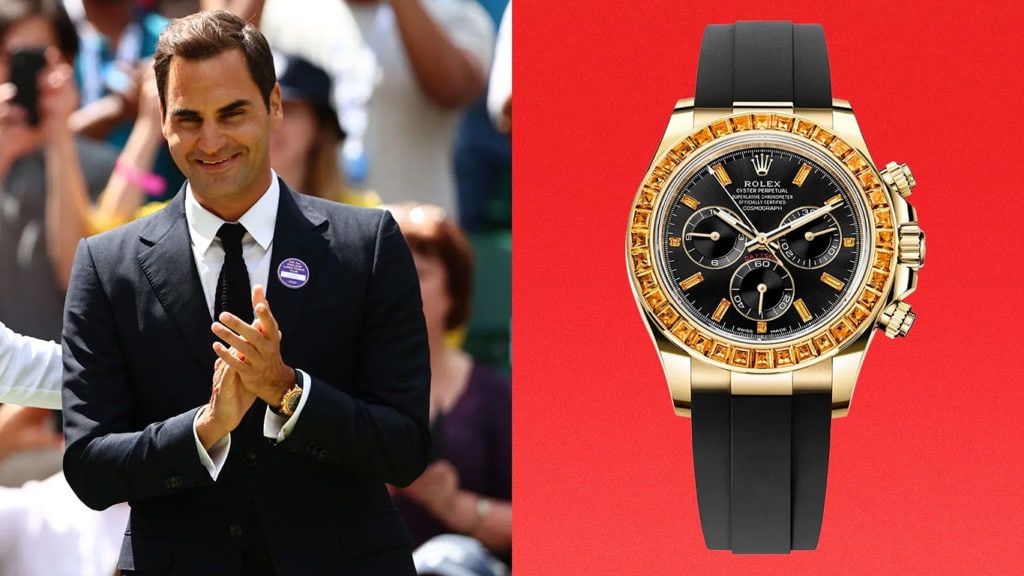
The useful question is not simply whether the partner is famous. It is what meaning the partner brings, whether the audience recognizes that meaning and whether the relationship feels credible. Reach can introduce the association, but reach alone cannot make it fit.
The same judgment applies to cultural and entertainment collaborations. A recognizable character can attract attention. A collaboration becomes more interesting when the product itself demonstrates an understanding of the audience and the source material.
5. Visual cues that make the meaning accessible
Logos, colors and packaging help people recognize what they are looking at. McDonald’s arches and familiar packaging are useful examples of cues that can bring a known experience to mind. The cue is valuable because there is something behind it to remember.

There is no need to explain that through a universal claim that red makes everyone hungry or that yellow automatically produces happiness. Color works within a visual system and a cultural context. Consistent recognition is a more defensible objective than assuming a color can manufacture a particular feeling.
Visual consistency also cannot guarantee operational consistency. A familiar package helps someone identify the brand. The food, service and setting determine what that familiarity comes to mean.
Positive and negative associations
LEGO: make the association available through participation
LEGO is a useful example of a product that lets people act on an idea. Building provides a direct experience of making something. LEGO Ideas extends that relationship by allowing fan concepts to be considered for official products. The connection with creativity is supported by something people can do, rather than only something an advertisement says.

This is the principle to borrow, not the claim that every customer has the same fond memories. If you want an association with creativity, give people meaningful room to create. If you want an association with expertise, help them understand or accomplish something. The activity gives the message substance.
United: a service failure can overwhelm the intended message
On April 9, 2017, a passenger was forcibly removed from United Express Flight 3411. United’s April 27 announcement of changes acknowledged the incident and described measures including limits on the use of law enforcement and changes to crew booking procedures.
The branding lesson is not that one incident permanently determines every customer’s opinion. It is that a highly visible experience can give people a compelling reason to question the company’s promise. Communications then have to be supported by changes to the decisions and procedures that allowed the experience to happen.
An apology and a corrective action do different jobs. The apology acknowledges the harm. The corrective action gives people something to examine when deciding whether the same thing is likely to happen again. Treating both as a messaging exercise misses the source of the problem.
How to build stronger associations deliberately
Start with the associations people already have
Ask customers what first comes to mind when they hear the brand name, then ask why. Begin with an open question before presenting the qualities you hope they will choose. Otherwise, you risk measuring agreement with your language instead of discovering theirs.
Look for the experience behind the adjective. Expensive might mean unaffordable, but it might also mean difficult to justify. Helpful might refer to one employee rather than the whole service. Those distinctions point toward different actions. Include people who considered the brand and chose something else, where you can reach them appropriately.
Build a map that separates intention from evidence
Put the brand at the center and group the words and experiences people connect with it. Keep desired associations separate from observed ones. Note which audience supplied each idea, whether it is positive or negative in that context, and what evidence produced it.
Then compare the map with a few relevant alternatives. If every company is described as high quality, that may be an expectation of the category rather than a distinguishing strength. If customers consistently mention an easy setup process for your product, there may be a more specific and useful association to develop.
You can also look outside the category for inspiration. A landscaping company might study how a hospitality business makes customers feel informed and looked after. The point is to borrow a useful behavior, not another company’s voice or visual identity.
Choose a promise the business can repeatedly support
Select a small number of associations that matter to the intended customer and are credible for the business. Translate each one into a behavior. An approachable brand needs understandable explanations. A responsive service needs a realistic response process. An inventive product needs evidence of useful invention.
Review the journey from first impression through ownership. The website may promise simplicity while the invoice, onboarding and support process introduce unnecessary work. Fixing those contradictions often matters more than adding another campaign. Consistency means that different parts of the business support the same expectation, not that every message sounds identical.
Be clear about the limits
If a product has a limitation or a service cannot meet a deadline, make that information understandable. Acknowledging a problem does not automatically destroy trust. Hiding it can create a second problem: people now have to question both the product and the company’s explanation.
Measure the associations again after making meaningful changes, using a comparable audience and questions. Look at whether the intended meaning is becoming clearer, not only whether more people recognize the name. Awareness tells you that people know you exist. Associations tell you something about what that knowledge contains.
The association is the result of the system
You cannot assign a meaning to a brand and expect the audience to accept it. You can make a promise clear, provide experiences that support it and learn from the meaning people actually take away. That gives the brand a better chance of becoming useful in a decision.
The most productive question is therefore not only what you want to be known for. It is what the business must do, repeatedly, for that association to make sense.
Frequently asked questions
What is a brand association example?
A customer might associate a vacuum brand with effective cleaning, a watch brand with achievement, or a coffee shop with a familiar daily routine. These are examples of possible meanings, not assumptions that every customer shares them.
What are the three types of brand associations?
Functional, symbolic and experiential associations are a useful working lens: what a product helps someone do, what choosing it might signify, and what using it feels like. They can overlap and are not an exhaustive classification.
What else can become a brand association?
Prices, places, people, product categories, service experiences and specific events can all become connected with a brand. Associations may be positive, negative or neutral, depending on the person and situation.
Why is brand association important?
Associations can influence whether a brand enters a shortlist and how its offer is interpreted. Useful, credible and distinctive associations can support preference, but they do not guarantee a purchase or replace product performance.
Listen to the original edition
The audio below accompanies the earlier edition of this article. Examples and wording may differ from the revised text.
