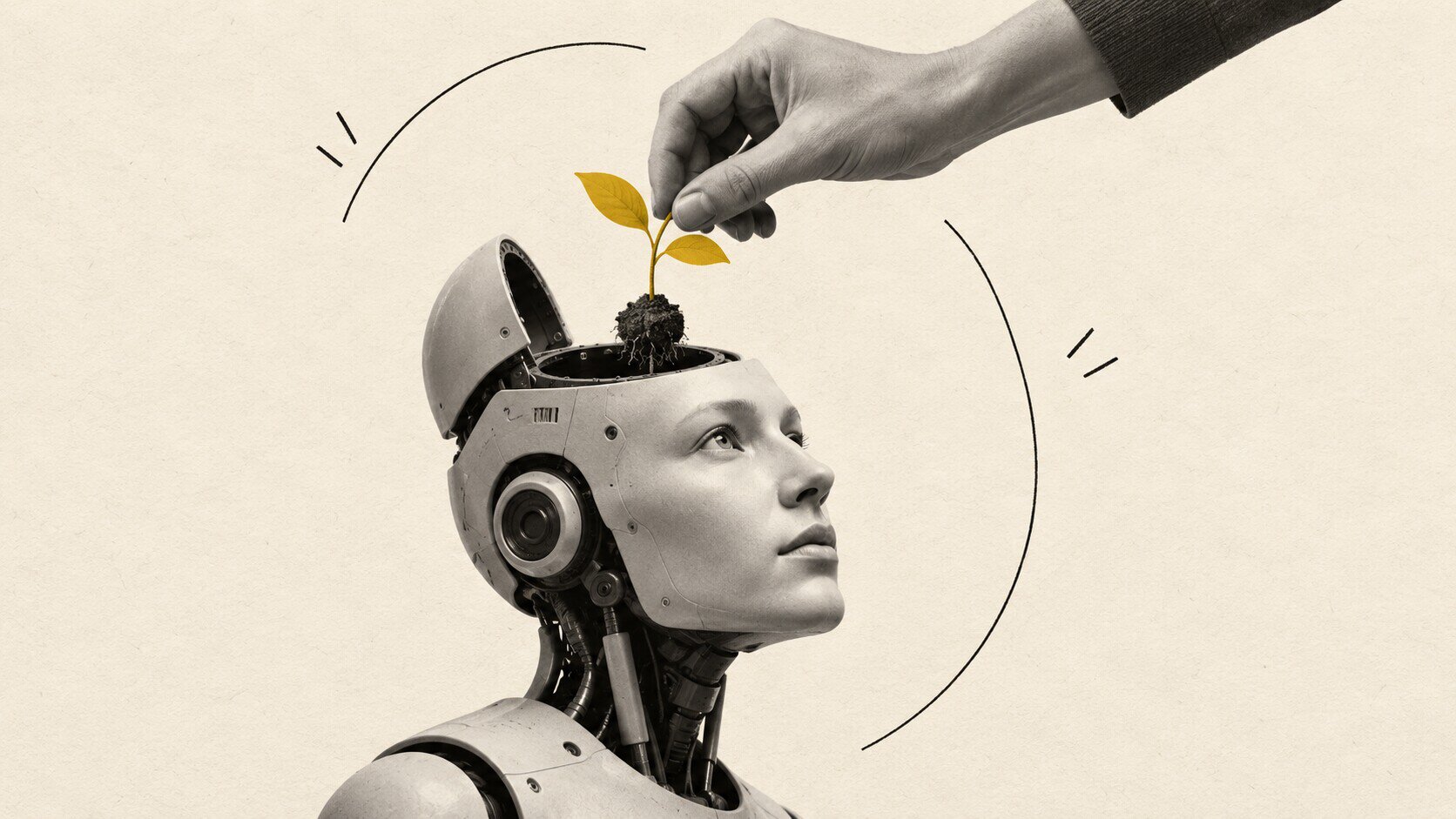
We Keep Talking About What AI Can Generate. We Talk Less About What it Can’t Imagine.
Spoiler Warning: This article discusses major plot points from Westworld.
My father had a saying he delivered with the calm confidence of someone who considered the matter settled.
It’s not about what you care about. It’s about what you’re good at.
He wasn’t a cruel man. He was a practical one, shaped by the particular logic of a generation of Vietnamese immigrants who had watched education become the only reliable ladder out of poverty and into something that looked like security. For families arriving in America in the late 1970s, the calculus was straightforward: doctors made money, doctors had status, and doctors would always be needed. The families we knew who had followed that path lived in houses that confirmed the theory. You didn’t argue with a house like that.
What made the pressure different for first-generation Asian kids, though, was something that gets lost in the broader immigrant narrative. We weren’t being pushed to achieve something our families had never done. We were being pushed to catch up to something they already had. My parents weren’t saying to be the first. They were saying keep up. That’s a different kind of weight. There’s no pioneer story to tell yourself. There’s only the standard already set, waiting for you to meet it.
I tried. I genuinely did. Biology and Chemistry were relatively easy and made sense. This was likely due to the daily dining-table classrooms my sister and I had to attend. I grew up thinking that a whiteboard with the periodic table, accompanied by that classic Asian chicken-feather duster discipline tool, was just the norm in every Asian household. But somewhere around my first college sociology class, something shifted. The questions that lit me up weren’t about the body. They were about behavior. About why people wanted the things they wanted, and how you could make them feel something just by arranging words and images in the right sequence. By the time I admitted this to myself, I was already in trouble with my father’s worldview.
I chose marketing. Branding. Creativity. The career that looked, to a man who had spent his life valuing concrete and measurable achievement, like a long walk off a short pier.
Here’s the irony I’ve been sitting with lately.
The parts of medicine my father valued most, procedural precision and technical execution, are also attracting automation research. A 2025 surgical-robotics study demonstrated autonomous gallbladder removal in eight ex-vivo specimens. That is a controlled research result, not evidence that a robot can independently replace a surgeon caring for a patient. It does show why technical mastery alone no longer feels like a complete argument for career security.
This isn’t to say medicine is disappearing. Researchers, scientists, and physicians navigating genuinely ambiguous situations with real human consequences aren’t going anywhere. There will always be moments when a doctor has to make a judgment call with incomplete information, commit to a decision, and carry the weight of that decision. I don’t think AI is ready to do that, and I’m not sure people are ready to let it.
But the specific vision of medicine my father held up as the gold standard relied heavily on doing difficult things correctly and consistently. Automation challenges parts of that vision. It does not tell us which profession is safest, or make creativity immune to disruption. It asks a more useful question: what judgment does a person contribute beyond executing a repeatable task?
The career he dismissed as impractical, the one built on imagination, on understanding why people feel what they feel and how to move them, turns out to be considerably harder to replicate.
Which brings me to Westworld, and to a job that doesn’t exist yet but probably should.
Behind every host in Westworld was a writer.
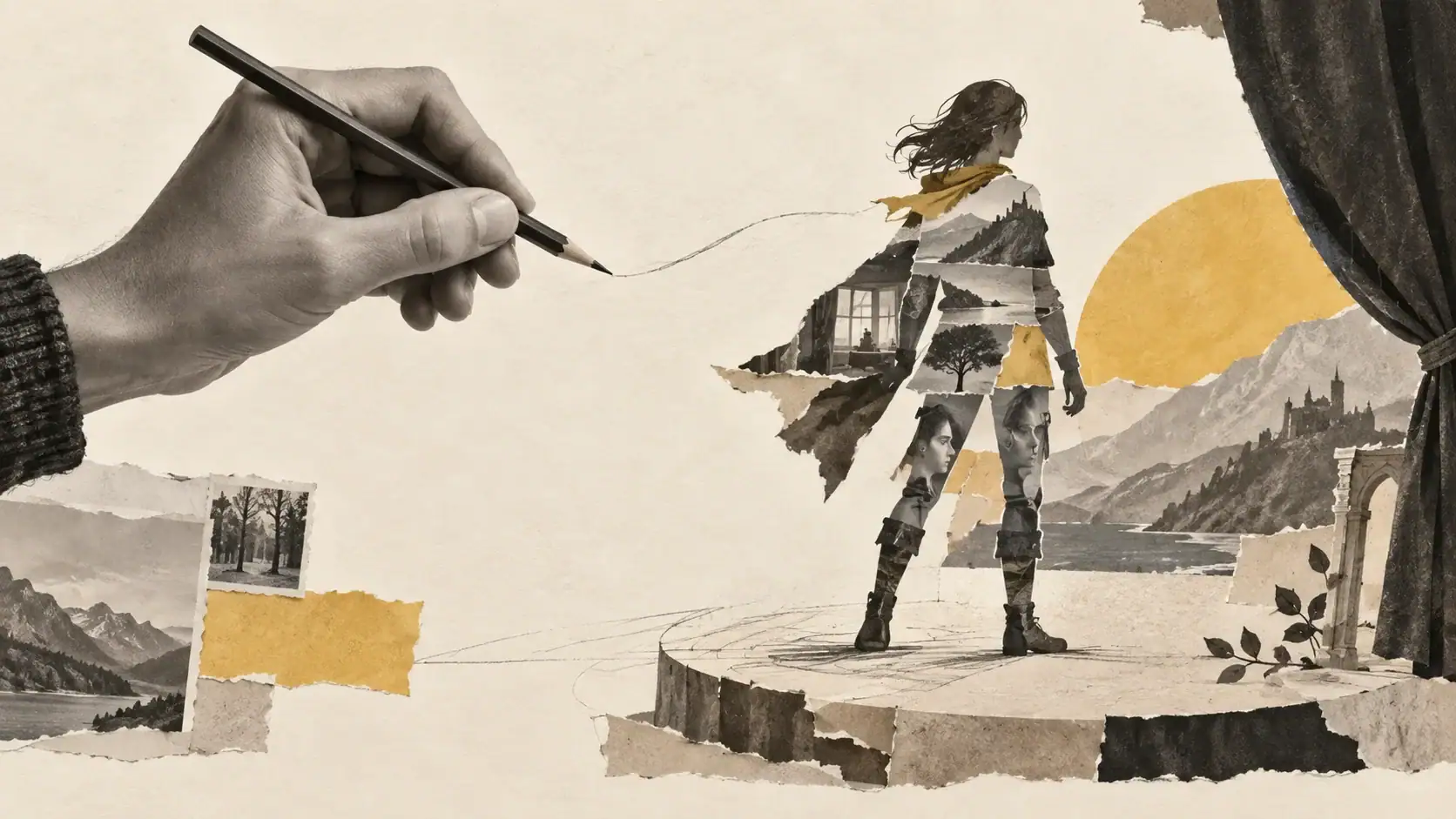
Not a programmer. Not an engineer. A writer. Someone who decided that this particular artificial being had lost a child once, or carried a secret ambition they had never acted on, or had loved someone who never loved them back. These backstories weren’t decoration. They were architects. The hosts behaved the way they did because a human being had planted the seeds of who they were.
I remember watching those scenes and thinking: That is an incredible job. Not because it involved technology. Because it involved imagination. The role wasn’t about generating dialogue. It was about deciding who deserved to exist, and why.
At the time, it felt like science fiction.
Today, it feels like a job posting that hasn’t been written yet.
That shift in my thinking didn’t happen in a vacuum. I’ve been closely following AI’s trajectory into gaming, and the more I understand where that technology is headed, the more I believe Westworld wasn’t depicting a distant fantasy. It was depicting a professional category we don’t have a name for yet.
If you have read my earlier piece on gaming as an AI frontier, you know the possibility that interests me: characters that remember an encounter, change a relationship and carry consequences forward. The 2023 Generative Agents research demonstrated memory, reflection and planning in a sandbox of twenty-five agents. A commercial world that remains coherent for months, with factions evolving while players are offline, is a much larger challenge. Those examples are a creative direction I want to explore, not a claim that the entire system is already solved.
The technology can already simulate parts of that behavior.
What simulation alone does not settle is why the character should matter.
That’s the gap nobody is talking about.
When you interact with even the most sophisticated AI character today, something is missing. It’s hard to name at first. The responses are coherent. The reactions are contextually appropriate. But after enough interactions, a realization sets in: there’s no interior life driving any of it. Only pattern recognition performs the appearance of one.
The internet already has a name for the content version of this problem: AI slop. The term gets used as a casual insult, but it points toward something structurally real. AI can generate an almost infinite amount of content, and yet quantity alone does not produce meaning. After enough exposure, most AI-generated material blurs together. The images are technically impressive and emotionally forgettable. The stories are coherent and oddly hollow. The ideas feel familiar even when they’re technically new.
This is the paradox of abundance: when everything can be generated, originality doesn’t become less valuable. It becomes more valuable. The scarcity shifts from production to meaning.
And nowhere will that shift matter more than in the world AI is about to help build.
Consider what a living game world actually requires. The technology can script a character’s responses. It can vary its dialogue based on context. It can simulate how they react to the things you do in their presence. But someone still has to decide who this character was before you arrived. What they lost. What they want. What they would never admit out loud. Someone has to determine which wound shapes their personality, which dream they’re quietly working toward, which loyalty they would sacrifice everything to protect.
Those are not engineering problems. They’re storytelling problems. And storytelling is one of humanity’s oldest technologies, with a longer track record than machine learning.
This is exactly what the writers in Westworld were doing, and it’s why those scenes resonated the way they did. The show understood something that most AI discourse ignores: the more sophisticated an artificial system becomes, the more it needs a genuinely human interior to inhabit. Otherwise, it’s an impressive machine that ultimately reveals itself to be empty.
A world of AI-driven NPCs without human-authored inner lives would be extraordinarily sophisticated on the surface and hollow underneath. You could talk to any character endlessly. You could receive intelligent responses indefinitely. And eventually you’d discover that none of them were actually anyone.
That gap could expand the work of narrative designers, writers and game designers who already build fictional worlds.
Someone has to decide what memories a character carries. Someone has to write the mythology that gives a virtual world emotional weight. Someone has to craft the tragedy that makes an NPC feel like a person rather than a process. These roles draw on a mix of established creative skills: part novelist, part game designer, part cultural architect. The people who fill them will need to understand human psychology well enough to build convincing fictional psychologies, and enough narrative instinct to know which backstories create compelling behavior rather than just technically coherent behavior.
The demand for those skills won’t be limited to gaming, either. As AI systems become more embedded in daily life, the same questions will arise everywhere. What kind of personality should this assistant have, and why? What values should shape how it responds when the situation is ambiguous? What’s the story that makes this character feel trustworthy rather than merely functional? Every one of those questions is a creative brief, not a technical specification.
This is where most AI predictions fall short. They assume creativity is primarily about output. Generate enough images, stories, characters, or code, and eventually the machine outperforms the human at all of it. But creative work has never been about output alone. The output is the delivery mechanism. What it’s delivering is perspective. Cultural intuition. A specific way of seeing the world that no statistical model can independently develop, because it emerges from the experience of being a particular person alive at a particular moment in time.
AI can remix billions of examples from the past. It can learn patterns faster than any human ever could. It can generate endless variations of existing ideas. But deciding which stories are worth telling, which characters deserve to exist, and what emotional truths a fictional world should carry remains a fundamentally human act. At least for now. And likely for much longer than the current discourse suggests.
None of this means creative professionals should ignore the disruption happening around them. The approach I would invest in is that of artists who treat AI as a production tool while investing more deeply in the things it can’t replicate: a genuine point of view, cultural specificity, emotional authenticity, and the ability to create something that feels discovered rather than generated.
The irony is that AI may not diminish creativity. It may finally make clear how much it mattered all along.
For decades, creative industries have been judged largely on productivity. More content, faster. Shorter production cycles. Higher volume. AI is exceptionally good at that game, which means the game is over for anyone playing only on those terms. But if everyone gains access to infinite production, production stops being the differentiator. What you’re saying, and whether it means anything, becomes the differentiator.
The creator who can build a character that players genuinely grieve when they lose it will matter more than the one who can generate a thousand characters overnight. The writer who can invent a world that feels morally coherent, where the history beneath the surface is felt even when it isn’t seen, will matter more than the writer who can produce endless dialogue trees. The designer who understands human longing, fear, and curiosity will matter more than the one who simply understands the software.
And somewhere in that future, there will be people doing exactly what those writers in Westworld were doing: sitting down with a blank page and deciding who an artificial being truly is. What shaped them? What they want. What they’ve never told anyone.
Someone still has to plant the seeds.
Someone still has to imagine the tragedy.
Someone still has to decide what makes a character worth remembering.
My father wasn’t wrong that security matters. He was just wrong about where it would come from.
The future of creativity may not be competing against AI. It may be giving AI something meaningful to become.