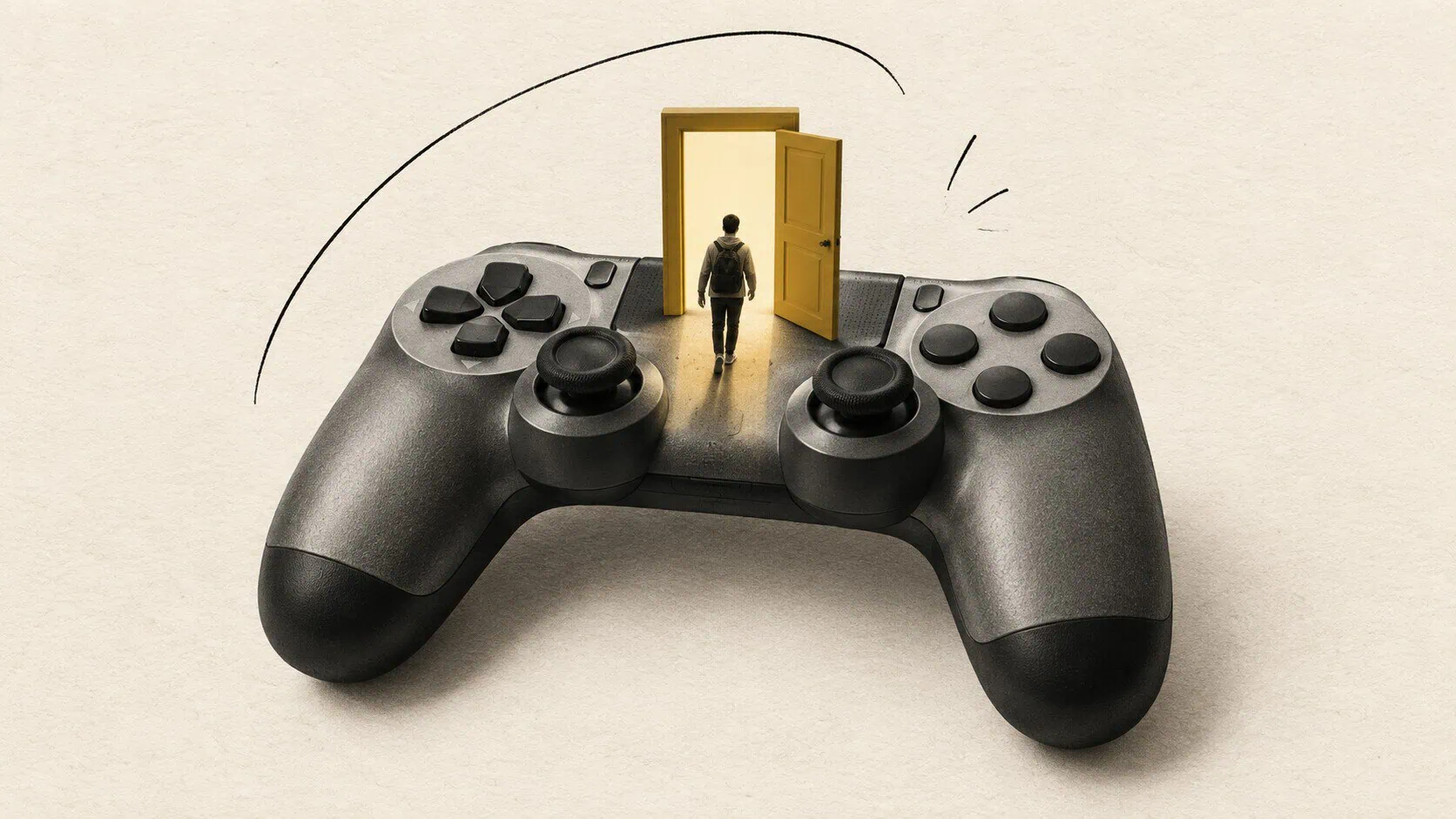
The industry thinks AI is replacing gaming. It may be the opposite.
At Computex 2026 in Taiwan, I felt something unusual for the first time in my career.
Gaming had become background noise.
Not literally, of course. Gaming PCs, giant graphics cards, and enough RGB to illuminate Taipei were still everywhere. But the center of gravity had shifted. Every conversation eventually bent toward AI. Intel, AMD, NVIDIA, memory manufacturers, motherboard vendors, and system integrators all had an AI story. Even companies known for cases and cooling were finding new relevance through workstations, servers, and AI infrastructure. That emphasis was not just my impression. COMPUTEX 2026 officially organized the show around “AI Together,” with AI and computing as one of its three central themes.
For anyone walking those halls, the message felt unavoidable: gaming was yesterday’s story and AI was the future.
I left Taiwan thinking the opposite.
Not because AI is overhyped, and not because gaming will defeat it. I left convinced that gaming could become one of AI’s most important delivery systems. The reason is a simple perceptual trap: we keep confusing where investment is flowing today with where a technology eventually becomes meaningful to ordinary people.
Infrastructure is not culture
The scale of the AI infrastructure buildout is enormous. Investors naturally follow the spending on data centers, accelerators, memory, networking, and power. But infrastructure is not culture. A technology reshapes society when it finds a place in everyday life, not merely when it fills server racks.
Entertainment has repeatedly helped new consumer platforms cross that distance. The internet did not spread simply because the protocols were impressive. People found concrete reasons to want faster connections, and online games became one of them. Quake, Ultima Online, Xbox Live, and World of Warcraft did not create broadband by themselves, but they gave millions of people an experience that made speed, persistence, and connection personally valuable.
Technology rarely wins because it exists. It wins because people care about what it lets them do.
Gaming already connects billions of people across phones, PCs, and consoles. That does not guarantee it will become AI’s defining consumer application. It does mean the medium already has a global audience, a language of interaction, and decades of experience turning computing power into places people want to inhabit.
The problem with today’s AI
There is a version of the AI era that wastes itself.
Every hour spent generating low-quality spam, engagement bait, and forgettable content is an hour not spent building the applications that could make the technology matter. The tragedy of the current boom is not its ambition. It is how much of that ambition is being consumed by mediocrity. We are deploying some of the most advanced computing infrastructure ever assembled to produce material nobody will remember next week.
That gap between potential and current use is not permanent. Powerful technologies often begin by making faster versions of familiar things. The internet gave us banner ads and chain emails before it gave us the modern digital economy. Smartphones gave us novelty apps before they restructured commerce, transportation, photography, and communication.
AI is still searching for experiences that capture imagination at scale. Gaming has played that role for other technologies. It may be positioned to do it again.
The dream of living worlds
For decades, game developers have chased a dream that is harder to define than a bigger map or better graphics: a world that actually feels alive.
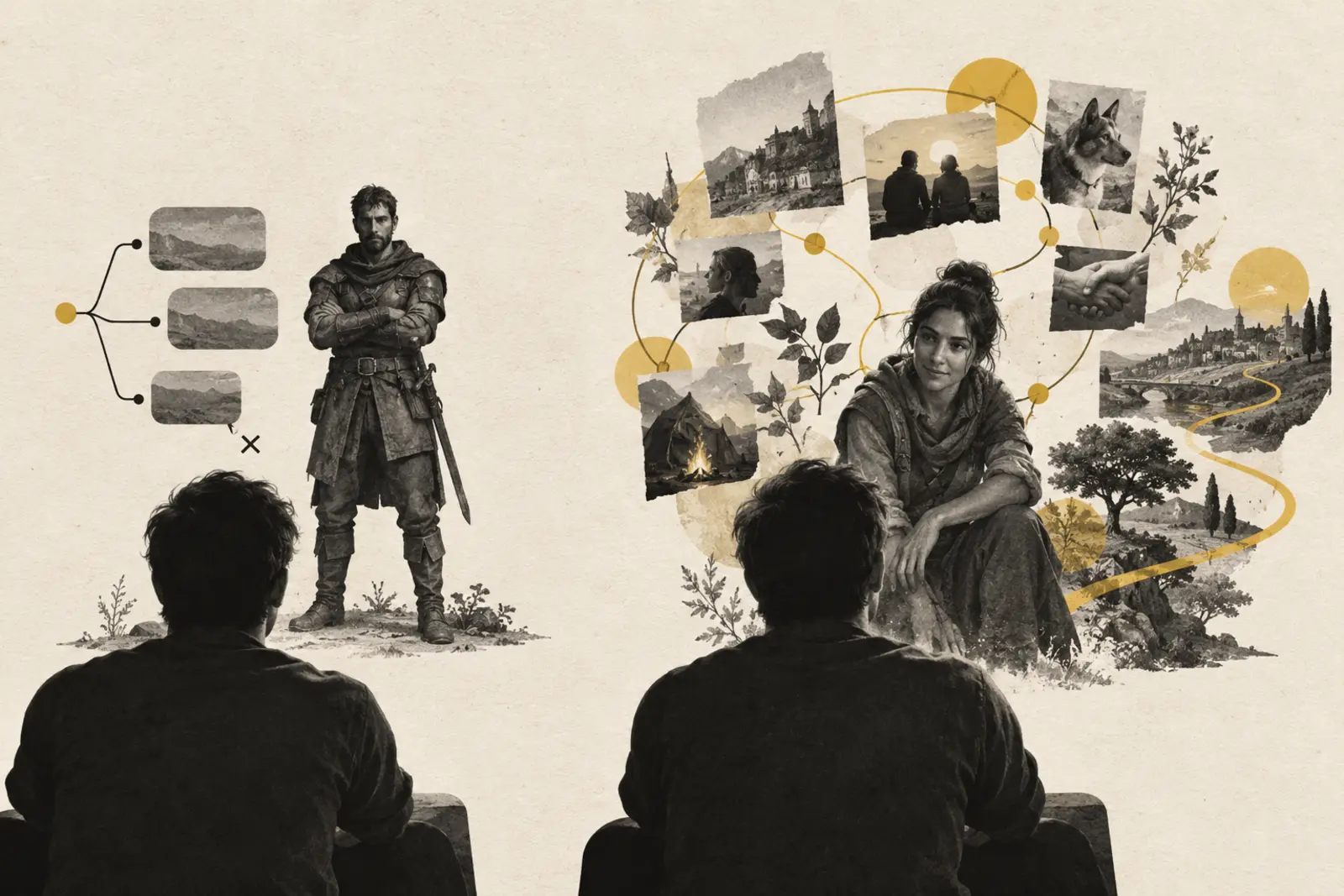
They built branching dialogue, factions that reacted to player choices, and economies that responded to supply and demand. Yet even ambitious open worlds eventually reveal their seams. The world is a very large sculpture. Once you reach the edge of what its creators anticipated, the illusion breaks.
Generative and agentic systems create a new possibility, but we should describe it accurately. NVIDIA’s ACE tools are designed to support conversational and actionable game characters. Ubisoft’s NEO NPC research prototype explores more flexible conversations while explicitly remaining a prototype rather than a finished game system. These efforts do not yet produce autonomous worlds with genuine social memory. They show that developers can begin experimenting with characters that perceive more, respond more flexibly, and carry limited context across interactions.
Imagine where that could lead: a merchant who remembers a broken promise, a village whose attitude changes after you abandon it, or a companion whose trust develops through months of play. The important distinction is not between scripted memory and “real” memory. Both are designed systems. The distinction is between a short branch selected from a fixed tree and a persistent state that can influence many future encounters.
Cost, latency, safety, authorship, and reliability remain serious constraints. A generated character that contradicts the world, forgets a central relationship, or produces inappropriate dialogue can damage the experience faster than it deepens it. The direction is promising precisely because the hard problems are becoming visible.
What isekai already understands
Isekai, the Japanese storytelling genre built around protagonists entering another world, offers a useful cultural lens. Again and again, these stories pair a new environment with a system, guide, or companion that recognizes the protagonist’s actions and helps make the unfamiliar world legible.
The appeal is not simply power. It is responsiveness: the fantasy of entering a world that sees what you do, remembers it, and changes around you. Series such as Sword Art Online and Re:Zero have made that idea familiar to global audiences. AI-assisted games could move a small part of that fantasy from authored fiction into interactive experience.
The first game that delivers convincing persistent relationships across months of play could do something productivity tools have not. It could make AI feel less like software a person consults and more like a place with continuity.
That is an opportunity, not a forecast. Technical feasibility is only one part of it. Players will still decide whether the experience is meaningful, respectful of their data, and worth returning to.
Why gaming feels like it is losing
Gaming’s potential role in the AI era does not make the present moment comfortable. Data-center demand has redirected investment and attention toward AI infrastructure. For enthusiasts, the result can feel like watching the industry’s most important hardware companies discover a larger customer while consumer components remain expensive.
That frustration is understandable, but it is not evidence that gaming has lost its audience. It means gaming is no longer the highest bidder in every conversation about advanced computing.
The mistake is to assume today’s spending hierarchy determines tomorrow’s cultural hierarchy. Infrastructure is a prerequisite. It is not the reason most people eventually care.
The loading screen
AI does not automatically improve games. A world filled with infinite generated content can still feel empty. Great games succeed because of design, authorship, pacing, and intentionality. AI may expand what is possible, but it does not eliminate the need for creative vision. The studios that win will not be the ones that generate the most. They will be the ones that use these systems to deepen what players feel.
That is why declarations that gaming is dead do not land for me.
Gaming has always been one of humanity’s favorite laboratories. It is where we experiment with identity, competition, storytelling, and cooperation. AI does not replace that function. It may amplify it. The industry’s current mood feels less like a funeral than an intermission.
Platform shifts need applications that capture the imagination. The internet needed destinations. Smartphones needed apps. AI will need experiences people choose for reasons beyond efficiency.
No industry has more experience building worlds than gaming.
So when people tell me gaming is dead, I do not see an ending. I see a loading screen.
The next chapter begins when AI stops being only something we use and becomes somewhere we go. If that happens, today’s debate about whether AI is replacing gaming will look backward. Gaming may become one of the environments through which millions of people first experience AI not as a chatbot, but as a responsive world.
That possibility is why I left Computex more optimistic than concerned.
Sources
- COMPUTEX. “COMPUTEX 2026 Concludes Successfully as Global Leaders Co-Create a New AI Era.” June 5, 2026. Official report.
- NVIDIA Developer. “NVIDIA ACE for Games.” Accessed September 9, 2026. Product and developer documentation.
- Ubisoft. “How Ubisoft’s New Generative AI Prototype Changes the Narrative for NPCs.” March 19, 2024. Project NEO NPC overview.